- Home
- Technical Products
Enterprise Cloud IT Solutions
Test Measurement
Industrial Measurement
- Solutions
Enterprise Cloud IT Solutions
Test Measurement
- Latest Articles
- About Us
EN
1G MTSN - Multi-Port TSN Switch IP Core
Generate optimized TSN bridges or endpoint devices for your application


Product Overview
Time Sensitive Networking (TSN) is the name of the IEEE 802.1 task group responsible for data link layer standards. The group provides specifications that will allow time-synchronized and low-latency streaming services over IEEE 802 networks. This group of protocols provides streams with guaranteed bandwidth and deterministic latency.
TSN is constantly evolving and it targets different industries such as automotive, broadcasting or aerospace. Therefore, this flexibility and reconfiguration can only be realized through reconfigurable logic such as FPGAs, HDL IP and embedded software.
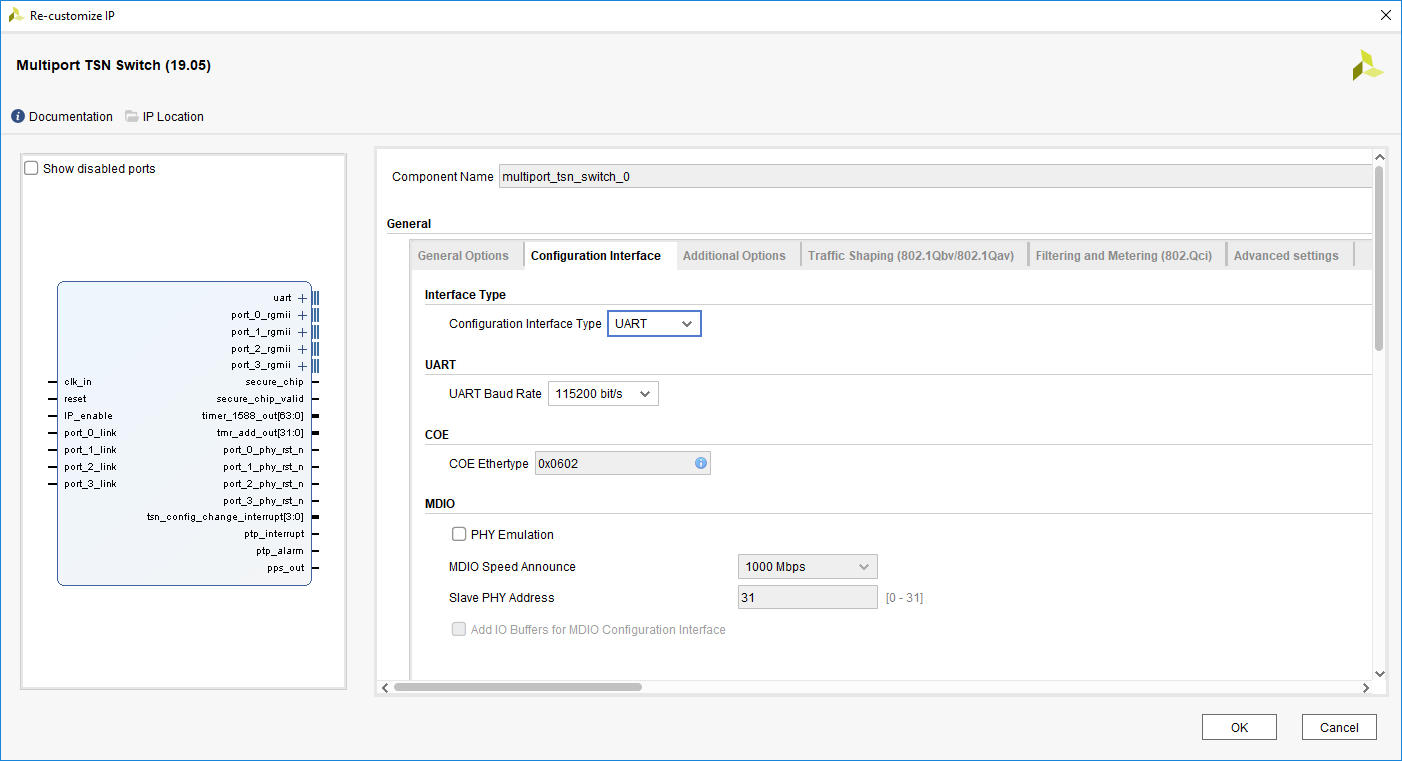
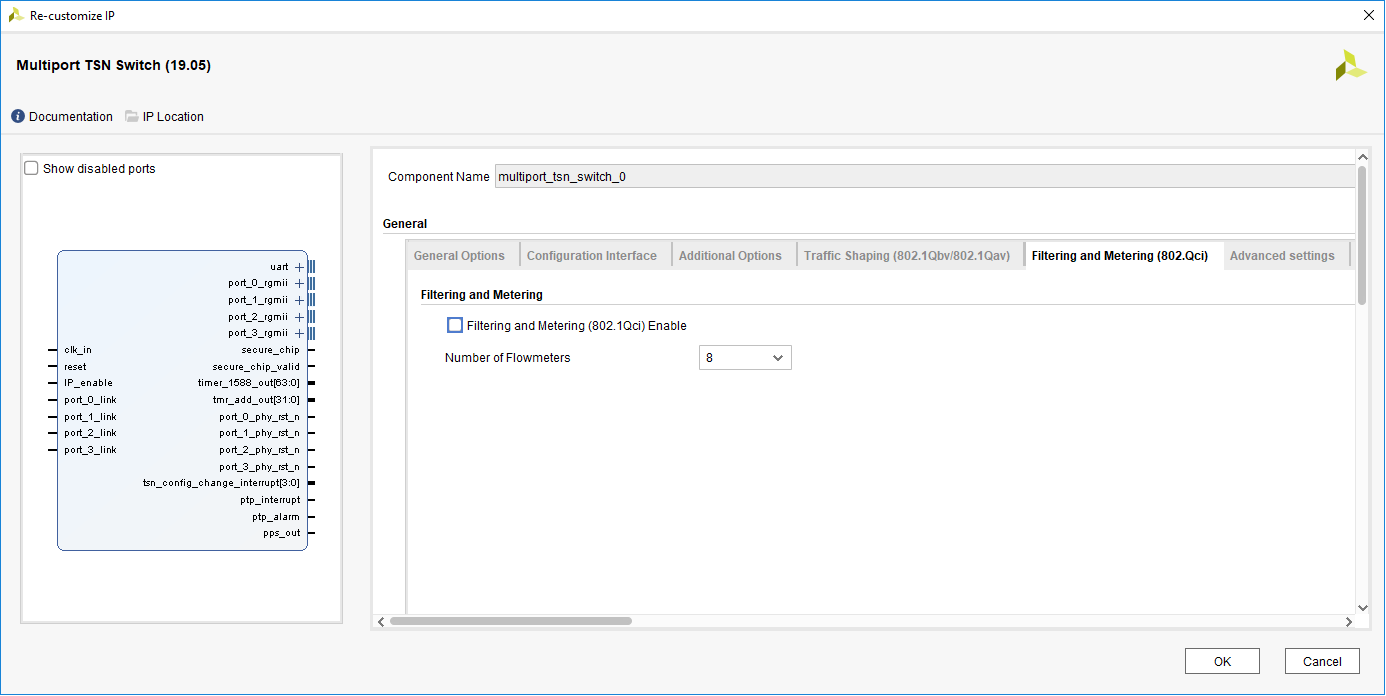
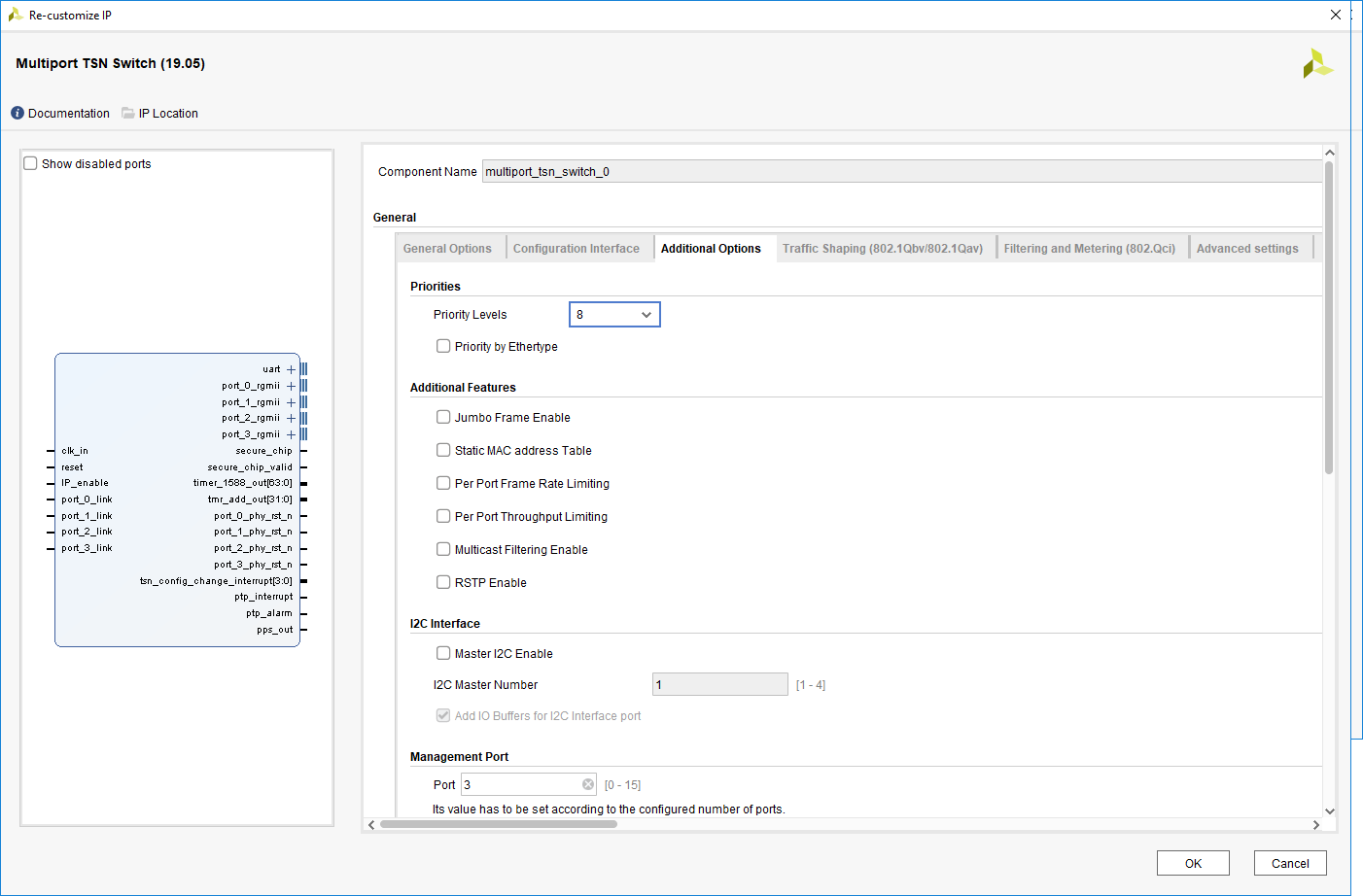
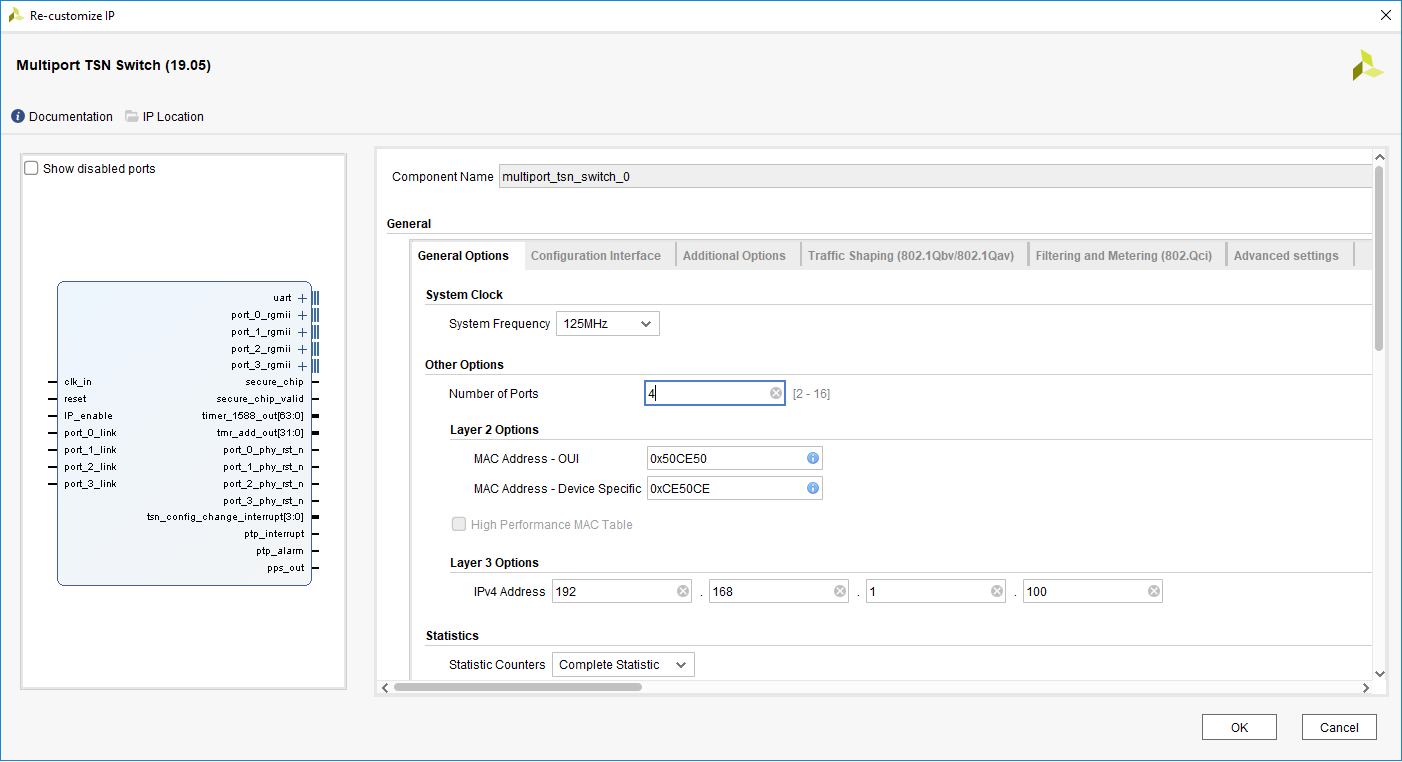
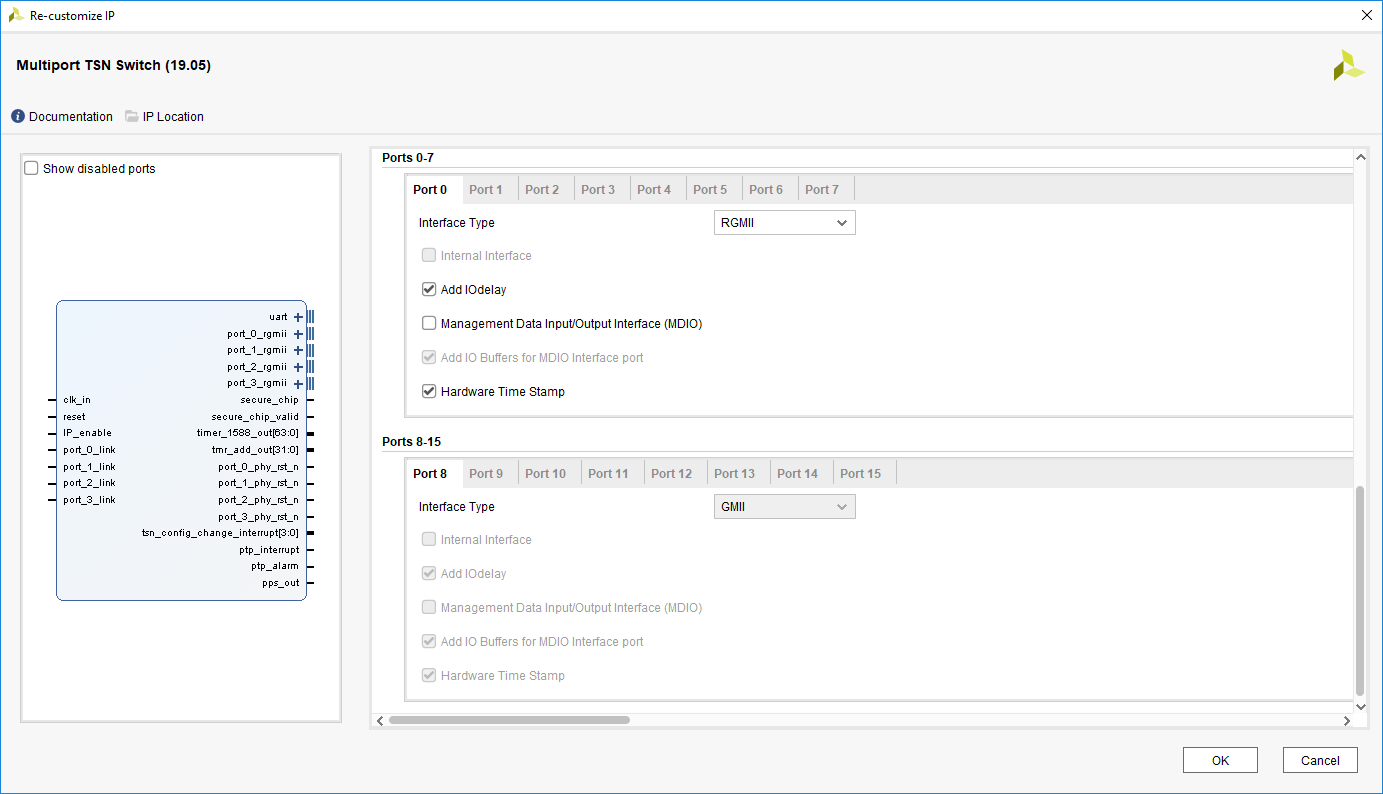
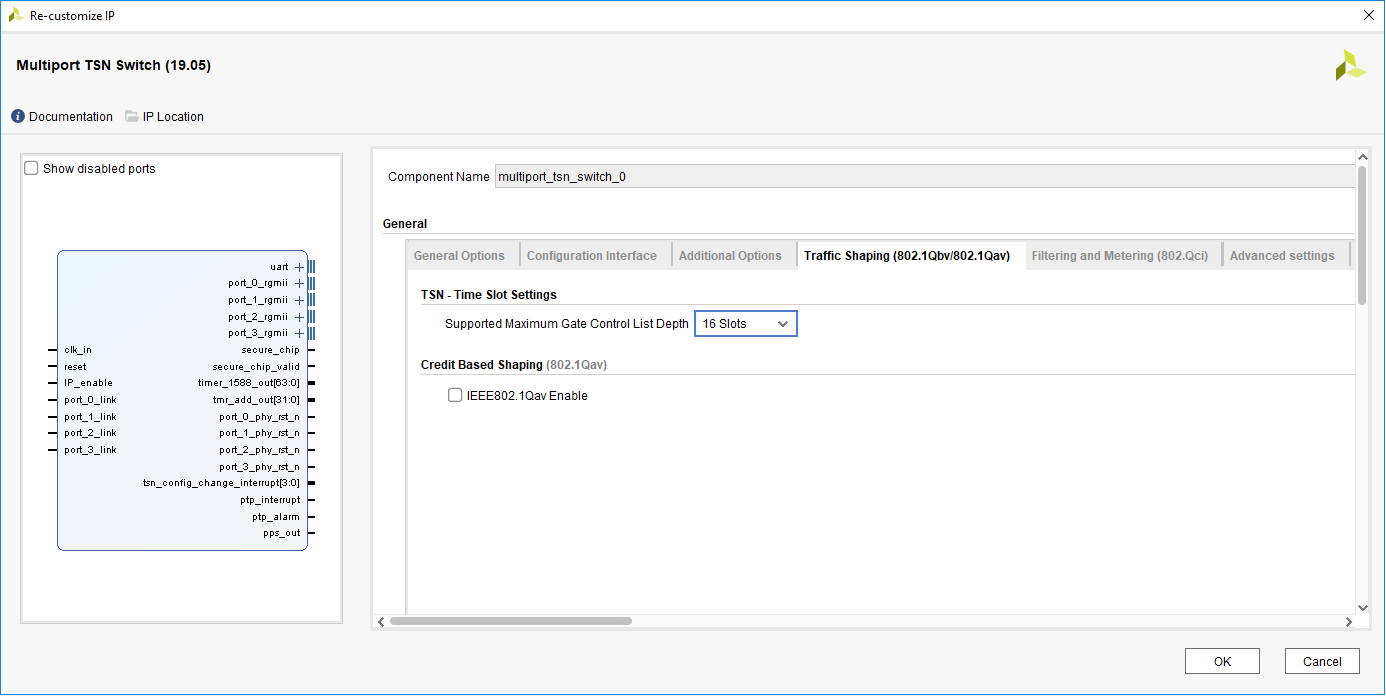
The Multi-Port Time-Sensitive Network (MTSN) Switch IP core is a flexible HDL code that readily generates TSN endpoint or bridge implementations. The IP core provides a rich set of generic parameters for optimal functional resource tradeoffs. Since a GUI interface is provided for the Vivado IPI, these common items can be configured at the VHDL level or graphically.
Our MTSN IP cores can be deployed in the following Xilinx families. You can find the different Xilinx product sheets and selection guides in the links below:
- 7 Series(Zynq, Spartan, Artix, Kintex, Virtex)
- Ultrascale(Kintex, Virtex)
- Ultrascale+(Zynq MPSoC, Kintex, Virtex)
- Versal ACAP
In SoC-e, we also develop systems on network modules or network modules. In this case, we offer the MTSN suite of solutions for customers who need an all-in-one solution to introduce time-sensitive networks into their devices.

connector
- Full-duplex 10/100/1000 Mbps Ethernet interface
- Up to 32 Ethernet ports
- MII/RMII/GMII/RGMII/SGMII/QSGMII Physical Layer Device (PHY) Interface
- Each port supports different data rates
exchange
- Dynamic MAC table with automatic MAC address learning and aging (up to 4096 entries)
- Static MAC table (up to 4096 entries)
- Giant Frame Management
- Broadcast/Multicast Storm Protection
- Rate limiting per port (broadcast, multicast and unicast traffic)
- Port-based VLAN support
Time Sensitive Networking
- IEEE 802.1AS (rev) for time synchronization layer
- IEEE 802.1Qav for Reserved Traffic
Credit-based shaper: bandwidth reservations can be configured for each traffic class - IEEE 802.1Qbv traffic for the program
Time-aware shaper: configurable number of timeslots - IEEE 802.1Qcc for Network Management
NETCONF is used to manage YANG data.
- IEEE 802.1Qci for Data Stream Filtering and Monitoring
- IEEE 802.1AB for LLDP (Link Layer Probing Protocol)
- IEEE 802.1w for Fast Tree Protocol Generation
- IEEE 802.1s for Multiple Spanning Tree Protocols
- IEEE 802.1CB for Frame Overlay and Reliability Elimination (*)
- Passthrough support for synchronized scheduling traffic (*)
- IEEE 802.1Qbu/802.3br for frame grabbing (*)
Low Level Configuration
- MDIO, UART, AXI4-lite or CoE management interface.
- Configuration over Ethernet (CoE): full access to internal registers via the same Ethernet link to the CPU
- Drivers are provided with the purchase of IP cores
Advanced Configuration
- RESTCONF/NETCONF YANG model support (CNC configuration)
- Advanced Configuration GUI
*: Future versions or interoperability testing to be determined
Keeping up with the times and innovating - Explore more potentials of TSN with Hongke
Time Sensitive Networking (TSN) is a new generation of network technology based on the evolution of the standard Ethernet architecture. It takes traditional Ethernet as the network foundation and provides a data link layer protocol specification for deterministic data transmission capability through mechanisms such as clock synchronization, data scheduling, and network configuration. Compared with traditional Ethernet, TSN can provide microsecond-level deterministic services, reduce the complexity of the entire communication network, and realize the convergence of information technology (IT) and operation technology (OT). With its precise clock synchronization, deterministic traffic scheduling, and intelligent and open operation and maintenance management framework, TSN can ensure the high-quality transmission of multiple business traffic in a common network, and it has both performance and cost advantages, and it is the development trend of the future network. This is the future trend of network development.
Currently, TSN technology has a high level of discussion in the automotive, industrial, rail transportation, and aerospace fields. As a non-vendor-bound real-time communication protocol, we believe that TSN technology has a good application prospect.
Welcome to contact us to explore and learn the integration of TSN technology with various industries, and actively promote more applications on the ground to jointly build a new world of intelligent interconnection.