

Search

Hongke's latest articles

HongKe

Lorem ipsum dolor sit amet, consectetur adipiscing elit. Ut elit tellus, luctus nec ullamcorper mattis, pulvinar dapibus leo.

Lorem ipsum dolor sit amet, consectetur adipiscing elit. Ut elit tellus, luctus nec ullamcorper mattis, pulvinar dapibus leo.

[HONGKE SOLUTIONS] Ending Low Survival Rates: Highly Efficient Cryopreservation of hiPSC-CMs and Scale-up of Cardiac Research with the Grant CRFT Liquid Nitrogen-Free Procedural Cooling Apparatus

In Human Heart Disease Modeling and Regenerative Medicine Research.Human induced pluripotent stem cell-derived cardiomyocytes (hiPSC-CMs) It is seen as a "critical tool" with great potential - it can simulate pathologies, screen for new drugs, and even provide a source of cells for heart repair. HoweverDifficulty in standardized production, large batch variation, functional impairment after freezing.The three major bottlenecks of hiPSC-CMs in scientific research and clinical translation have long been identified.

Important research recently published by the Kevin Kit Parker Group at Harvard University has shown that by optimizing Stirring Suspension Culture SystemIn this breakthrough study, we successfully realized the efficient and reproducible generation of hiPSC-CMs. In this groundbreaking study, theGrant CRF-1 Liquid Nitrogen Free Programmable Cryostat (now upgraded to Grant CRFT model), distributed by HONGKEI.It plays a central role in the cell cryopreservation process, dramatically improving the stability of experimental results and the potential for large-scale application.

01. Why is cryopreservation of hiPSC-CMs so critical?

Conventional monolayer culture of hiPSC-CMs suffers from poor scale-up, uneven nutrient distribution, and large batch-to-batch variation, while the old suspension culture strategy performs poorly in terms of differentiation consistency and cell quality assessment.

Bottlenecks in the refrigeration recovery sectorThe application of hiPSC-CMs is even more restricted. Past studies have shown that the survival rate of monolayer-differentiated hiPSC-CMs after cryopreservation is only about 60%, and the problems of cell shrinkage, abnormal electrophysiological properties, and deviation of drug response are frequently occurring, which makes the "cryopreservation" become the core obstacle hindering the large-scale application of hiPSC-CMs.

To address these challenges.Boston Children's Hospital and Harvard University teamA novel stirred suspension differentiation system has been developed, which is capable of stably generating ventricular muscle-based hiPSC-CMs with a functional purity of approximately 94%. However, if these cells are to be truly "usable and usable", it will be necessary to develop a new system that can be used to generate the cells in the future.Highly efficient and standardized cryo-recovery technologyIt is indispensable - after all, not every experiment can be "differentiated and used now", and a standardized cryopreservation process is a prerequisite for moving towards large-scale research and clinical application.

02. How to realize precise cryopreservation and efficient recovery of hiPSC-CMs?

In the "cell cryo-recovery" stage of the study, the research team explicitly used the Grant Liquid Nitrogen Free Programmable Cryostat(provided by Hongke), whose core function is the realization of thePrecise and controlled cooling processThe specific steps are as follows:

1️⃣ Cell Preparation
The differentiated and matured hiPSC-CMs were resuspended in a special freezing solution (STEMdiff™ Cardiomyocyte Freezing Medium) and dispensed into cryopreservation tubes.

2️⃣ Programmatic Cooling
The rate of cooling is controlled by Grant's liquid nitrogen-free programmable cryostat, which allows the cryotubes to be cooled steadily down to -80°C within 1 hour, avoiding rapid cooling that could result in ice crystals that could damage the cells.

3️⃣ Long-term storage
After cooling, transfer the cryotubes to -150°C liquid nitrogen for long-term storage.

4️⃣ Subsequent recovery
When needed, the tubes can be removed from liquid nitrogen and thawed quickly in a 37°C water bath before being used for subsequent functional experiments.

In a nutshell.Grant CRFT Liquid Nitrogen Free Programmable CryostatOur mission is to create a "gentle, controlled freezing environment" for hiPSC-CMs that maximizes cell viability and functional integrity.

end result: In the study, the Grant CRFT descaler was used to realize up to Cell Resuscitation Survival Rate of 94%The 60% level is significantly better than the 60% level of conventional methods and remains fully functional.

03. Grant CRFT Liquid Nitrogen Free Programmable Cryostat Core Benefits

🔹 Precise temperature control to avoid 'ice crystal killers'

The greatest risk of cellular freezing is "ice crystal formation", which can puncture cell membranes and cause irreversible damage. The Grant CRFT can be programmed to precisely control the rate of cooling (to a steady -80°C in about 1 hour), allowing cells to gradually dehydrate and avoid ice crystal formation, thus achieving the following Resuscitation survival rate of >94% (Taipan Blue Negative Test)It is much better than the traditional freezing method.

🔹 Standardize processes to eliminate batch variation

"Lot-to-lot consistency" has always been a challenge for the reproducibility of hiPSC-CMs. grant CRFT has been able to achieve this through the use ofFully automatic program controlThis design ensures that the freezing curves are exactly the same each time and avoids human error. This design ensured that as many as 14 iPSC cell lines and 25 differentiation experiments were able to consistently produce high purity cardiomyocytes forResearch Standardization and Clinical Cell ProductionProvides the technical basis.

🔹 Highly adaptable to support large-volume freezing and multi-scene applications

The research team utilized Grant CRFT to complete a single 380 mL cultivation volume of about 13.2 Billion sCMs The high efficiency of cryopreservation provides a stable cellular reserve for subsequent engineered cardiac tissue construction and high-throughput drug screening. This excellentCapacity Adaptability and Operational StabilityThis makes the Grant CRFT a key piece of equipment for moving hiPSC-CMs from laboratory research to large-scale production.

Conclusion

This study not only proves thatStirring Suspension Separation Systemadvantages in the production of hiPSC-CMs, highlighting even more theThe Core Value of Precision Cryogenic Equipment in Regenerative Medicine Research TransformationThe

Grant CRFT Liquid Nitrogen Free Programmable Cryostat With its performance of "high survival rate, no loss of function and batch consistency", it has become a powerful assistant for the research team to break through the bottleneck of scale-up.

For those who focus onStem Cell Research, Heart Disease Modeling and Regenerative MedicineThe Grant CRFT is not just a cryostat, but a bridge between laboratory and clinical applications for research institutions - it enables the ready reuse of high-quality hiPSC-CMs, which is a powerful support for disease modeling, drug discovery, and industrialization of cellular therapies.

Other Articles

Hongke Case

Hongke Solutions] Embedded AI Rise: How CAN Buses Reinvent Real-Time Control and Edge Intelligence?

Embedded AI is accelerating to the edge, and CAN bus is becoming a key communication architecture for connecting AI sensors and smart actuators due to its reliable, real-time and decentralized features. HTRC analyzes CiA insights, CANopen applications (including CiA 462), and the future PCAN XL toolchain, revealing the path to CAN + AI and industry opportunities.

Read more
Hongke Case

HONGKE Solution] HONGKE ArangoDB Graph Database - The Power of Graph Data: Financial Anti-Fraud from Rule Gaming to Relationship Insight

ArangoDB plays a key role in the financial anti-fraud space, helping organizations move from traditional rule-based approaches to deep relationship insights. In the face of increasingly complex and insidious fraud networks, traditional risk control systems have been overwhelmed by the lack of a global perspective, lagging rule updates, and challenges in cross-system integration, ArangoDB, through its unique native multi-model (graphs, files, vectors) capabilities, integrates fragmented customer information, transaction behavior, and device fingerprints to achieve an integrated analysis of "Relationships + Behavior + Patterns Identification". This not only significantly improves the speed and accuracy of fraud identification, reduces decision-making delays and maintenance costs, but also empowers financial institutions with the ability to proactively prevent and comprehensively understand risks, opening a new chapter in financial anti-fraud.

Read more
Hongke Case

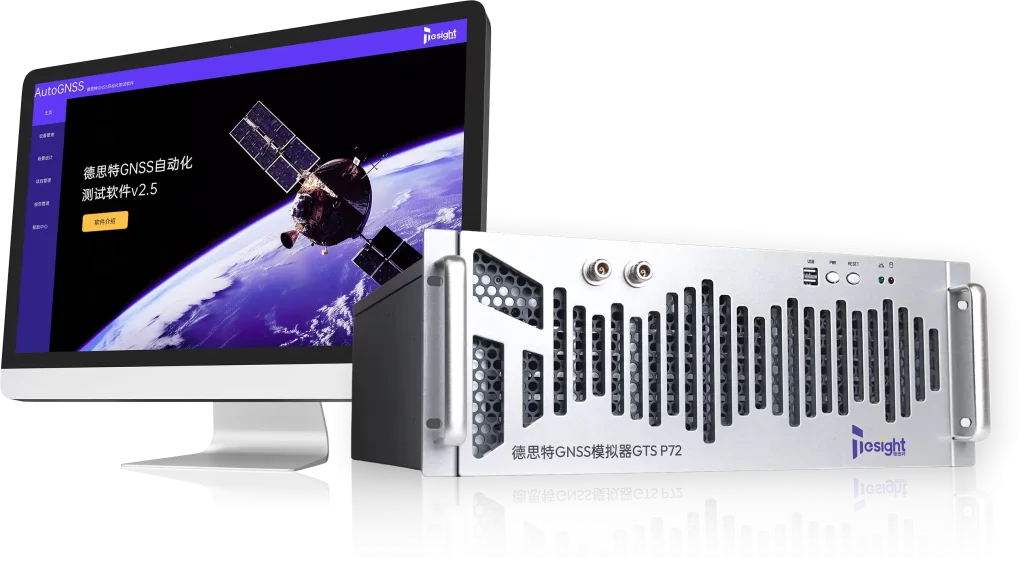
HONGKE Solutions] HONGKE GNSS Simulator - Faster, More Accurate and Repeatable Inspection Drone Testing

Hongke GNSS simulator accurately reproduces complex scenes such as urban canyons, mountainous areas, and farmlands in the laboratory through the software definition structure to completely verify the navigation accuracy, multi-constellation compatibility, interference resistance, RTK high-precision positioning, and multi-sensor fusion performance of the inspection UAV. Say goodbye to high-cost, low-repeatability field testing, and create an efficient, controllable and traceable UAV testing process.

Read more

Contact Hongke to help you solve your problems.

Let's have a chat