Hongke Case
【虹科案例】從60%到5%: Anglo-Eastern 如何用一年時間築起網路安全防線
Anglo-Eastern Ship Management 是一家管理超過750艘船舶的全球船舶管理公司。面對分布在世界各地的32000多名海員和不斷增長的網絡攻擊風險,公司通過部署 KnowBe4 HRM+ 安全意識培訓平台,實施持續的員工網絡安全教育和模擬釣魚測試。僅用一年時間,員工釣魚攻擊易感率從60%降至5%,培訓完成率超過90%,員工每天主動上報約200封可疑郵件。

 EN
ENLorem ipsum dolor sit amet, consectetur adipiscing elit. Ut elit tellus, luctus nec ullamcorper mattis, pulvinar dapibus leo.
Today, with the rapid development of automotive intelligence and vehicle networking technologies, theIn-Vehicle Communication System It is facing unprecedented challenges. Although the traditional CAN CC and CAN FD buses have been in service for many years, they are still in the process of being replaced by the traditional CAN CC and CAN FD buses.Bandwidth, data throughput and real-time performanceIt has been difficult to meet the needs of the new generation of smart cars.
(indicates contrast) CAN XL Technology (Controller Area Network XL) It revolutionizes in-vehicle communication - not only is it perfectly suited for smart cars, but it also powersFlying carsandIntelligent RobotsThe development of the application.
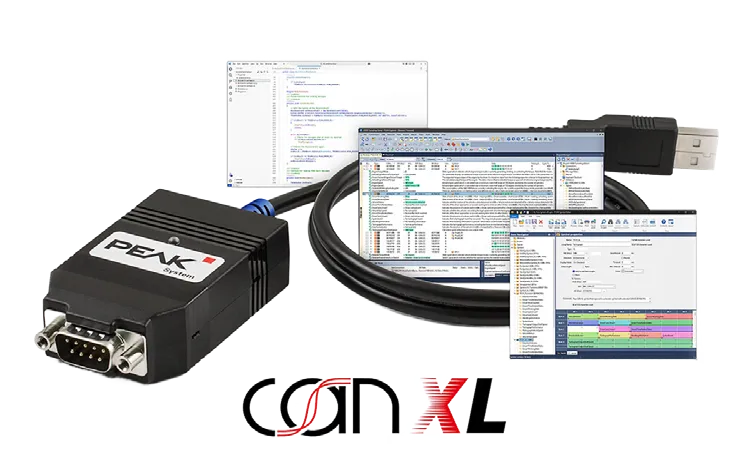
As a next-generation CAN network protocol, theCAN XL While retaining the core advantages of the CAN series, it has been upgraded with a number of innovations. It follows the original physical layer design as far as possible, and only adopts the new frame format.High compatibility and low escalation costsIt also brings multiple breakthroughs in performance.
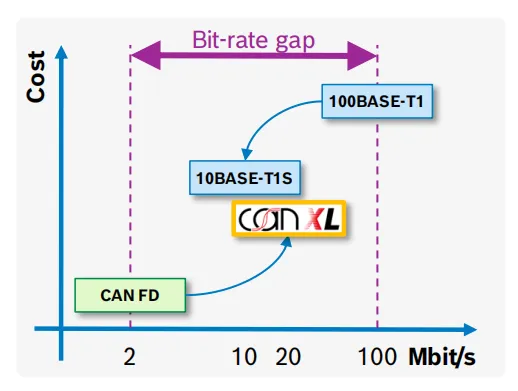
in terms of data transmission capacity.Data Field of CAN XL support sth. 1-2048 BytesThis is far more than the 8 Bytes of traditional CAN and the 64 Bytes of CAN FD, which greatly increases the capacity of a single transmission to meet the demand for transmission of large amounts of sensor data and high-resolution images in smart cars.
In terms of transmission rate, CAN XL'sArbitration zone rate ≤ 1Mbit/sbut (not)Data zone rate up to 1-20Mbit/sThe
Rates of up to 20 Mbit/s in a "CAN XL only" network and up to 8 Mbit/s in a "FD + XL hybrid" network.
CAN FD nodes automatically ignore CAN XL messages.The CAN XL node receives CAN XL and CAN FD messages at the same time, ensuring perfect compatibility and a smooth transition between the technologies.
In addition, CAN XL also supports the Virtual Bus (VLAN) concept from Ethernet with theEthernet TunnelingIt enables more flexible network hierarchical management and resource scheduling.
Double CRC verification (leading CRC and frame CRC) significantly improves data transmission accuracy and reliability, ensuring the integrity and stability of the frame header and the whole frame under high-speed transmission.
The CAN XL report (Frame) contains several key fields, each with a specific function, which together ensure efficient and accurate data transfer.

PID (Priority ID): Message ID with priority, 11-bit only, provides 2048 priorities (000h-7FFh) to ensure that high-priority data is transmitted first.
SDT (Service Data Unit Type): 8 bits to describe how CAN XL is compatible with other protocols (e.g. IEEE 802.3).
SEC (Simple/Extend Content)The 1 bit supports higher level functions such as bus safety and load balancing.
DLC (Data Length Code)The following table describes the length of the data area: 11 bits, which defines the data area length range of 1-2048 Bytes.
PCRC (Preamble CRC): 13 bits for header error detection to improve reliability.
VCID (Virtual CAN Network ID)The 8 bits, similar to a VLAN, can distribute messages to a virtual CAN network for enhanced QoS and traffic control.
AF (Acceptance Field): 32 bits for filtering and reception management, ensuring that the node processes only the necessary data.
DATA (Data Field): 1-2048 Bytes for carrying the actual data load.
FCRC (Frame CRC)The 32 bits, whole-frame message validation ensures data integrity.
CAN FD Light As a lightweight extension of CAN FD, it utilizes a master-slave structure (similar to LIN), supports 11-bit ID (no frame expansion), and up to 64 Bytes of data transfer.
Its application covers the scene:
Automotive lighting (headlights, taillights, ambient lighting)
Battery Management System (BMS Submodule)
Actuators / Sensors (HVAC, Ultrasonic, Wiper Control, etc.)
White Home Appliances and Low-Cost Control Scenes
CAN FD Light toLow Cost + High StabilityThe advantages make it an ideal choice for low and medium speed communication applications.
Have you encountered these two difficulties when you first contacted CAN XL?
❌ No adapted docking device
❌ Cannot find professional software to analyze the frame data.
HongKe PCAN XL Starter Bundle (HongKe PCAN XL Starter Bundle) Designed to address these entry pain points - a complete toolset for "hardware connectivity + software analysis" to help newcomers get started with CAN XL.
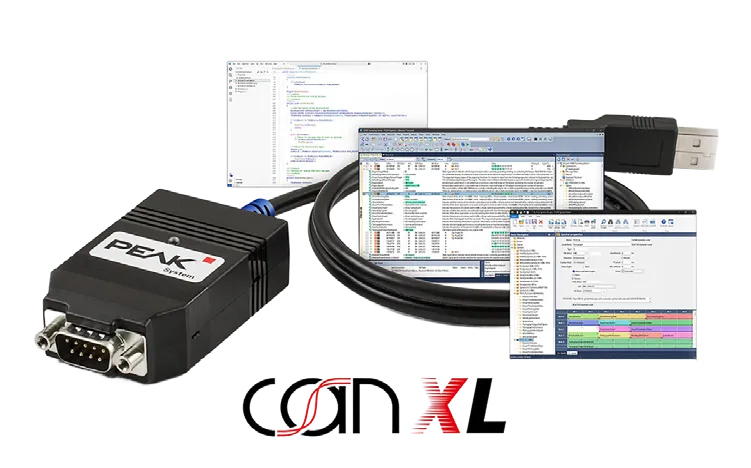
HongKe PCAN XL Kit of the core configuration is included:
USB to CAN XL interface: Stable connection, plug-and-play;
PCAN-Explorer 7 Professional Analysis Software (Sneak Peek Version): Efficiently analyzes frame data and visually displays communication status;
PCAN-Basic Programming Interface: catering to both beginner and advanced development needs.
Considering that CAN XL communication requires at least two nodes, HongKe offers Single Interface Version / Dual Interface Version Two sets:
A menu interface version is available for users who already have a CAN XL device;
For those who don't have existing equipment, a dual interface version is available to create a complete communication link right out of the box.
From development testing to real-world applications, the HongKe PCAN XL suite makes it easy for companies and engineers to accomplishTechnology upgrade from CAN FD to CAN XLIn addition, it also realizes a higher speed and more flexible in-vehicle communication architecture.
Anglo-Eastern Ship Management 是一家管理超過750艘船舶的全球船舶管理公司。面對分布在世界各地的32000多名海員和不斷增長的網絡攻擊風險,公司通過部署 KnowBe4 HRM+ 安全意識培訓平台,實施持續的員工網絡安全教育和模擬釣魚測試。僅用一年時間,員工釣魚攻擊易感率從60%降至5%,培訓完成率超過90%,員工每天主動上報約200封可疑郵件。

隨著《歐盟人工智能法案》(EU AI Act)逐步落地,AI治理正在從企業自律走向強制合規。根據法案第4條要求,AI系統的提供者和使用者必須采取措施確保員工具備足夠的AI素養(AI Literacy)。企業需要通過分層培訓體系、角色化課程設計以及持續追蹤機制,將AI知識轉化為可執行的合規流程。
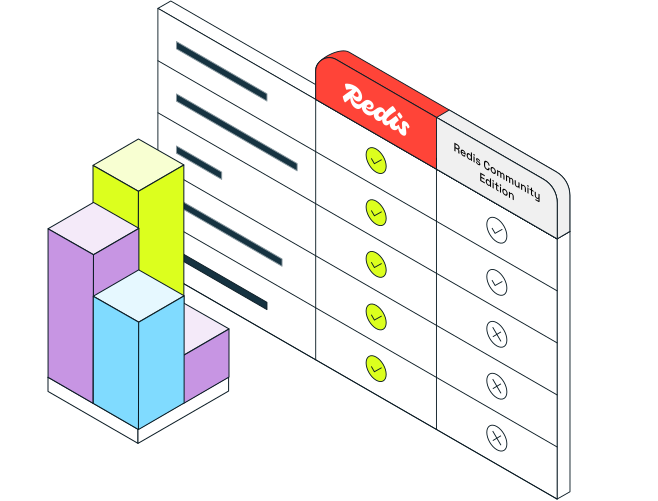
隨著香港《保護關鍵基礎設施(計算機系統)條例》實施,核心功能持續性與恢復時間目標(RTO)成為法定責任。Redis Enterprise 透過 99.999% 高可用架構、單秒級自動故障轉移與 Active-Active 多活技術,將恢復時間與恢復點目標趨近於零,在高負載下仍維持毫秒級延遲,幫助金融、電信與能源行業實現真正的零中斷數據合規。