3. Enable employees to report suspicious emails with a single click
When employees detect a suspicious request, they need a simple, clear channel for reporting it. KnowBe4’sPhish Alert Button (Phishing Report Button) This allows users to report suspicious emails directly from their inbox with a single click, and deletes the email from their inbox to prevent further exposure.
The more complex the reporting mechanism, the more likely employees are to ignore emails or delete them on their own. With one-click reporting, security teams can obtain leads more quickly, determine whether the same attack has been sent to other individuals, and take prompt action.
4. Implement personalized interventions based on risk
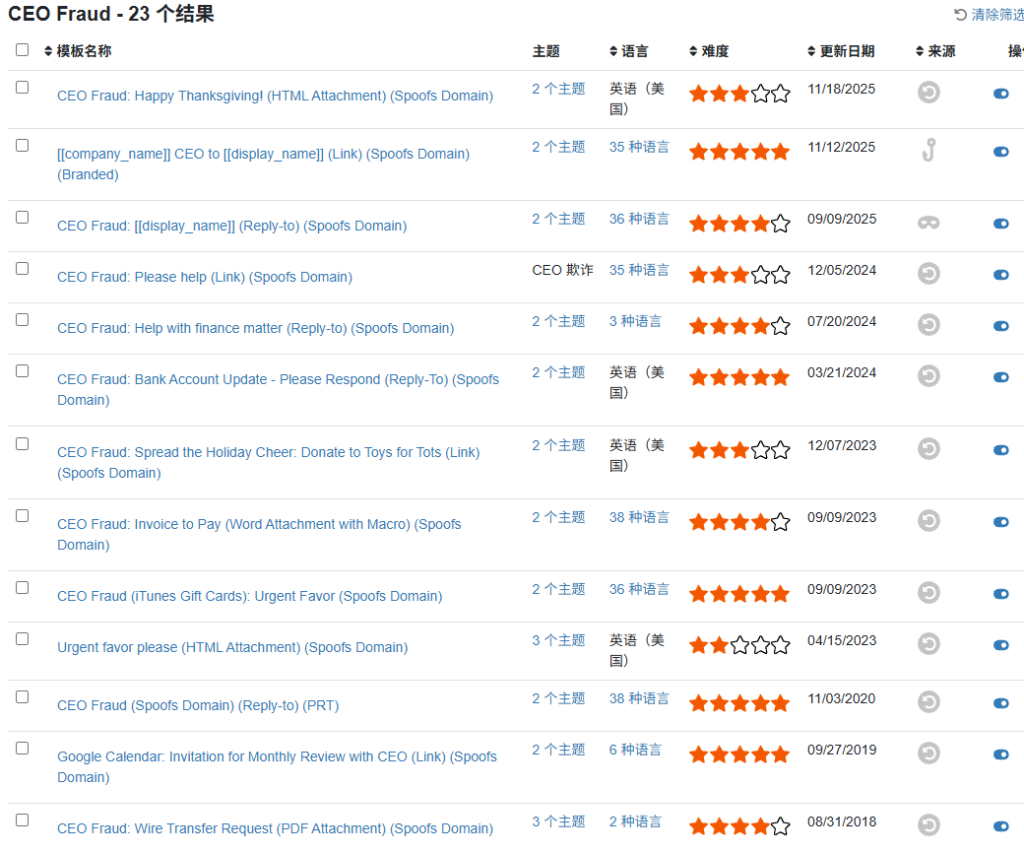
The risks faced by different employees vary. Companies can identify individuals and groups that require priority protection by considering their job roles, permissions, performance on simulation tests, and historical behavior.
KnowBe4'sAIDA (Artificial Intelligence Defense Agent) It can automatically select the most relevant and challenging simulation templates for each user based on their training history, phishing incidents, and performance metrics.
Finance, human resources, executive assistants, and IT administrators can receive more frequent, business-oriented training; employees who demonstrate higher risk in the assessments can receive targeted remedial training.
This prevents everyone from having to go through the same training repeatedly and allows security resources to be prioritized for the areas with the highest risk.
5. Enhancing Detection Using Technological Tools
In addition to employee training, KnowBe4 also provides a technical layer of protection specifically designed to combat BEC.KnowBe4 DefendPlatform UtilizationNatural Language Processing (NLP) Technology capable of detecting key indicators of BEC attacks:
-
Display Name Impersonation Detection: Attackers use display names identical to those of internal employees but from external domains, which makes them particularly difficult to detect on mobile devices.
-
Homophone Attack Detection: Identify instances where similar characters are used (such asc0mpany.comInstead ofcompany.com) counterfeit domain names.
-
Language Analysis: Look for “credibility statements” in emails that are intended to create a sense of urgency, demand confidentiality, or discourage the recipient from verifying the information through other channels.
-
Executive Fakes Test Results: Use NLP to determine whether an attacker is impersonating a trusted and important sender, such as a CEO.
Behavioral AIIt also checks for contextual signals, such as unusual writing styles or domain behavior, to detect zero-day phishing and payload-less BEC attacks—threats that static systems are prone to miss.
6. Assessing Whether Behavior Has Truly Changed
Companies should not merely count how many employees have completed the course; they should also focus on:
-
Can users identify emails from executives impersonating others?;
-
Was a secondary verification performed when an unusual payment request was received?;
-
Has the rate of suspicious email reports increased?;
-
Has the response rate to simulated BEC emails decreased?;
-
Has the risk scoring for high-risk groups improved?;
-
Do errors of the same type occur repeatedly?
Security awareness programs only truly take effect when employee behavior and business processes change.