Hongke Case
【虹科方案】從 Crunchbase 外洩事件看企業郵件安全:如何防止誤寄與敏感資料外流?
2026 年初 Crunchbase 證實發生重大資料外洩,再次證明一次成功釣魚即可引爆數百 MB 檔案外流。除了外部攻擊,企業更常忽略「郵件誤寄」與內部外傳風險。本文解析釣魚產業化趨勢、合規壓力(如 HIPAA、GDPR、GLBA),並提供整合式 DLP、行為式 AI 與郵件加密的三位一體防護策略,協助企業在資料寄出前即時攔截風險。

 EN
ENLorem ipsum dolor sit amet, consectetur adipiscing elit. Ut elit tellus, luctus nec ullamcorper mattis, pulvinar dapibus leo.
Today, with the rapid development of automotive intelligence and vehicle networking technologies, theIn-Vehicle Communication System It is facing unprecedented challenges. Although the traditional CAN CC and CAN FD buses have been in service for many years, they are still in the process of being replaced by the traditional CAN CC and CAN FD buses.Bandwidth, data throughput and real-time performanceIt has been difficult to meet the needs of the new generation of smart cars.
(indicates contrast) CAN XL Technology (Controller Area Network XL) It revolutionizes in-vehicle communication - not only is it perfectly suited for smart cars, but it also powersFlying carsandIntelligent RobotsThe development of the application.
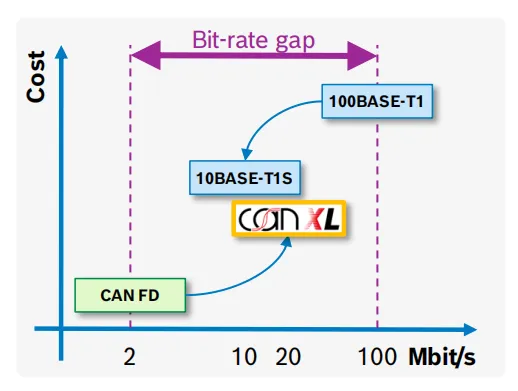
As a next-generation CAN network protocol, theCAN XL While retaining the core advantages of the CAN series, it has been upgraded with a number of innovations. It follows the original physical layer design as far as possible, and only adopts the new frame format.High compatibility and low escalation costsIt also brings multiple breakthroughs in performance.
in terms of data transmission capacity.Data Field of CAN XL support sth. 1-2048 BytesThis is far more than the 8 Bytes of traditional CAN and the 64 Bytes of CAN FD, which greatly increases the capacity of a single transmission to meet the demand for transmission of large amounts of sensor data and high-resolution images in smart cars.
In terms of transmission rate, CAN XL'sArbitration zone rate ≤ 1Mbit/sbut (not)Data zone rate up to 1-20Mbit/sThe
Rates of up to 20 Mbit/s in a "CAN XL only" network and up to 8 Mbit/s in a "FD + XL hybrid" network.
CAN FD nodes automatically ignore CAN XL messages.The CAN XL node receives CAN XL and CAN FD messages at the same time, ensuring perfect compatibility and a smooth transition between the technologies.
In addition, CAN XL also supports the Virtual Bus (VLAN) concept from Ethernet with theEthernet TunnelingIt enables more flexible network hierarchical management and resource scheduling.
Double CRC verification (leading CRC and frame CRC) significantly improves data transmission accuracy and reliability, ensuring the integrity and stability of the frame header and the whole frame under high-speed transmission.
The CAN XL report (Frame) contains several key fields, each with a specific function, which together ensure efficient and accurate data transfer.

PID (Priority ID): Message ID with priority, 11-bit only, provides 2048 priorities (000h-7FFh) to ensure that high-priority data is transmitted first.
SDT (Service Data Unit Type): 8 bits to describe how CAN XL is compatible with other protocols (e.g. IEEE 802.3).
SEC (Simple/Extend Content)The 1 bit supports higher level functions such as bus safety and load balancing.
DLC (Data Length Code)The following table describes the length of the data area: 11 bits, which defines the data area length range of 1-2048 Bytes.
PCRC (Preamble CRC): 13 bits for header error detection to improve reliability.
VCID (Virtual CAN Network ID)The 8 bits, similar to a VLAN, can distribute messages to a virtual CAN network for enhanced QoS and traffic control.
AF (Acceptance Field): 32 bits for filtering and reception management, ensuring that the node processes only the necessary data.
DATA (Data Field): 1-2048 Bytes for carrying the actual data load.
FCRC (Frame CRC)The 32 bits, whole-frame message validation ensures data integrity.
CAN FD Light As a lightweight extension of CAN FD, it utilizes a master-slave structure (similar to LIN), supports 11-bit ID (no frame expansion), and up to 64 Bytes of data transfer.
Its application covers the scene:
Automotive lighting (headlights, taillights, ambient lighting)
Battery Management System (BMS Submodule)
Actuators / Sensors (HVAC, Ultrasonic, Wiper Control, etc.)
White Home Appliances and Low-Cost Control Scenes
CAN FD Light toLow Cost + High StabilityThe advantages make it an ideal choice for low and medium speed communication applications.
Have you encountered these two difficulties when you first contacted CAN XL?
❌ No adapted docking device
❌ Cannot find professional software to analyze the frame data.
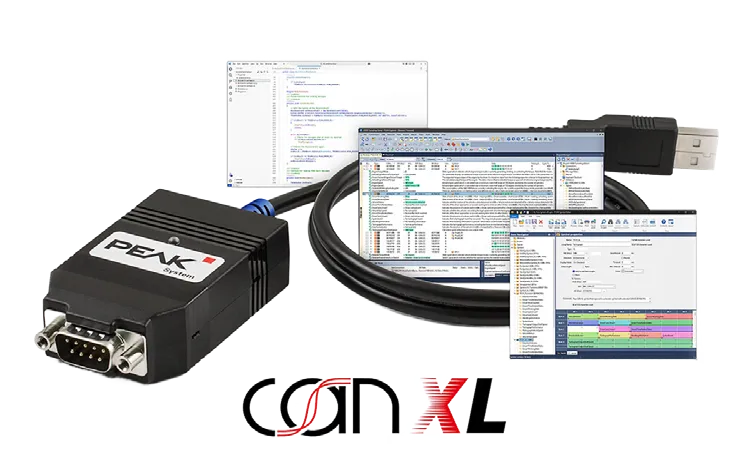
HongKe PCAN XL Starter Bundle (HongKe PCAN XL Starter Bundle) Designed to address these entry pain points - a complete toolset for "hardware connectivity + software analysis" to help newcomers get started with CAN XL.
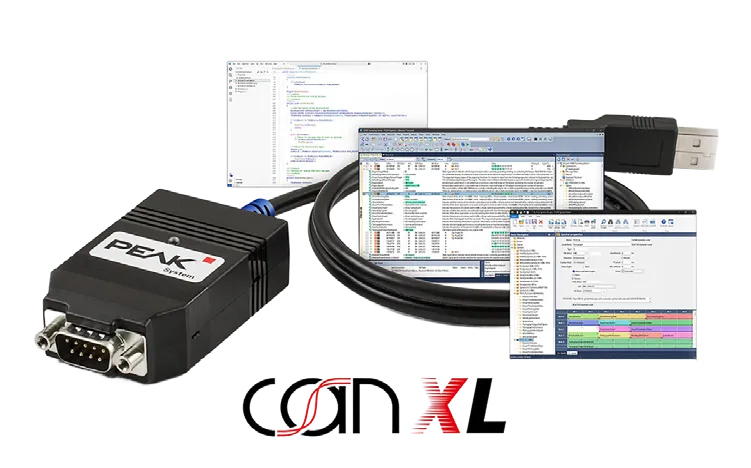
HongKe PCAN XL Kit of the core configuration is included:
USB to CAN XL interface: Stable connection, plug-and-play;
PCAN-Explorer 7 Professional Analysis Software (Sneak Peek Version): Efficiently analyzes frame data and visually displays communication status;
PCAN-Basic Programming Interface: catering to both beginner and advanced development needs.
Considering that CAN XL communication requires at least two nodes, HongKe offers Single Interface Version / Dual Interface Version Two sets:
A menu interface version is available for users who already have a CAN XL device;
For those who don't have existing equipment, a dual interface version is available to create a complete communication link right out of the box.
From development testing to real-world applications, the HongKe PCAN XL suite makes it easy for companies and engineers to accomplishTechnology upgrade from CAN FD to CAN XLIn addition, it also realizes a higher speed and more flexible in-vehicle communication architecture.
2026 年初 Crunchbase 證實發生重大資料外洩,再次證明一次成功釣魚即可引爆數百 MB 檔案外流。除了外部攻擊,企業更常忽略「郵件誤寄」與內部外傳風險。本文解析釣魚產業化趨勢、合規壓力(如 HIPAA、GDPR、GLBA),並提供整合式 DLP、行為式 AI 與郵件加密的三位一體防護策略,協助企業在資料寄出前即時攔截風險。

ArangoDB plays a key role in the financial anti-fraud space, helping organizations move from traditional rule-based approaches to deep relationship insights. In the face of increasingly complex and insidious fraud networks, traditional risk control systems have been overwhelmed by the lack of a global perspective, lagging rule updates, and challenges in cross-system integration, ArangoDB, through its unique native multi-model (graphs, files, vectors) capabilities, integrates fragmented customer information, transaction behavior, and device fingerprints to achieve an integrated analysis of "Relationships + Behavior + Patterns Identification". This not only significantly improves the speed and accuracy of fraud identification, reduces decision-making delays and maintenance costs, but also empowers financial institutions with the ability to proactively prevent and comprehensively understand risks, opening a new chapter in financial anti-fraud.
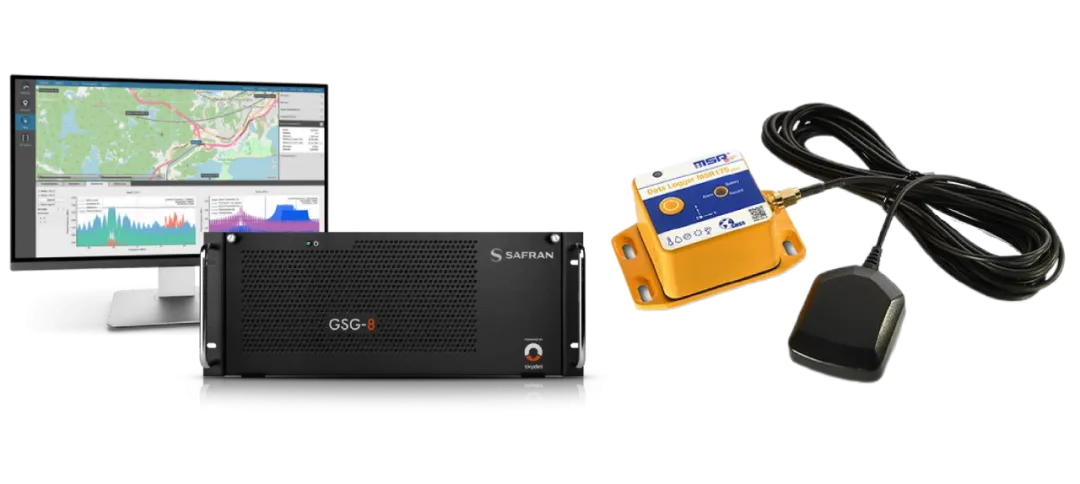
虹科 GNSS 模擬器協助 HK-MSR175Plus 運輸數據記錄儀完成定位精準度與抗干擾測試,提升物流運輸監測效率,支援全球路徑模擬與異常情境驗證。