
Search

Hongke's latest articles

HongKe

Lorem ipsum dolor sit amet, consectetur adipiscing elit. Ut elit tellus, luctus nec ullamcorper mattis, pulvinar dapibus leo.

Lorem ipsum dolor sit amet, consectetur adipiscing elit. Ut elit tellus, luctus nec ullamcorper mattis, pulvinar dapibus leo.

HONGKE SOLUTIONS] Safe guarding tips for temperature-sensitive drugs

We are in the midst of a new wave of unprecedented medical innovation. Modern medicine offers solutions to many diseases that were once considered difficult to cure or manage. For example, in the rapid development of the COVID-19 vaccine, the global medical science community has demonstrated an astonishing rate of progress that exemplifies the high level of advancement in medical technology today.

In reality, however, the transportation and storage of pharmaceuticals still faces many challenges. A large number of drugs are extremely sensitive to temperature changes and require strict temperature management to maintain their effectiveness during transportation and storage. In this article, we will discuss the best practices and methods for securing temperature-sensitive pharmaceuticals during transportation and storage.

When taking medication, many people only pay attention to whether the medication has expired or not, but neglect the fact that "temperature" is actually a key factor affecting the quality and efficacy of medication. Temperature is an indicator of molecular activity (e.g., molecular vibration), and the quality and chemical stability of drugs are affected by temperature changes.

For example:

  • The decomposition rate of protein drugs depends on time and temperature, the higher the temperature, the faster the decomposition.
  • Once insulin is frozen, it forms crystals and becomes completely ineffective.
  • Gels tend to melt at high temperatures and lose their original properties.

After the primary packaging (e.g., ampoule, vial, prefilled syringe) is complete, temperature becomes a major risk factor for the quality of the drug. For many temperature-sensitive drugs, even a slight increase or decrease in temperature above or below the standard temperature is enough to cause a decrease in efficacy or even complete failure of the drug, preventing it from achieving its therapeutic purpose.

01. What are temperature-sensitive drugs?

When exploring the temperature sensitivity of drugs, we will find that both general drugs and highly complex biologics have a common characteristic - "high sensitivity to temperature change".

Even if the appearance of a drug is seemingly unchanged, irreversible changes in the chemical structure or a decrease in biological activity may occur at unsuitable temperatures, ultimately affecting the efficacy of the drug and even jeopardizing patient safety. This is especially true for refrigerated and frozen drugs.

Refrigerated Drugs Required 2°C - 8°C (36°F - 46°F)
  • Insulin (Humulin, Novolin, Lantus, etc.)
  • Certain antibiotics (amoxicillin/clavulanic acid suspension)
  • Biological agents (e.g., monoclonal antibodies)

Refrigeration prevents degradation, chemical changes or loss of potency, especially for products that are highly sensitive to temperature fluctuations, such as vaccines, insulin and some antibiotics.

Requires refrigerated drugs -20°C (-4°F) or less
  • Varicella Vaccine, Herpes Zoster Vaccine
  • RNA / DNA samples
  • Blood and Plasma Products

High temperatures can damage the molecular structure, resulting in protein denaturation or reduced stability. Freezing allows the drug to enter a "dormant" state, effectively delaying the loss of activity.

02. How are drugs kept safe during transportation and storage?

Drug sensitivity is affected by two main factors:TimeandTemperatureMost drugs have a limited shelf life. Most drugs have a limited shelf life and require rapid transportation and proper storage under strict temperature control to avoid loss of potency.

1️⃣ Transportation

Clinical trial drugs often require refrigeration, freezing, rapid freezing/thawing, or special packaging to ensure the safety and efficacy of the transportation process. Temperature monitoring is a critical aspect of transportation and common methods include:

Smart Indicator

Temperature stickers, electronic labels or sensors allow real-time monitoring of temperature changes during transportation.
Its simple design helps to improve monitoring efficiency and reduce manual recording.

Long-term Electronic Indicator

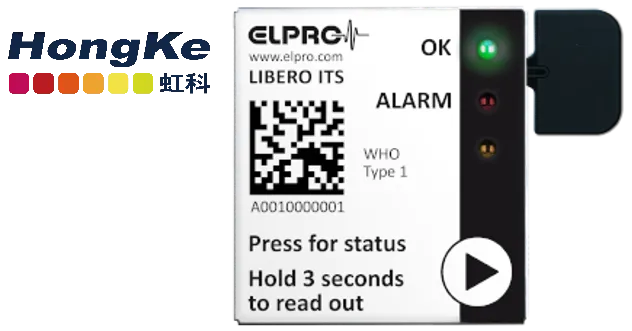
Such indicators allow continuous monitoring of temperature deviations throughout the product lifecycle (e.g. 1-3 years), e.g. LIBERO ITS uses a long-term monitoring mechanism, which allows for a more efficient allocation of the drug's "stability budget".

2️⃣ Storage

Refrigerator or freezer temperature monitoring

Upon arrival of the clinical trial drug, strict temperature control is required to ensure the safety of the drug for patients.
Appropriate temperature monitoring systems provide real-time audible and visual alarms and data logging.

3️⃣CRO Clinical Research Organization

If your team manages a large number of dispersed repositories or is constantly faced with data tracking challenges, CROs can provide clinical organizations with the Iris ELPRO solution.

The advantages of using the LIBERO series for monitoring:

  • Monitoring points can be quickly self-assembled for easy deployment.
  • All data is centralized in one system
  • Abnormal conditions are automatically notified and the source sensor is displayed.
  • Secure and easy to use, data can be uploaded easily.
  • Manage sensor alarm standards, battery status and calibration certificates

Other Articles

Hongke Case

HONGKE Solution] HONGKE ArangoDB Graph Database - The Power of Graph Data: Financial Anti-Fraud from Rule Gaming to Relationship Insight

ArangoDB plays a key role in the financial anti-fraud space, helping organizations move from traditional rule-based approaches to deep relationship insights. In the face of increasingly complex and insidious fraud networks, traditional risk control systems have been overwhelmed by the lack of a global perspective, lagging rule updates, and challenges in cross-system integration, ArangoDB, through its unique native multi-model (graphs, files, vectors) capabilities, integrates fragmented customer information, transaction behavior, and device fingerprints to achieve an integrated analysis of "Relationships + Behavior + Patterns Identification". This not only significantly improves the speed and accuracy of fraud identification, reduces decision-making delays and maintenance costs, but also empowers financial institutions with the ability to proactively prevent and comprehensively understand risks, opening a new chapter in financial anti-fraud.

Read more
Hongke Case

HONGKE Solutions] HONGKE GNSS Simulator - Faster, More Accurate and Repeatable Inspection Drone Testing

Hongke GNSS simulator accurately reproduces complex scenes such as urban canyons, mountainous areas, and farmlands in the laboratory through the software definition structure to completely verify the navigation accuracy, multi-constellation compatibility, interference resistance, RTK high-precision positioning, and multi-sensor fusion performance of the inspection UAV. Say goodbye to high-cost, low-repeatability field testing, and create an efficient, controllable and traceable UAV testing process.

Read more
Hongke Case

How to Identify Invisible Energy Wastage in Buildings - Panorama Intelligent Energy Management

The Energy SCADA system helps organizations identify invisible energy wastage in buildings through BMS building management, intelligent sensing, energy monitoring and data analysis to improve energy efficiency and meet energy saving and emission reduction requirements. Learn how Panorama SCADA enables smart buildings and efficient energy management.

Read more

Contact Hongke to help you solve your problems.

Let's have a chat