
Search

Hongke's latest articles

HongKe

Lorem ipsum dolor sit amet, consectetur adipiscing elit. Ut elit tellus, luctus nec ullamcorper mattis, pulvinar dapibus leo.

Lorem ipsum dolor sit amet, consectetur adipiscing elit. Ut elit tellus, luctus nec ullamcorper mattis, pulvinar dapibus leo.

HONGKE Solution] Toward High-Level Autonomous Driving Verification: HONGKE's High-Fidelity HIL Simulation Solution Reinvents Test Value

along with L3 / L4 Autonomous Driving TechnologyContinued development has seen a rapid increase in the density of sensor configurations in vehicles and an exponential increase in the complexity of test scenarios. At the same time, theHIL (Hardware-in-the-Loop) TestingWe are facing a number of key challenges, such as insufficient simulation fidelity of traditional solutions to meet the demands of high-end self-driving sensing systems; higher upgrade costs due to the complex system link structure; the increasingly obvious contradiction between insufficient edge scene coverage and low-latency data transmission; and the difficulty of the existing test framework to support the full-life-cycle testing and validation of high-level intelligent driving systems.

Against HIL system upgrades and new deploymentsTo fulfill the core needs of our customers, HONGKE launched High Fidelity End-to-End HIL Emulation Test SolutionThe The program is based on aiSim Simulation Platform (Simulation Platform)At the core, we provide the entire automotive industry chain, including foreign-invested car companies, traditional car manufacturers, intelligent driving technology companies and Tier-1 suppliers, with the following services Low-cost, high-confidence and high-efficiency testing supportBy virtue of By virtue of ISO 26262 ASIL-D Functional Safety CertificationThis solution has become an important choice for upgrading the intelligent driving test system, and has been proven on a large scale.

Solution Architecture and Core Technology

Software-driven HIL testing system

The HTC HIL solution is based on Open and flexible XIL architecture (X-in-the-Loop)The organization of theHigh fidelity scenes - Multi-mode sensors - High precision vehicle dynamics - ECU full link interactionThe core strengths of the "Closed Loop Test System" are summarized as follows Software Technical Competence and System Compatibility DesignThe

The program is delivered through Single High Performance Computing NodeIntegration of large-scale scene generation, multi-sensor co-simulation, and high-precision vehicle dynamics modeling with the innovative use of the "Vehicle Dynamics Modeling" (VDM) method.Dual Injection Path"It realizes direct transmission of sensor raw data, effectively avoids hardware interface redundancy and debugging complexity, and meets the needs of multi-domain controller (Domain Controller) collaborative testing, significantly shortening the system development cycle.

In terms of compatibility, the platform natively supports ASAM OpenDRIVE / OpenSCENARIO Industry standard for seamless integration ROS2, TROS, MATLAB / Simulink and other mainstream development environments, as well as adapting Continental, Sony, Horizon Robotics, NVIDIA The HIL system can be upgraded without re-constructing the test process. The existing HIL system can be upgraded without the need to re-construct the test process, so that a smooth transition can be realized.

In terms of computing power, the system uses Multi-GPU Parallel Architecture and Multi-node Deployment ModelsStable support 12 Camera + 9 Radar + 1 LiDAR Simulation requirements for high-density sensor configurations and above, to meet multi-source sensing fusion test scenarios, so that the efficiency of parallel testing of complex scenarios is improved. 50% and aboveThe

aiSim Core Technology

The core software of the program aiSim It was the first in the world to pass the ISO 26262 ASIL-D certificationIts technical capabilities provide comprehensive support for intelligent driving tests.

High-fidelity perceptual simulation

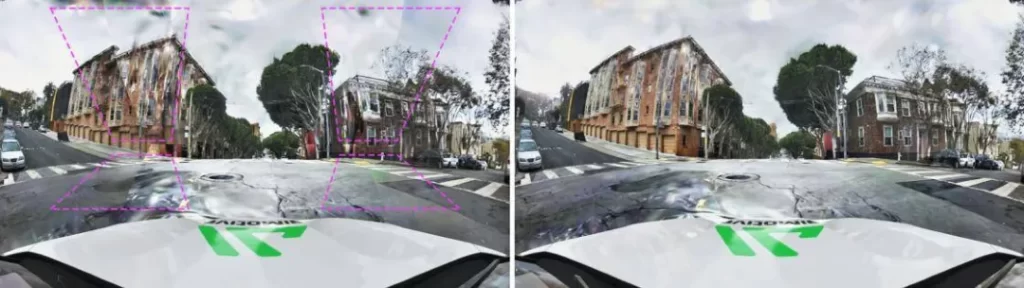
aiSim integrates various rendering technologies such as Rasterization, Ray Tracing and NeRF / 3DGS (3D Gaussian Splatting), and through independent research and development. GGSR Generic Gaussian Splash RendererOptimized RayTracing sensing rendering effectively solves the problem of large FOV lens consistency, and at the same time highly restores the environmental interaction effects such as reflection attenuation in rainy and snowy weather and radar multipath effect. Multi-target detection Recall value up to 64.68%The test results are close to the real road test level.

Low latency data transfer

Through PCIe DMA (Direct Memory Access) TechnologyThe system can realize GPU to injection boards. Low latency transmission of ≤1msI'm not sure if I'm going to be able to do that. Meanwhile 40Gbit/s channel bandwidthsupportable 4K High Resolution Sensor Data TransferStable output in rasterized rendering mode 30FPSThe system runs smoothly even in light-tracking mode. 14FPS(Ongoing optimization).

Smart Scene Coverage

Platform Support AutoGI Generative Scene Generalizationand Log2World Auto Scene Reconstructionand is compatible with Euro NCAP Regulatory Test Sceneup to Corner Case Edge Scene ExtractionThe Through Latin Hypercube Sampling with Bayesian Adaptive AlgorithmIt is also a good way to improve the test coverage and edge scene exploration efficiency.

Full Stack Model Support

Built-in Hi-Fi Camera, LiDAR, Radar, GNSS & Ultrasonic Sensor modeling to provide GT True Value Mode and Physical Level Simulation ModeIt also supports detailed parameter settings such as lens distortion, motion blur, and point cloud reflectivity. Vehicle dynamics model coverage 2D / 2D3 / 3D Models and Trailer ScenesIt can be used in a wide range of vehicles and test scenarios.

Core Strengths

The HIL simulation solution can help customers in Cost, Performance and SecurityThe balance is struck between the two.

exist Cost optimization aspectsThrough software architecture innovation and efficient utilization of hardware resources, the overall test cost can be reduced compared with traditional solutions. Approx. 30%It also avoids duplication of investment due to hardware iteration, making new deployments and system upgrades more cost-effective.

exist Testing Confidence LevelsCore Software aiSimPassed ISO 26262 ASIL-D Functional Safety CertificationThe standard deviation of lane line inspection error is The standard deviation of lane line inspection error is 0.33 (0.31 in real scenario)and through Kolmogorov-Smirnov test with KL dispersionMulti-dimensional validation indicators ensure that the simulation results are highly consistent with the real world.

exist System AdaptabilityProgram Support SiL / MiL / HiL Full Process TestingThe test mode can be seamlessly transitioned from rapid algorithm iteration to system-level validation, with the flexibility to switch between test modes to accommodate the entire lifecycle of automated driving system development.

exist In terms of engineering maturityThe program has been completed 2000+ hour calibrationcompatible NI PXI It also supports various communication protocols such as CAN / CAN FD and Ethernet (1000BASE-T1 / 100BASE-T1), and is ready for stable operation after deployment.

Application Cases

At present, the HIL simulation solution has been applied in many leading enterprises, and at the same time, the HIL simulation solution has been applied in many leading enterprises. National Vehicle Dynamics Co-simulation HiL BenchtopIt has also been successfully built, typical examples include:

NVIDIA Hyperion 8.1 L3 Closed Loop HiL Project
Support for multi-node distributed deployments with 12 Camera + 9 Radar + 1 LiDAR Sensor Configuration with GMSL / Ethernet The interface realizes sensor data injection, which meets the requirement of full-scene testing for high-level automated driving systems.

Horizon TROS Integration Solution
The system has built-in kinetic modeling through Ethernet + Proto ProtocolRealize low-latency communication with ADCU_J6E Domain Controller PlatformThe company has completed the verification of Lane Keeping and Adaptive Cruise Control (ACC).

National Vehicle Dynamics Co-simulation HiL Benchtop
Integration of a Dexter GNSS simulator (1000Hz iteration rate, 5ms delay) provides physical GNSS signal simulation to support verification of vehicle dynamics.

Qualcomm L2+ Smart Driving System Test
Through 4 Camera + 5 RadarConfiguration and dual GPU parallel simulation covering highway and urban roadway scenarios, complete with AEB, ACCClosed-loop testing of core functions such as

Conclusion

Overall.Hi-Tech HIL Simulation SolutionDriven by software capabilities at its core, it breaks through the hardware-dependent limitations of traditional testing architectures. The solution supports a smooth transition for existing system upgrades and provides a mature solution for new deployments that benchmarks against industry-leading standards.

depend on aiSim's technological foresight and engineering capabilityHONGKE can help customers across the entire intelligent driving industry chain to realize their goals in the system development and testing process. Cost, Efficiency and Confidence Across the BoardThe

Other Articles

Hongke Dry Goods

Rainbow Solutions] 2026 Procurement Committee Must-Have: Hong Kong Bank Redis Procurement Checklist (Open Source vs Enterprise Decision Framework)

The HKMA has repeatedly emphasized risk-based and principle-driven requirements in recent years, and has brought the risk of third-party IT solutions to the forefront, meaning that it's fine to turn on Maintenance or Redis Enterprise, but you have to prove that the "controls work" rather than that the "tool is famous".

Read more
Hongke Case

How to map analog signals to CAN/CAN FD telegrams? One Step Guide

Get an in-depth look at how to accurately convert analog signals such as temperature and pressure into CAN/CAN FD telegrams using a data acquisition module (DAQ). This guide covers quantization, packaging principles, and hands-on procedures for automotive electronics and industrial automation engineering development.

Read more

Contact Hongke to help you solve your problems.

Let's have a chat