Search

Hongke's latest articles

HongKe

Add your title text here

I. Introduction: Strategic Changes at the Data Layer under the Critical Infrastructure Legislation

Add your title text here

[Rainbow Section Program] How does CRA compliance work? Network Security Engineer's Perspective brings you to understand the logic of compliance and ONEKEY.Secure and Compliant PlatformsValue

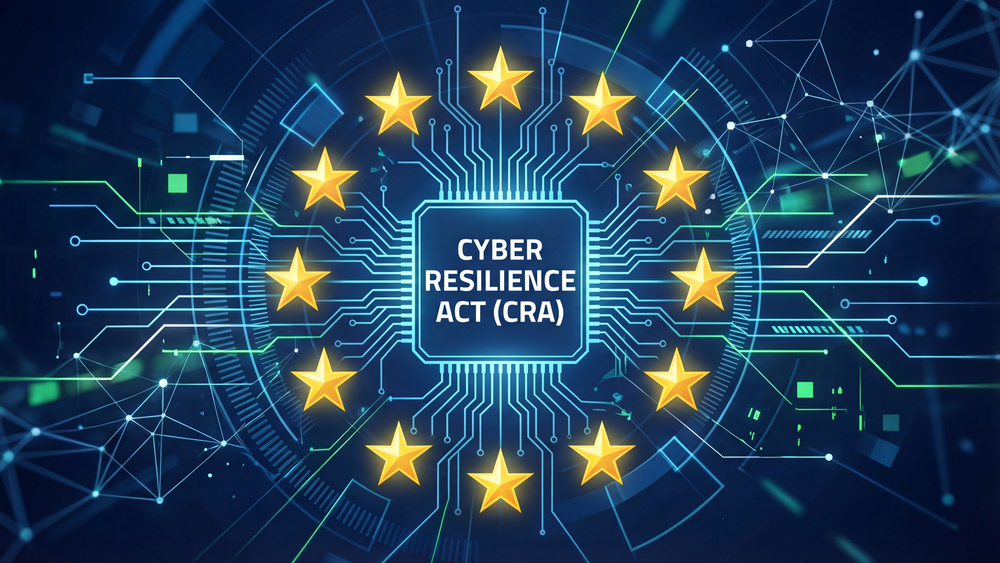
In terms of the actual project, the EU CRA (Network Firmware Act) has become a mandatory entry threshold for digital products to enter the European market, and non-compliance can be subject to a maximum fine of 2.5% of the global annual turnover. According to IBM statistics, products that do not establish a compliance system, the incidence of security incidents is 3.7 times higher than that of compliant products, and the average cost of a data breach is increased by US$1.8 million. CRA is aimed at manufacturers, importers, distributors, authorized representatives, and other subjects, and mandates full lifecycle security and supply chain transparency.

I. Industry Status: Real Compliance Pressure from CRA

From the perspective of engineering landing, enterprises are generally facing four major pain points:

(i) High cost of regulatory understanding

CRA clauses are complex and cover the entire life cycle, so manual clause-by-clause checking is prone to omissions and blurred compliance boundaries.

(ii) Non-transparent supply chain

A large number of products use third-party firmware, open-source components, and lack a complete software bill of materials (SBOM) to meet CRA transparency requirements.

(iii) The Vulnerability Response Requirement is Stringent

The CRA requires vulnerabilities to be reported within 24 hours and mitigated within 72 hours, which is difficult to achieve with traditional manual processes.

(iv) Difficulty in closing the loop on evidence of compliance

Regulators need a traceable, verifiable and reproducible chain of evidence, and manual documents have low credibility and high risk of failure.

These pain points are not scare tactics, but real engineering bottlenecks commonly encountered by companies in the CRA era.

Working principle and technical support

ONEKEY's core technology lines areFirmware depth inverse analysis + automated compliance engineThe overall structure is very suitable for CRA scenarios:
(A) Binary Firmware Fully Automated Analysis
Directly unpacks, partition recognizes, and extracts the file system from the firmware image without source code or compilation environment.
 
(ii) Component Identification and SBOM Auto Generation
Identify open source components, versions, license terms, and known CVE vulnerabilities to form a standardized SBOM list.
 
(iii) CRA Rule Engine Automation Comparison
Built-in CRA official requirements and assessment items, automatic completion of compliance check, risk classification, gap analysis.
 
(iv) Automatic archiving of the chain of evidence
The entire testing process, results and repair records are kept, forming a package of evidence that can be directly used for regulatory review.
 
In real projects, this framework can be realized:
  • Do in a few hours what you did in the last few weeks manually.
  • In-depth security analysis without source code
  • Compliance results are reproducible and verifiable
This is the key to its ability to steadily support CRA compliance.

Core Functions and Actual Engineering Value

(i)CRA Full Process Compliance Assessment
Automated assessment against CRA regulatory requirements, including product risk level, security documentation, vulnerability management, supply chain security, incident response, etc., and output of compliance gap reports, so that enterprises can clearly grasp "where they are out of compliance and how to improve".
 
(ii) Fully automated SBOM generation and management
Generate complete SBOMs directly from firmware binary with support for standard formats such as SPDX and CycloneDX, solving the CRA-mandated issue of supply chain transparency and avoiding compliance denials due to unknown components.
 
(iii) Firmware Depth Vulnerability Detection
Supports PNG detection and recognition:
  • Known CVE Vulnerabilities
  • Weak code, hard-coded gold key
  • Unsecure Communication Settings
  • Risks of unauthorized access, debugging port opening, etc.
Meet the CRA's mandatory requirements for vulnerability discovery, handling, and reporting.
 
(iv) Automatic generation and retention of compliance evidence
Automatically generates audit logs, detection reports, rectification records and evidence packages to meet CRA's requirements for traceability and certifiability, making it easier to respond to regulatory spot checks.

Implementation Paths and Best Practices

From the first-tier experience, CRA compliance can be steadily progressed in four steps:
 
  1. Firmware Upload and Basic Analysis - Upload firmware, ONEKEY automatically unpacks, recognizes components, and generates SBOM.
  2. CRA Compliance Assessment - The system automatically completes the compliance check, outputs risk items and recommends corrective actions.
  3. Bug fixes and iterative validation - Prioritize remediation of high-risk vulnerabilities, update firmware and redetect until compliance is achieved.
  4. Continuous monitoring and long-term compliance - Automatically rechecks for new firmware versions and vulnerabilities as they are revealed to maintain continuous compliance.
Actual case effectiveness:
IndicatorManual ComplianceUsing ONEKEY
Completion of Foundation Compliance1 to 2 months3 to 7 days
Vulnerability Discovery Efficiency ImprovementbenchmarkUpgrade 80% or above
Compliance Evidence CompletenessInsufficient 30%Approaching 100%
Judging from the engineering practicality: In the face of CRA's strong compliance, evidence, and timeliness requirements, the Algorithmic ONEKEY is a more stable, more efficient, and more reliable choice.

Frequently Asked Questions (FAQ)

Q: What is the main difference between Algorithmic ONEKEY and traditional vulnerability scanning tools? A: While traditional tools focus on vulnerability scanning, IZP's ONEKEY is based on CRA compliance objectives, providing compliance assessment, SBOM generation, firmware in-depth analysis, and evidence chain archiving in a single package, eliminating the need for multi-tools, and making it more suitable for meeting mandatory regulatory requirements.
 
Q: How long does it usually take to administer Esteem ONEKEY? A: With complete data, firmware analysis and compliance diagnosis can be completed in 1-3 days; for medium complexity products, rectification can be completed in 1-2 weeks and a compliance evidence package can be formed; and long-term compliance can be maintained with continuous monitoring.
 
Q: How can we ensure the quality and credibility of our compliance content? A: The platform is based on real-world firmware analysis, not manual reporting, and all results are traceable and reproducible. the CRA rule base is continuously synchronized with regulatory updates, and the output reports have an objective engineering basis and can directly support regulatory review and compliance verification.
 
The above is a technical analysis and practical advice on the logic of CRA compliance combined with many years of frontline practical experience. To be honest, CRA compliance is not a small difficulty, and the pain points faced by different enterprises are also different. If you encounter any difficulties in the process of CRA compliance, or are interested in AIJINGBAO ONEKEY products, please feel free to communicate and exchange ideas, and we will work together to explore solutions, share practical experience, and help you efficiently complete the CRA compliance, avoid compliance risks, and successfully open up the overseas market.

Other Articles

Hongke Dry Goods

Rainbow Solutions] 2026 Procurement Committee Must-Have: Hong Kong Bank Redis Procurement Checklist (Open Source vs Enterprise Decision Framework)

The HKMA has repeatedly emphasized risk-based and principle-driven requirements in recent years, and has brought the risk of third-party IT solutions to the forefront, meaning that it's fine to turn on Maintenance or Redis Enterprise, but you have to prove that the "controls work" rather than that the "tool is famous".

Read more
Hongke Case

How to map analog signals to CAN/CAN FD telegrams? One Step Guide

Get an in-depth look at how to accurately convert analog signals such as temperature and pressure into CAN/CAN FD telegrams using a data acquisition module (DAQ). This guide covers quantization, packaging principles, and hands-on procedures for automotive electronics and industrial automation engineering development.

Read more

Contact Hongke to help you solve your problems.

Let's have a chat