
Search

Hongke's latest articles

HongKe

Lorem ipsum dolor sit amet, consectetur adipiscing elit. Ut elit tellus, luctus nec ullamcorper mattis, pulvinar dapibus leo.

Lorem ipsum dolor sit amet, consectetur adipiscing elit. Ut elit tellus, luctus nec ullamcorper mattis, pulvinar dapibus leo.

HONGKE Solution] Radiotherapy Vision Positioning Application Based on High Precision Binocular Spread Spectrum 3D Camera

In the field of radiation therapy (radiotherapy), millimeter-level errors can mean damage to healthy tissue or missed photos of tumor sites. With the increasing sophistication of radiotherapy technology, the need for clinical verification of patient position and real-time monitoring has reached an unprecedented level. Conventional optical surface imaging systems are facing challenges in terms of accuracy, interference resistance, and adaptability to complex surfaces. In this paper, we will discuss how HongKe's vision positioning system based on a high-precision binocular scatter 3D camera can revolutionize the radiotherapy positioning process and enhance the safety and efficacy of cancer treatment.

Clinical Pain Points: The "Last Centimeter" Problem of Precision Radiotherapy

The core goal of radiation therapy (radiotherapy) is to deliver a high dose of radiation precisely to the tumor area while maximizing the protection of surrounding normal tissue. However, in the actual process of precision radiotherapy, thePositional management of patientsIt became a critical bottleneck:

  1. The gap between planning and execution:Although the treatment plan is based on advanced CT/MRI images, it is often difficult to achieve a perfect match between the patient's actual position and the planned position during the actual treatment.
  2. Offset between fractionated treatments:During the cycle of multiple fractionated radiotherapy, the patient's weight change, body organ displacement and other variables will easily lead to inconsistency between the anterior and posterior body positions.
  3. Micro-movements during treatment:Even if the initial positioning is extremely precise, the patient's breathing, unconscious micromovements, or slippage can cause displacement of the target area during treatment.
  4. Limitations of traditional methods:Laser lights and skin marking points are highly dependent on the experience of medical personnel and have limited accuracy, while conventional surface optical systems are susceptible to interference from ambient light and less adaptable to complex surfaces.

Adverse consequences: Postural deviations can cause radiation dose distribution to deviate from the original plan, which in turn can reduce tumor control rates or significantly increase the risk of complications in normal tissue.

Technology: The Core Advantage of High-Precision Binocular Spotting 3D Camera

With its unique imaging principle, binocular scattering 3D camera technology is an ideal solution for radiotherapy localization pain points. The core workflow of HongKe's solution is to actively project a high-density, high-contrast laser scatter pattern onto the target area, and two high-precision calibrated cameras simultaneously capture the surface-modulated scatter image from different angles. Finally, based on the triangulation principle and advanced stereo matching algorithm (utilizing the uniqueness of the scatter pattern), the system quickly calculates and generates high-density three-dimensional point cloud coordinates of the object surface.

The technique has significant advantages for radiotherapy localization:

  1. Superior precision and Robustness:Its core value lies in its ability to provide sub-millimeter (typically better than 0.1mm @1m) high-precision surface point clouds, which are far more accurate than traditional optical methods, perfectly meeting the stringent millimeter positioning requirements of radiotherapy. At the same time, the active projection of the specific scatter pattern gives the system a strong anti-interference ability, which can effectively overcome the influence of complex ambient light in the operating room or treatment room (such as surgical shadowless lamps, treatment room lighting), to ensure stable and reliable operation in the real clinical environment.
  2. Label-free, full-field, high-speed motion capture:The system utilizes contactless measurements to obtain a complete three-dimensional view of the body surface without the need to stick skin markers on the patient's body. This not only avoids the cumbersome process brought about by additional operations, but also enhances patient comfort. The entire area of interest (e.g., chest, abdomen, head and neck) can be covered in a single shot, providingUp to 5 megapixel high resolutionThe system is rich in detail. The maximum frame rate of the system is up to 30fpsIt is capable of real-time capture of breathing and other dynamic movements, realizing real-time three-dimensional imaging and providing strong support for dynamic monitoring during treatment.
  3. Excellent surface adaptability:The technology has excellent 3D reconstruction capability for complex and irregular surfaces such as skin and medical body molds, which can truly and completely reflect the patient's body shape information, effectively overcoming the limitations of traditional methods in surface reconstruction.
  4. Provides free SDK for vision fusion of multiple 3D cameras:When a project requires a large field of view coverage and a single camera's field of view is not enough to meet the demand, developers can use the multi-phase calibration fusion function integrated in the UI interface of the software to unify the field of view of multiple cameras under the same coordinate system, thus perfectly realizing the field of view expansion. This provides great convenience for medical equipment developers in application development.

System Construction: From 3D Data to Precise Positioning

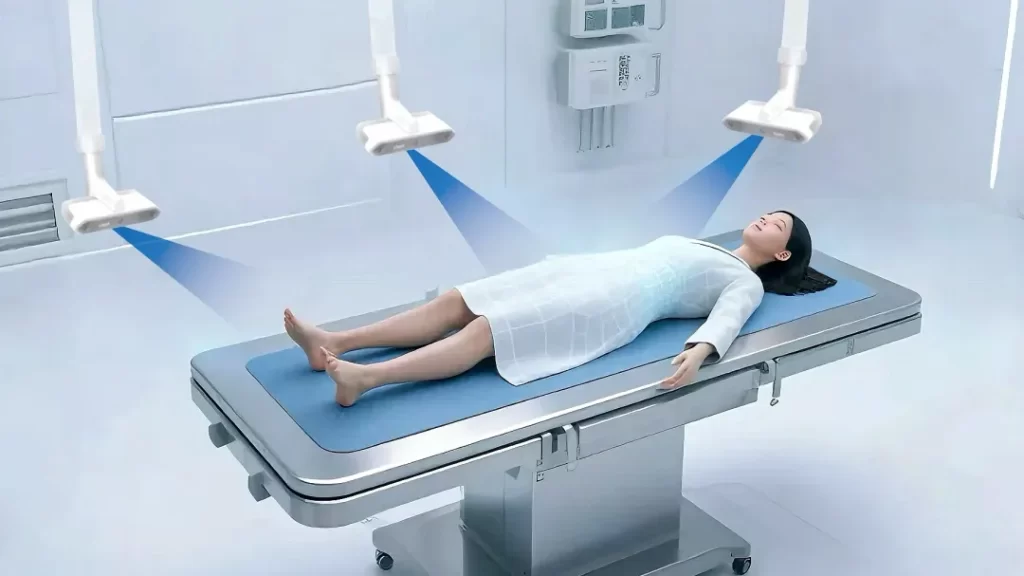
Radiotherapy vision positioning systems based on binocular scatter 3D cameras have a clear architecture. The hardware core is a high-precision binocular scatter 3D camera module, which is usually mounted on a rack on either side or above the treatment bed, and its field of view needs to cover the patient's treatment area completely. Key performance indicators include accuracy, resolution, field of view (FOV), working distance and frame rate. The equipment needs to be crash and radiation resistant (or easily shielded) for safe integration into the radiotherapy room environment, with a high performance computing unit responsible for real-time data processing.

At the software level, the core point-and-cloud alignment algorithm is first performedRigid alignmentThe optimal spatial transformation (including translation and rotation deviations) between the current patient's body surface point cloud and the reference point cloud extracted from the outer surface of the planned CT image (or the reference surface model created at the time of the first treatment) is accurately calculated, which is the basis for the accurate reproduction of the "planned body position".

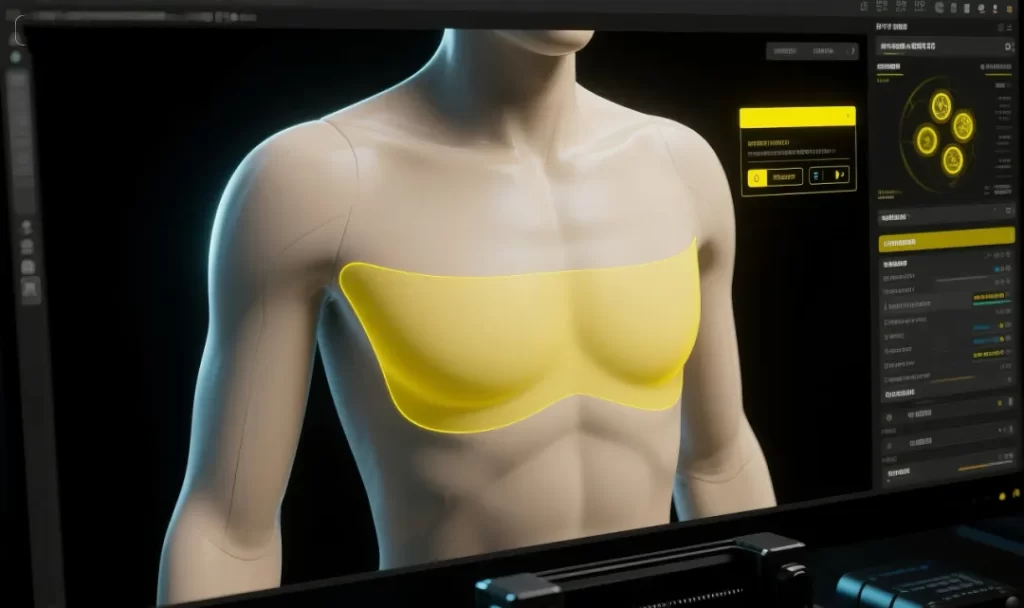
For more advanced clinical applications, the system can useDeformation Alignment TechnologyThe system is designed to handle non-rigid deformations due to respiration, organ motion, or weight changes to provide more detailed information about the displacement field. The system interface visually displays the translational (ΔX, ΔY, ΔZ) and rotational (Roll, Pitch, Yaw) deviations of the patient's current position from the reference position.

In addition, the safety monitoring and alarm function supports the setting of specific displacement thresholds to instantly monitor any patient movement during treatment. Once a displacement above the safety threshold is detected, the system triggers an audible and visual alarm and sends a signal to the gas pedal control system to pause the radiation exposure. The Data Management and Reporting Module automatically records positional error data before each treatment, movement trajectories during treatment, and generates standardized quality control (QC) reports to provide an objective basis for continuous improvement by the medical team.

Layout of Radiological Medical Body Positioning System
Human Chest Positioning
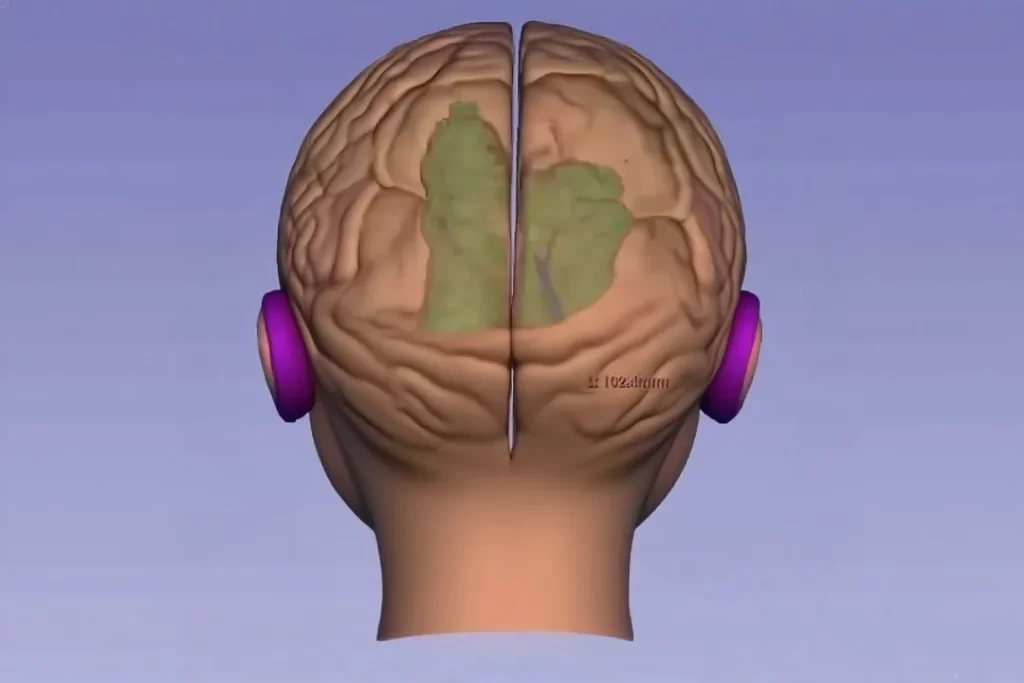
Three-dimensional localization of the human brain

Typical application cases: practice in precision radiotherapy

The radiotherapy center of a large oncology hospital introduced a vision positioning system based on binocular scatter 3D camera (core camera parameters: accuracy ±0.1mm @1m, FOV 900x866mm @1m), which was successfully applied to the position management of Nasopharyngeal Carcinoma Intensity-Modulated Radiation Therapy (IMRT) patients.

  • The pendulum reference is established: At the time of the patient's planned CT scan, a 3D camera is used simultaneously to capture point cloud data of the patient's body surface (face, neck) under immobilization devices (e.g., thermoplastic wrap + headrest), which is stored as a "reference surface model" in the Treatment Planning System (TPS).
  • Initial Precision Positioning: Once the patient is lying on the treatment bed and immobilized, the laser lights in the radiotherapy room are used for initial positioning. The 3D visual localization system is then activated: the camera quickly takes a picture of the patient's current body surface and instantly reconstructs the point cloud. The rigid alignment of the current point cloud with the reference model in the TPS is accomplished within seconds. Based on the system's precise and quantitative guidelines, the medical staff can fine-tune the position of the treatment bed (translation and rotation) until all deviations are smaller than the preset thresholds (e.g. ±1mm / ±1°).
  • Treatment is monitored in real time: During treatment beam (ray) irradiation, the system remains in continuous operation (in low dose mode or intermittent sampling) to monitor the patient's body surface position in real time. Once a displacement beyond the safety threshold is detected, an interlock mechanism is triggered to suspend the gas pedal irradiation and alert the healthcare personnel through an audible and visual alarm.

Application Advantage Highlights:

  1. Accuracy and efficiency are both improved:With the assistance of the system, the final swing residual error can be stabilized at a very low level of <1mm / <1°, much better than the traditional swing method. The alignment calculation is fast and intuitive, and the adjustment process has a clear quantitative basis, so that the average swing time is shortened by about 40%.
  2. The safety of the treatment is strongly guaranteed:The real-time motion monitoring function can effectively capture unintentional patient movements (e.g. coughing, slight slipping) during treatment and prevent radiation dose distribution errors caused by positional deviations. Clinical records show that approximately 15% patients triggered a displacement alarm during a single treatment session, emphasizing the importance of this feature for clinical safety.
  3. Well-established data management:The system automatically records the positional error before each treatment and the maximum displacement data during the treatment process, providing a solid objective and quantitative basis for personalized treatment evaluation, optimized design of fixation devices and clinical academic research.
  4. A better, more comfortable patient experience:The label-free, non-invasive measurement greatly enhances patient comfort and compliance during radiation therapy.

V. Outlook and Conclusion

The high-precision binocular scatter 3D camera technology provides a revolutionary solution for body surface localization and monitoring in the field of radiation therapy. The technology combines the core advantages of non-contact, sub-millimeter high accuracy, strong interference resistance, and full-field high-speed dynamic measurement, effectively breaking through the bottleneck of traditional methods in terms of accuracy, efficiency, and reliability.

By deeply integrating into the whole process of radiotherapy, HongKe's system not only greatly improves the accuracy and efficiency of initial positioning, but also builds a solid defense for patient safety through real-time dynamic monitoring, and accumulates valuable objective and quantitative quality-control data for medical institutions.

With the continuous evolution of medical technology and its synergistic innovation with adaptive radiotherapy (ART), artificial intelligence (AI) and other cutting-edge fields, vision localization system based on binocular scatter 3D camera will surely become an indispensable core pillar in the system of precision radiotherapy, contributing a key force in enhancing the effectiveness of cancer treatment and improving the quality of patient's survival.

Other Articles

Hongke Case

AI Recognition and AR Workflow: Reinventing PCB Quality Assurance and Digital Factory

Facing PCB Quality Inspection Yield Bottleneck? HongKe HongKe provides AR standardized workflow + AI recognition solution to reduce visual inspection rate by 50% and shorten new employee training to 1 day. Applicable to Hong Kong and Southeast Asia electronics manufacturing transformation, helping you realize efficient quality control and quality traceability.

Read more

Contact Hongke to help you solve your problems.

Let's have a chat