
【虹科案例】每年節省200萬元的品質損失!海信日立如何用MSR振動記錄儀發現大型設備運輸隱憂?
虹科MSR衝擊振動記錄器可為物流運輸、軌道運輸、電力能源、工業自動化等領域提供高精度、可靠的衝擊振動監測解決方案。透過引入虹科MSR165衝擊微型振動記錄儀,海信日立成功建構了一套科學的數據監測體系,實現了對設備運輸環境的精準量化與產品設計的持續優化。
Lorem ipsum dolor sit amet, consectetur adipiscing elit. Ut elit tellus, luctus nec ullamcorper mattis, pulvinar dapibus leo.
It is a time of great change driven by data. From ADAS to AD, every technological leap involves the collection, annotation and analysis of massive road data. Taking image data as an example, they are valuable resources for training and optimizing perception algorithms and enhancing system safety.
However, when the plan was to send this data to the overseas R&D team, the challenge of "data compliance" came to the fore.
For any automotive company or technology provider with global expansion plans, cross-country R&D and testing is often unavoidable, such as verifying the robustness of algorithms in different traffic environments and climates. However, when real-world image data is used, it often captures a large amount of data. Personally Identifiable Information (PII)The following are some examples of this: facial features of pedestrians, clearly recognizable license plate numbers, and so on.
This is the heart of the challenge. When cross-border transfer of data becomes a new R&D requirement, companies are stepping into a "high-risk zone" of global privacy regulations.

Since the European Union's General Data Protection Regulation (GDPR) set a milestone in global data protection, privacy legislation reforms have begun globally, with China's Personal Information Protection Law (PIPL) being one of the key components. Although these laws and regulations are all aimed at protecting personal information, they are not as comprehensive as the PIPL. Definitions, principles and cross-border rules The differences between the two are a huge challenge for global automakers.
Take GDPR and PIPL as an example:
Data Definition Scope
Article 4 of the GDPR: The definition is extremely broad and includes "any information relating to an identified or identifiable natural person", such as a face in image data or a car license plate number.
PIPL Article 4: Similarly broad, but explicitly excludes "anonymized information" to provide direction on data compliance.
Handling Principle Requirements
Article 5 of the GDPR: establishes six core principles, the first of which is "lawfulness, fairness and transparency".
PIPL Articles 5 and 6: emphasize the principles of "lawfulness, propriety, necessity, good faith" and "minimization of impact".
Cross-border Data Transfer Mechanism
GDPR Chapter 5: Centering on 'Adequacy Recognition' and Standard Contractual Clauses (SCCs).
PIPL Article 38: Adoption of the "security assessment, certification, and standard contract" option; Article 40 requires large-scale data processors to undergo a national security assessment.
This "one country, one policy" pattern forces automakers to refine their global data flows. Failure to do so may not only affect business expansion, but also face the possibility of Large fines and reputational riskIn the age of data sovereignty. In the age of data sovereignty, embracing compliance and utilizing cutting-edge technologies such as anonymization is a must for business survival and development.
If the personal identifying information in the data can be removed completely and irreversibly through technical means, then the data can be legally circulated freely across borders for AI training and algorithmic analysis.
But here is the problem:How to protect privacy while retaining the value of data for R&D?
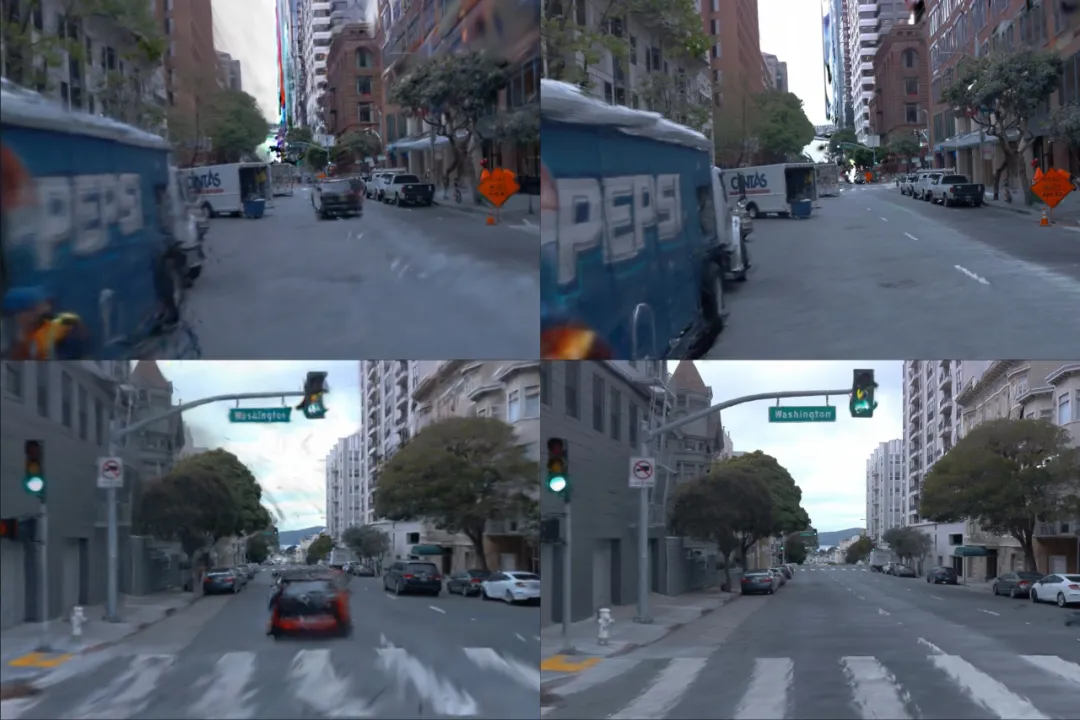
To this end, theHi-Tech Brighter AI Proposed an industry-leading AI-driven anonymization solution.
Precision Blur
Automatically recognizes faces and license plates in images/videos.
Only the core area is treated, preserving the integrity of the background.
Provide high quality data base for AI training and machine learning.
Full Body Blur
To further recognize the whole body contour of the pedestrian.
Prevents identification by indirect information such as posture, clothing, and tattoos.
Suitable for sensitive scenes: public surveillance, campus testing, etc.
Deep Natural Anonymization Technique (DNAT)
Leveraging generative AI to replace faces and license plates with new, natural images instead of traditional mosaic masks.
Irreversible, truly anonymous: Generate unique and randomized images to ensure compliance with global regulations.
Retention of Properties: Gender, race, emoticons, and accessories (glasses, etc.) remain.
AI Training Friendly: In tasks such as target detection and semantic segmentation, the performance is almost the same as the original data.
Stricter and more harmonized data laws and regulations are the order of the day around the world. For enterprises competing for autonomous driving, it will be Data Compliance Shifting from a "cost center" to a "strategic advantage" will be the key to victory.
With flexible deployment modes (cloud, local, edge computing) and generative AI anonymization, Brighter AI provides a path for global automotive companies and suppliers to A clear, compliant and forward-looking path to data complianceThe

虹科MSR衝擊振動記錄器可為物流運輸、軌道運輸、電力能源、工業自動化等領域提供高精度、可靠的衝擊振動監測解決方案。透過引入虹科MSR165衝擊微型振動記錄儀,海信日立成功建構了一套科學的數據監測體系,實現了對設備運輸環境的精準量化與產品設計的持續優化。

虹科 PCAN Router 提供 CAN / CAN FD 通訊橋接解決方案,支援跨 EE 架構信號轉換,無需修改 ECU 軟件即可完成 POC 驗證與測試整合,適用於汽車電子、自動駕駛與車載系統開發。

虹科高保真 HIL(Hardware-in-the-Loop)仿真解決方案,以 aiSim 模擬平台為核心,支援 L3/L4 自動駕駛測試、多傳感器仿真與 SiL/MiL/HiL 驗證,提供高置信度智能駕駛測試環境,適用於 OEM、Tier1 及自動駕駛科技企業。