

Search

Hongke's latest articles

HongKe

Lorem ipsum dolor sit amet, consectetur adipiscing elit. Ut elit tellus, luctus nec ullamcorper mattis, pulvinar dapibus leo.

[HongKe Solutions] How to solve the problem of cross-border data compliance in the era of data-driven change in automated driving R&D?

It is a time of great change driven by data. From ADAS to AD, every technological leap involves the collection, annotation and analysis of massive road data. Taking image data as an example, they are valuable resources for training and optimizing perception algorithms and enhancing system safety.

However, when the plan was to send this data to the overseas R&D team, the challenge of "data compliance" came to the fore.

Data Compliance Challenges in Globalized R&D

For any automotive company or technology provider with global expansion plans, cross-country R&D and testing is often unavoidable, such as verifying the robustness of algorithms in different traffic environments and climates. However, when real-world image data is used, it often captures a large amount of data. Personally Identifiable Information (PII)The following are some examples of this: facial features of pedestrians, clearly recognizable license plate numbers, and so on.

This is the heart of the challenge. When cross-border transfer of data becomes a new R&D requirement, companies are stepping into a "high-risk zone" of global privacy regulations.

Differences and Realities in Global Data Regulations

Since the European Union's General Data Protection Regulation (GDPR) set a milestone in global data protection, privacy legislation reforms have begun globally, with China's Personal Information Protection Law (PIPL) being one of the key components. Although these laws and regulations are all aimed at protecting personal information, they are not as comprehensive as the PIPL. Definitions, principles and cross-border rules The differences between the two are a huge challenge for global automakers.

Take GDPR and PIPL as an example:

  • Data Definition Scope

    • Article 4 of the GDPR: The definition is extremely broad and includes "any information relating to an identified or identifiable natural person", such as a face in image data or a car license plate number.

    • PIPL Article 4: Similarly broad, but explicitly excludes "anonymized information" to provide direction on data compliance.

  • Handling Principle Requirements

    • Article 5 of the GDPR: establishes six core principles, the first of which is "lawfulness, fairness and transparency".

    • PIPL Articles 5 and 6: emphasize the principles of "lawfulness, propriety, necessity, good faith" and "minimization of impact".

  • Cross-border Data Transfer Mechanism

    • GDPR Chapter 5: Centering on 'Adequacy Recognition' and Standard Contractual Clauses (SCCs).

    • PIPL Article 38: Adoption of the "security assessment, certification, and standard contract" option; Article 40 requires large-scale data processors to undergo a national security assessment.

This "one country, one policy" pattern forces automakers to refine their global data flows. Failure to do so may not only affect business expansion, but also face the possibility of Large fines and reputational riskIn the age of data sovereignty. In the age of data sovereignty, embracing compliance and utilizing cutting-edge technologies such as anonymization is a must for business survival and development.

Technology Breakthroughs: How to Balance Privacy and Data Value?

If the personal identifying information in the data can be removed completely and irreversibly through technical means, then the data can be legally circulated freely across borders for AI training and algorithmic analysis.
But here is the problem:How to protect privacy while retaining the value of data for R&D?

To this end, theHi-Tech Brighter AI Proposed an industry-leading AI-driven anonymization solution.

  1. Precision Blur

    • Automatically recognizes faces and license plates in images/videos.

    • Only the core area is treated, preserving the integrity of the background.

    • Provide high quality data base for AI training and machine learning.

  2. Full Body Blur

    • To further recognize the whole body contour of the pedestrian.

    • Prevents identification by indirect information such as posture, clothing, and tattoos.

    • Suitable for sensitive scenes: public surveillance, campus testing, etc.

  3. Deep Natural Anonymization Technique (DNAT)

    • Leveraging generative AI to replace faces and license plates with new, natural images instead of traditional mosaic masks.

    • Irreversible, truly anonymous: Generate unique and randomized images to ensure compliance with global regulations.

    • Retention of Properties: Gender, race, emoticons, and accessories (glasses, etc.) remain.

    • AI Training Friendly: In tasks such as target detection and semantic segmentation, the performance is almost the same as the original data.

Conclusion

Stricter and more harmonized data laws and regulations are the order of the day around the world. For enterprises competing for autonomous driving, it will be Data Compliance Shifting from a "cost center" to a "strategic advantage" will be the key to victory.

With flexible deployment modes (cloud, local, edge computing) and generative AI anonymization, Brighter AI provides a path for global automotive companies and suppliers to A clear, compliant and forward-looking path to data complianceThe

Other Articles

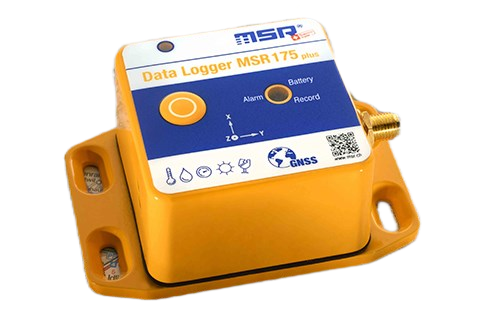
虹科 MSR175plus 衝擊與環境數據記錄器外觀圖:黃色堅固外殼配有 GNSS 定位功能、三軸加速度(X/Y/Z)以及溫度、濕度、氣壓、光照與傾斜感測器圖示,專用於運輸與物流監測。
Hongke Dry Goods

[Hongke Case Study] TSMC Selects MSR Shock and Vibration Data Loggers

How Can You Prevent Vibration Damage During International Transport of Semiconductor Wafers and Photomasks? We Reveal the Key Reasons TSMC Chose Hongke’s MSR175Plus Shock and Vibration Data Logger! The product features long battery life and large-capacity memory, enabling precise recording of temperature, humidity, pressure, and multi-axis acceleration during long-distance transport. In an exclusive interview, a TSMC engineer shares how the company converts vibration into quantifiable data and establishes rigorous standards to effectively reduce the risk of damage and significantly improve the success rate of international shipments!
Read more
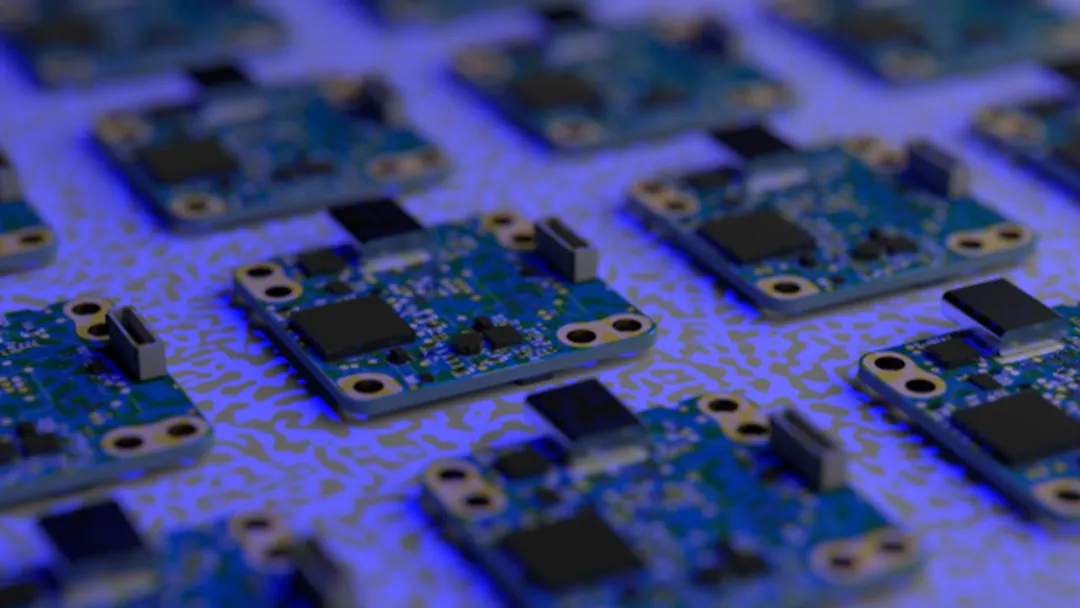
PCB 電路板組裝視覺檢測與測量示意圖:陣列排列的印刷電路板(PCBA)在藍光光源下展示晶片、元件與金屬焊盤細節,適用於 SMT 表面貼裝自動光學檢測(AOI)與品質管控。
Hongke Dry Goods

[Hongke Solutions] How Can AI-Powered Industrial Vision Inspection Overcome Quality Bottlenecks? A Comprehensive Analysis of Multi-Camera PTP Synchronization and Defect Detection

An In-Depth Analysis of AI Industrial Vision Inspection Technology! Explore how high-resolution industrial cameras, AI deep learning algorithms, and IEEE 1588 PTP microsecond-level multi-camera time synchronization precisely overcome bottlenecks in PCB component measurement and lithium-ion battery defect detection, and SMT Automated Optical Inspection (AOI), thereby improving production line yield!

Read more
可配置的CAN FD模擬I/O模塊 功能概述: PCAN-MicroMod FD系列模塊是支持CAN FD的數采模塊。 PCAN-MicroMod FD 插入式板卡可以和即插即用的母板一起購買,母板提供了各種外設可滿足特定需要。對於CAN連接、I/O、和供電,可用彈簧端子連接器。 PCAN-MicroMod FD 數字版1和2著重於數字輸入和輸出,其上有相應的保護電路。數字1的數字輸出裝備了低邊開關,數字2的裝備了高邊開關。
Hongke Dry Goods

[Hongke Solutions] Can’t Read CAN Data? Not Enough Temperature Channels? A Comprehensive Guide to Integrating NVH and Battery Data Acquisition

Is your current NVH data logger unable to read the CAN bus? Are there not enough temperature channels for battery testing? Hongke offers the PCAN-MicroMod FD and MU-Thermocouple1 CAN FD modules to enable CAN(FD)-to-analog conversion and high-density thermocouple multi-module cascading expansion. No coding required—just unbox and use it right away, with no need to replace your existing system!

Read more

Contact Hongke to help you solve your problems.

Let's have a chat