

Search

Hongke's latest articles

HongKe

Lorem ipsum dolor sit amet, consectetur adipiscing elit. Ut elit tellus, luctus nec ullamcorper mattis, pulvinar dapibus leo.

From Process Automation to Decision Automation: Moving the Efficiency Bottleneck from the Execution Side to the Judgment Side

In the wave of digital transformation over the past few years, theProcess AutomationIt has become a "standard" for enterprises: whether it is office automation and collaboration platform (OA), enterprise resource planning (ERP) control, simplification of the signing process, or automatic report aggregation. After a round of system upgrades, on the surface, processes become smoother and operations more consistent, but many managers will soon encounter the same pain point:No matter how fast the process runs, the decision-making is still lagging behind.

The key is:Process is not the same as decision-making.

Process automation solves the problem of "execution efficiency"; what really breaks through the efficiency ceiling is to systematize the matter of "judgment" and move towardDecision AutomationThe

01. Process Automation: Getting Things Done by the Book

Process AutomationThe biggest advantage is the ability to execute fixed tasks in a predefined sequence and synchronize the results. It is essentially "process-oriented" and does not have the ability to make judgments and decisions. Common application scenarios include:

  • Automatically initiates signatures: Once the triggering condition is established, the system will automatically submit the approval without the need for manual delivery.
  • Multi-Channel Data Integration: Automatically summarizes and generates reports to reduce manual statistical errors.
  • Automatic Node Reminder: Automatically notify the person in charge of the process when it progresses to ensure that information is synchronized in real time.

While it can make "things go by the book" more efficient, it can't answer the core questions of "should this go by" and "which option should be chosen". The following three scenarios will help you understand better:

  1. Discount signing: The process automatically sends the application, attachments, and associated transactions to the correct approver, but there is no way to determine if the discount meets the gross margin target or matches the customer value.
  2. Customer ClassificationThe process accomplishes data creation and flow, but does not allow for the definition of "high-value customer segments" or the flexible adjustment of the grading logic according to market conditions.
  3. Risk Control: The process leaves a clear trail of operations at each node, but it is not possible to assess the level of risk in a case, and it is difficult to make a consistent judgment on whether to release or reject a case.

In short, process automation is the transportation and scheduling of information and tasks; the real logic of decision-making still relies heavily on human experience, and operational efficiency is naturally stuck at the "human" level.

02. Decision automation: making judgment a manageable system capability

If companies want to make decisions faster, more consistent, traceable and auditable, they must separate the "logic of judgment" from the process and build it into a maintainable and evolvable decision-making capability.Decision AutomationThe core of the system is to allow the system to replace human beings to complete standardized and regularized judgments, and its capabilities can be disassembled into four facets:

  • Centralized management of rules: Store and maintain business rules in a centralized location to avoid conflicts caused by fragmentation across processes or individuals.
  • Visual ModelingThe visualization interface is used to express decision-making rules, which allows business departments and management to see and change the rules, and significantly reduces the threshold of technology implementation.
  • Automated decision making: The system outputs clear results (e.g., approval, rejection, referral for manual review, etc.) based on rules and real-time data, and the process simply accepts the results and advances to the next step.
  • Traceability and AuditabilityThe company's technology is designed to minimize compliance risk by providing clear rules and data to support every decision, as well as support for playback and stocktaking.

This means that the transformation and upgrading of enterprises is no longer just about "faster processes", but also about the simultaneous acceleration of "processes + decisions". With more consistent results and better governance, the value of digitalization can be truly released.

03. Process automation vs. decision automation (in-depth comparison)

Comparison DimensionProcess AutomationDecision Automation
core functionalityMoving tasks, performing fixed steps, transmitting informationPerforms judgment and outputs clear decision results
Target GroupProcess nodes, form information, operation stepsBusiness Rules, Decision Conditions, Data Logic
Core dependenciesManual decision making, process executionSystem default logic, automatic judgment completion
Core ValuesSave operation time and standardize processesImprove decision-making speed and consistency, reduce risk, traceability and auditability.

It is not difficult to see from this table:Process automation is the foundation; decision automation is the critical next step in breaking through the efficiency bottleneck and moving toward high-quality growth.

Why should management pay special attention to "decision making"?

Many business managers tend to fall into a misunderstanding: "fast processes = high operational efficiency". But in practice, the common consequence is:

  • The nodes seem to run out, but in the end they are stuck in manual judgment and signing, which lengthens the overall cycle.
  • Businesses with complicated rules and many judgmental conditions still rely on the experience of key personnel, which is inefficient and prone to human bias.
  • Risk control relies on people rather than rules, and it is easy to miss or misjudge, and it is not easy to trace back the responsibility and causes afterwards.

The real efficiency liberation of enterprises is not in "making steps faster", but in "making judgment faster, consistent and traceable".

04. Decisions: an automated platform for taking on the logic of decision-making.

To implement decision automation, you don't have to overthrow the results of existing process automation, but rather patch in a platform that can take on the logic of decision making. Take Decisions For example, it focuses on visually modeling, testing and deploying rules, and can update rules in real time without disrupting existing workflows, making rule management the core engine of the automation architecture.

On governance and auditing.Decisions It also emphasizes that rules, processes, and AI behaviors can be managed under a single governance framework for permissions, version control, and audit trails, with full documentation to support interpretable and auditable decision-making and compliance needs.

If your goal is to "run processes fast and make decisions fast," then you need to contact HongKe to take the decision logic out of the human brain and processes and turn it into a manageable, iterative system capability.

Other Articles

Hongke Dry Goods

[Hongke Solutions] ArangoDB Contextual Data Platform: Key Architecture for Next-Generation Network Asset Management (CAM/CMDB)

An in-depth analysis of how enterprises can transition from single LLM API calls to autonomous agentic systems. This article compiles real-world examples of AI agent deployments in production environments across six major industries, including retail and finance, and breaks down the underlying infrastructure logic—such as high concurrency, cross-interaction memory (Memory Infrastructure), and distributed state persistence.
Read more
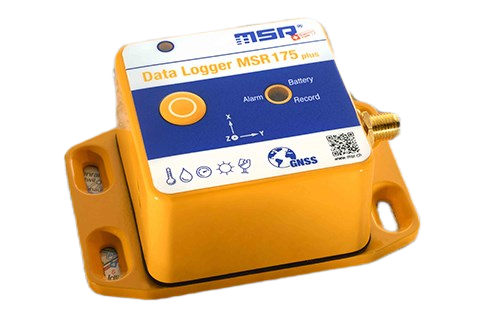
虹科 MSR175plus 衝擊與環境數據記錄器外觀圖:黃色堅固外殼配有 GNSS 定位功能、三軸加速度(X/Y/Z)以及溫度、濕度、氣壓、光照與傾斜感測器圖示,專用於運輸與物流監測。
Hongke Dry Goods

[Hongke Case Study] TSMC Selects MSR Shock and Vibration Data Loggers

How Can You Prevent Vibration Damage During International Transport of Semiconductor Wafers and Photomasks? We Reveal the Key Reasons TSMC Chose Hongke’s MSR175Plus Shock and Vibration Data Logger! The product features long battery life and large-capacity memory, enabling precise recording of temperature, humidity, pressure, and multi-axis acceleration during long-distance transport. In an exclusive interview, a TSMC engineer shares how the company converts vibration into quantifiable data and establishes rigorous standards to effectively reduce the risk of damage and significantly improve the success rate of international shipments!

Read more
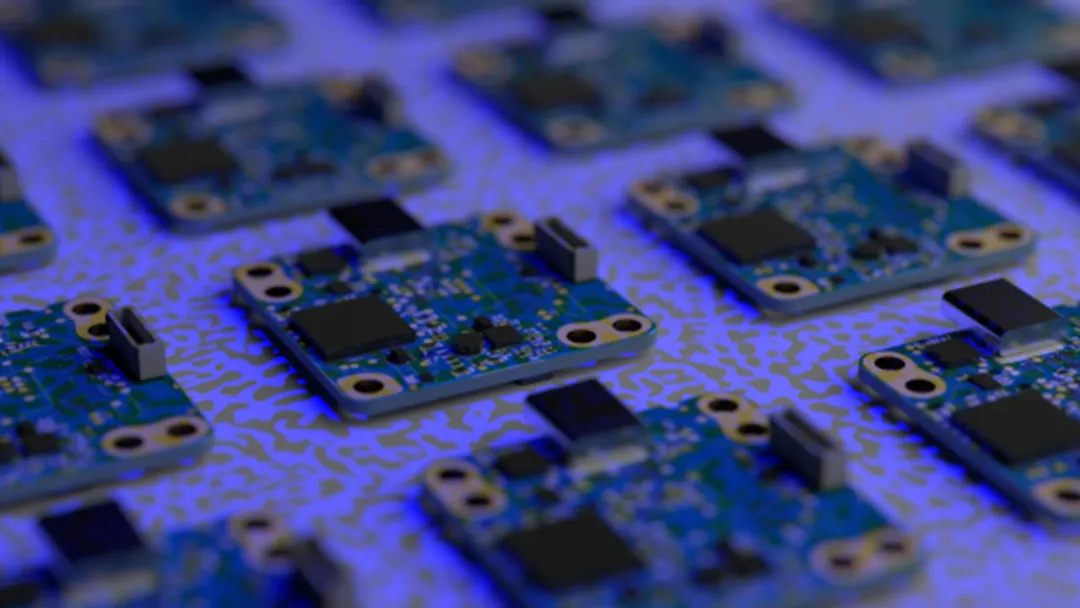
PCB 電路板組裝視覺檢測與測量示意圖:陣列排列的印刷電路板(PCBA)在藍光光源下展示晶片、元件與金屬焊盤細節,適用於 SMT 表面貼裝自動光學檢測(AOI)與品質管控。
Hongke Dry Goods

[Hongke Solutions] How Can AI-Powered Industrial Vision Inspection Overcome Quality Bottlenecks? A Comprehensive Analysis of Multi-Camera PTP Synchronization and Defect Detection

An In-Depth Analysis of AI Industrial Vision Inspection Technology! Explore how high-resolution industrial cameras, AI deep learning algorithms, and IEEE 1588 PTP microsecond-level multi-camera time synchronization precisely overcome bottlenecks in PCB component measurement and lithium-ion battery defect detection, and SMT Automated Optical Inspection (AOI), thereby improving production line yield!

Read more

Contact Hongke to help you solve your problems.

Let's have a chat