
Search

Hongke's latest articles

HongKe

[Hongke Case Study] TSMC Selects MSR Shock and Vibration Data Loggers

What should be kept in mind when transporting wafers?

Wafer transportation is a critical part of the semiconductor manufacturing process. Because wafers and photomasks are highly sensitive to environmental conditions and mechanical vibrations, these conditions must be strictly controlled during transportation.
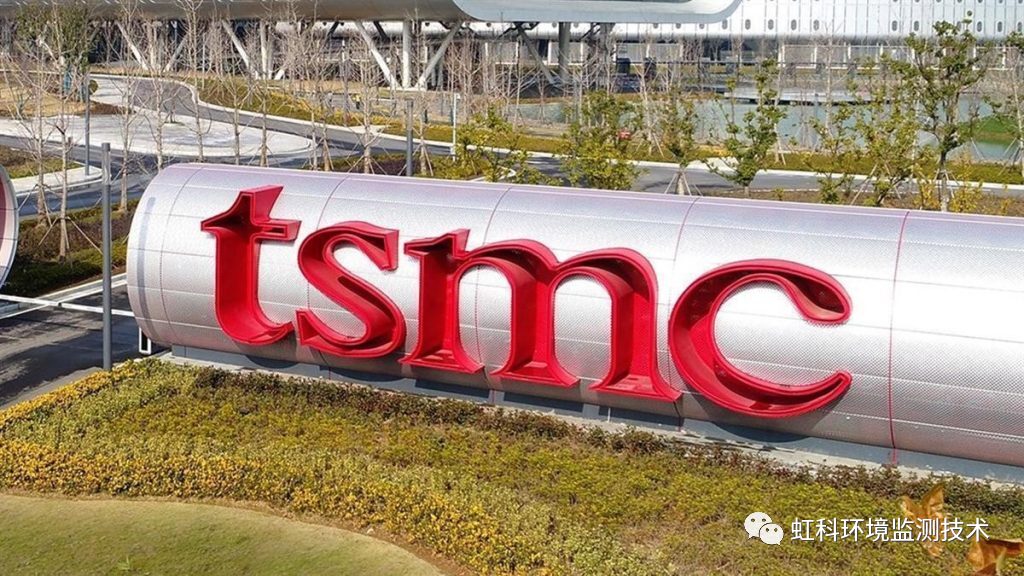
台積電(TSMC)半導體晶圓廠區大型紅色標誌外觀:展示晶圓廠環境監控與潔淨室技術應用場景,右下角附有「虹科環境監測技術」標籤。

1. Electrostatic Protection

Wafers are susceptible to electrostatic discharge, so appropriate electrostatic protection measures must be taken during transportation. SuitableAnti-static Packaging Materials, and avoid operations that are prone to generating static electricity. Operators can also wear conductive insoles and anti-static work clothes to reduce the risk of static electricity.

2. Clean and Sealed Environment

A clean environment must be maintained during wafer transport to prevent dust and contaminants from coming into contact with the wafers. When transporting wafers, useContainers with good sealing performance...while reducing impacts and excessive vibration.

3. Temperature and Humidity Control

Wafers are relatively sensitive to changes in temperature and humidity. Therefore, it is necessary to monitor relevant environmental parameters during transportation to ensure that temperature and humidity remain within appropriate ranges. This helps minimize the impact of environmental changes on wafer quality.

4. Shock and Impact Resistance

Wafers and photomasks are both highly precision products that must be protected from impacts and severe vibrations during transport. Therefore, appropriateShock-Resistant Packaging, and reduce impacts during handling.

5. Shipping Records and Tracking

To understand the actual condition of products during transport, it is necessary to establish a comprehensive transportation record-keeping and tracking system. By recording the location of products and their transport environment, it is possible to investigate the causes of any anomalies when they occur. Therefore, the transport of wafers and photomasks requires monitoring of packaging, environmental conditions, and transport conditions. Gaining insight into the transport process through objective data helps reduce the risk of product damage.

What can the Hongke MSR175Plus do?

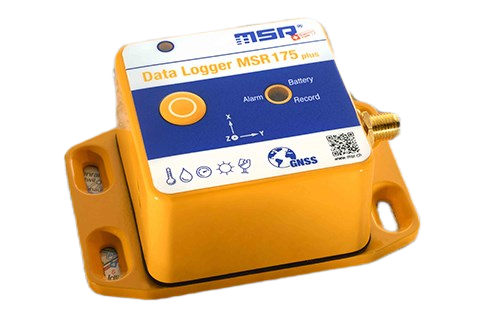
虹科 MSR175plus 衝擊與環境數據記錄器外觀圖:黃色堅固外殼配有 GNSS 定位功能、三軸加速度(X/Y/Z)以及溫度、濕度、氣壓、光照與傾斜感測器圖示,專用於運輸與物流監測。
The MSR175Plus is a multifunctional transport data logger that records data during transport, such asTemperature, humidity, pressure, location, and vibration data. Built-in GPS Module...allows you to track the location of shipments. The relevant data can also be transmitted wirelessly toComputer or mobile device, facilitating further analysis. The MSR175Plus is suitable for logistics and transportation monitoring applications, particularly for long-distance shipments and products with stringent transportation environment requirements. Users can review the recorded data to track changes in temperature, humidity, and vibration during transit. The product features high-precision data logging capabilities and can generate detailed reports and charts. This data can be used for transportation analysis, quality management, and subsequent root cause analysis. The MSR175Plus also features a durable housing designed to withstand challenging transportation environments. Combined with a long-lasting battery, it supports extended periods of transportation monitoring. For products that are sensitive to shipping conditions—such as food, pharmaceuticals, and semiconductors—continuous recording of shipping data is particularly important. With the MSR175Plus, businesses can gain a clearer understanding of the actual conditions of their cargo during transit. The relevant data can also serve as a reference for improving shipping processes and managing risks. In summary, the MSR175Plus helps users record data during transportationTemperature, humidity, pressure, location, and vibration data. For applications that require quantifying transportation conditions, data logging can provide a more objective basis for quality and transportation management.

Frequently Asked Questions (Interview with a TSMC Engineer)

Q1: In which transportation scenarios is the “MSR175Plus Shock and Vibration Data Logger” primarily used at TSMC? How long does each transport take, and what is the distance traveled?
 
A1: We used the MSR175Plus for shipments between Taiwan and the United States. Since vibrations occur from various directions—up and down, left and right—during transit, we needed to understand the actual vibration conditions. G-value. Once actual data has been obtained, the maximum acceptable vibration range will be further established. On average, each round trip takes approximately 9 days, the distance is approximately 25,000 kmThe


Q2:Among the many similar products available, why did TSMC choose the MSR175Plus? Which product features best meet their actual needs?

A2:Since we need to conduct long-distance transportation tests, we have certain requirements for battery life and memory capacity. The MSR175Plus itself offers extended battery life and ample memory capacity, making long-term measurements more convenient. Some suppliers’ products may run out of memory after extended recording due to the accumulation of large amounts of vibration data. This situation could even lead to partial data loss. Therefore, the MSR175Plus’s battery life and memory capacity are better suited for long-distance transportation testing.


Q3: How has the use of the MSR175Plus contributed to workplace and transportation safety at TSMC? Compared to the products used previously, what improvements have been made?

A3: Using the HK-MSR175Plus will help TSMC better understand the actual impact of vibration on photomasks. At the same time, we can convert the vibration conditions experienced during transportation intoSpecific and Quantitative Data. With this data, we can further establish relevant standards. This will help minimize the impact of vibration on photomasks during future shipments and improve the success rate of photomask shipments.
 
 
Q4:Is this a one-time need? Is there a possibility that facilities in other regions might adopt the same solution in the future?
 
A4: In the future, HK-MSR data loggers will continue to be installed on photomasks as they are transported between Taiwan and the United States. By recording vibration data generated during transport, we can continuously monitor actual transport conditions. This data can also serve as a reference for future transport management and improvement efforts.
 
Q5: As a TSMC engineer, would you recommend the MSR175Plus? If so, who would you primarily recommend it to?
A5: Yes, I highly recommend it to anyone who needs it.Quantifying Vibration Datafor use by companies and engineers.
These data loggers are particularly helpful for companies that need to understand the effects of transportation vibrations or establish specific vibration standards.

Want to learn more about how to quantify cross-border transportation risks and establish rigorous vibration protection standards using Hongke MSR shock and vibration data loggers—just like TSMC does? Go Now MSR Multifunctional Miniature Shock and Vibration Recorder Main Page Explore comprehensive solutions.

Other Articles

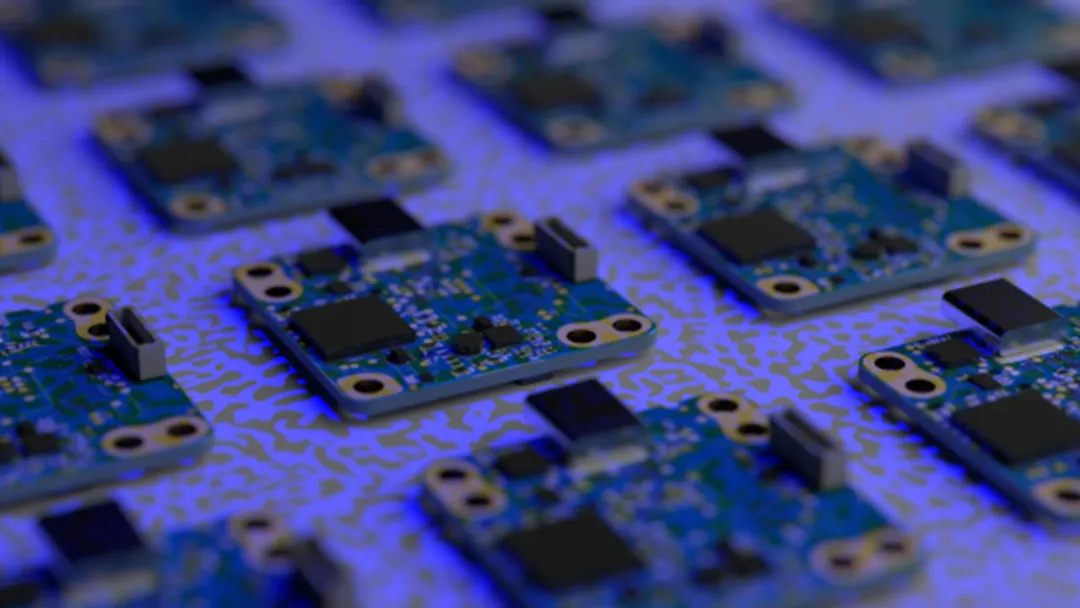
PCB 電路板組裝視覺檢測與測量示意圖:陣列排列的印刷電路板(PCBA)在藍光光源下展示晶片、元件與金屬焊盤細節,適用於 SMT 表面貼裝自動光學檢測(AOI)與品質管控。
Hongke Dry Goods

[Hongke Solutions] How Can AI-Powered Industrial Vision Inspection Overcome Quality Bottlenecks? A Comprehensive Analysis of Multi-Camera PTP Synchronization and Defect Detection

An In-Depth Analysis of AI Industrial Vision Inspection Technology! Explore how high-resolution industrial cameras, AI deep learning algorithms, and IEEE 1588 PTP microsecond-level multi-camera time synchronization precisely overcome bottlenecks in PCB component measurement and lithium-ion battery defect detection, and SMT Automated Optical Inspection (AOI), thereby improving production line yield!

Read more
可配置的CAN FD模擬I/O模塊 功能概述: PCAN-MicroMod FD系列模塊是支持CAN FD的數采模塊。 PCAN-MicroMod FD 插入式板卡可以和即插即用的母板一起購買,母板提供了各種外設可滿足特定需要。對於CAN連接、I/O、和供電,可用彈簧端子連接器。 PCAN-MicroMod FD 數字版1和2著重於數字輸入和輸出,其上有相應的保護電路。數字1的數字輸出裝備了低邊開關,數字2的裝備了高邊開關。
Hongke Dry Goods

[Hongke Solutions] Can’t Read CAN Data? Not Enough Temperature Channels? A Comprehensive Guide to Integrating NVH and Battery Data Acquisition

Is your current NVH data logger unable to read the CAN bus? Are there not enough temperature channels for battery testing? Hongke offers the PCAN-MicroMod FD and MU-Thermocouple1 CAN FD modules to enable CAN(FD)-to-analog conversion and high-density thermocouple multi-module cascading expansion. No coding required—just unbox and use it right away, with no need to replace your existing system!

Read more
Hongke Dry Goods

[Hongke Solutions] AI Agent Implementation Case Study: Enterprise-Level Deployment Across Six Major Industries and the Logic Behind the Underlying Infrastructure

An in-depth analysis of how enterprises can transition from single LLM API calls to autonomous agentic systems. This article compiles real-world examples of AI agent deployments in production environments across six major industries, including retail and finance, and breaks down the underlying infrastructure logic—such as high concurrency, cross-interaction memory (Memory Infrastructure), and distributed state persistence.

Read more

Contact Hongke to help you solve your problems.

Let's have a chat