
Search

Hongke's latest articles

HongKe

Add your title text here

I. Introduction: Strategic Changes at the Data Layer under the Critical Infrastructure Legislation

Add your title text here

[Hongke Solutions] Can’t Read CAN Data? Not Enough Temperature Channels? A Comprehensive Guide to Integrating NVH and Battery Data Acquisition

In complex application scenarios such as automotive engineering NVH (noise, vibration, and harshness) road testing, power battery temperature monitoring, electric vehicle charging, and power system monitoring, test engineers often face two major challenges:Existing analog data acquisition equipment cannot directly parse CAN/CAN FD bus data.as well asThe high density of testing sites has led to a severe shortage of testing channels.The

Replacing an entire, expensive data acquisition system to accommodate new CAN signals would not only be extremely costly but would also entail the risk of extensive secondary development and system restructuring. How can high-fidelity fusion of multi-source data be achieved without altering the existing architecture? How can data acquisition channels be expanded at a low cost? This article provides an in-depth analysis of Hongke’s PCAN-MicroMod FD and MU-Thermocouple1 CAN FD Technical Principles, Application Solutions, and Practical Guides for Modules.

Solving NVH and Energy Harvesting Challenges: CAN (FD) and Bidirectional Analog-to-Digital and Digital-to-Analog Conversion

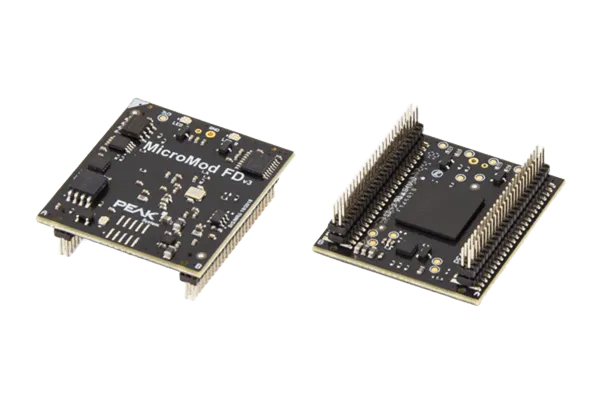
虹科 PCAN-MicroMod FD CAN/CAN FD I/O 模組正面與背面外觀,印有 MicroMod FD v3 與 PEAK-System 標誌,配備雙排連接針腳,用於數模訊號轉換與多源數據採集。

1. NVH Road Test Scenarios: Converts CAN signals to analog signals, ensuring full compatibility with existing test equipment

During whole-vehicle NVH testing, engineers need to simultaneously acquire vibration signals (analog data) and key vehicle status parameters—such as engine speed, vehicle speed, and pedal position—(CAN bus data).

  • Traditional Pain Points: The older NVH simulation data acquisition front end lacks the ability to parse CAN interfaces and cannot directly read CAN messages.

  • Hi-Tech Solutions: Take HongKe PCAN-MicroMod FD As an in-vehicle bridge node connected to the CAN bus,Accurately capture vehicle speed and RPM parameters according to the preset logic,It then converts this high-fidelity data into an analog voltage signal and outputs it directly to the existing NVH data logger.

  • Core Strengths: No secondary development required; plug-and-play; fully compatible with existing NVH test architectures; significantly improves test efficiency.

2. Power and Battery Management (BMS): High-Precision Analog-to-CAN/CAN FD Conversion

In power systems, high-speed train charging, and battery management systems (BMS), real-time monitoring of voltage and current parameters and fault diagnosis are critical.

  • Hongke PCAN-MicroMod FD Analog 1: Equipped with 8-channel, 16-bit high-precision analog inputs, with a flexible four-range adjustment of ±2.5 V, ±5 V, ±10 V, and ±20 V, and equipped with corresponding overvoltage protection circuits, it can accurately encapsulate the acquired voltage and current data into CAN/CAN FD messages for real-time transmission to a host computer or control module.

  • Hongke PCAN-MicroMod FD Digital 1/2: Designed for digital switching applications, it features a low-side switch (Digital 1) and a high-side switch (Digital 2) to meet flexible control and status monitoring requirements.

High-Density Temperature Monitoring for Power Batteries: Thermocouple Modules and Multi-Module Cascading Expansion

The temperature distribution within new energy vehicle battery packs during charging and discharging directly affects battery safety. How can fast and stable temperature monitoring be achieved when there are a large number of monitoring points?

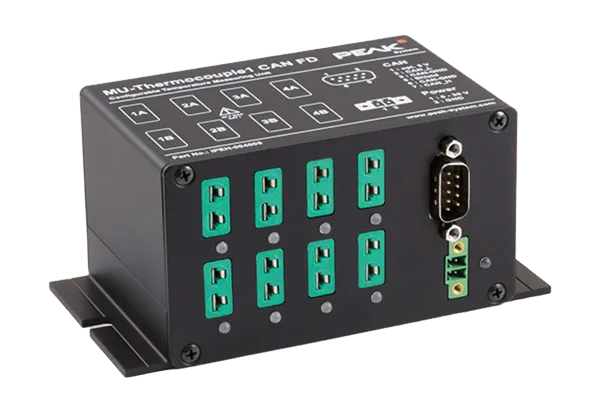
虹科 MU-Thermocouple1 CAN FD 熱電偶模組實物圖,展示 8 通道綠色熱電偶接線端子、D-Sub 9 針 CAN FD 接口與頂部線路定義圖,用於新能源電池高精度溫度監測。

1. High-Precision Thermocouple Data Acquisition: MU-Thermocouple1 CAN FD

To address the need for battery pack temperature monitoring,Hongke MU-Thermocouple1 CAN FD Thermocouple Module Provides highly reliable solutions:

  • High Collection Accuracy: Measurement accuracy up to 0.2%, with a temperature resolution of up to 1/16 °C...which can accurately detect even the slightest temperature changes in the battery.

  • Real-Time Data Stream: When used in conjunction with PCAN devices to form a network, it converts thermocouple temperature signals into CAN FD messages in real time and plots dynamic temperature change curves.

2. Seamless Cascading Expansion: Easily Overcome Channel Capacity Limits

When 8 temperature channels are not sufficient, the entire Hongke module series supports parallel expansion of multiple modules on a single CAN bus:

  • Hardware ID Settings: Set the device ID (0–15) using the onboard rotary switch.

  • Single-Bus Capacity: A single CAN bus supports up to Online Configuration of 16 Modules(If online configuration is not required,(Up to 16 modules can be connected during operation.)

  • Automatic Identification and Classification: The accompanying configuration software automatically distinguishes between individual nodes based on their device IDs,Easily scale up to hundreds of measurement points.

No-Code, Out-of-the-Box: Lowering the Development Barrier for Engineers

For engineering data collection projects,Development cycles and software learning costs are important evaluation metrics.Hongke's solution eliminates the need for complex coding right from the ground up:

1. Factory Presets and Plug-and-Play

The PCAN-MicroMod FD and MU-Thermocouple1 CAN FD come with default configurations out of the box and are ready to begin signal conversion and message transmission as soon as power is applied.

2. Free Graphical Configuration Tool

Available for the Windows platform PCAN-MicroMod FD Configuration and Thermocouple FD Configuration Software that supports flexible configuration of I/O mapping, CAN ID, transmission cycle, gain, and offset.

3. Deploy Once, Run Independently

Once the configuration parameters are downloaded to the module via the CAN bus in a single transmission, the module can operate as an independent CAN node without the need to write additional microcontroller code.

4. Extensive built-in processing capabilities

It supports simple I/O-to-CAN ID mapping and includes built-in data processing function blocks; the PCAN-MicroMod FD series also offers optional features CANopen Firmware, seamlessly integrates with existing CANopen industrial networks.

Frequently Asked Questions

Q1: Without replacing the existing NVH data logger, how can the CAN bus vehicle speed signal be integrated into the NVH data acquisition system?

A1:Using the Hongke PCAN-MicroMod FD as a CAN bus bridge node, the system captures vehicle speed and engine speed messages from the CAN bus, converts them into high-fidelity analog voltage signals, and outputs them to the existing NVH data acquisition system—without the need to replace the acquisition equipment or redevelop the system.

Q2: Battery pack testing requires dozens of temperature channels. How should multiple modules be cascaded?

A2: Hongke MU-Thermocouple1 CAN FD supports connecting multiple modules in parallel on the same CAN bus. By setting different device IDs (0–15) using the onboard rotary switch, the software can automatically identify and distinguish between each module; a single bus supports online configuration of up to 16 modules.

Q3: Do I need to write C/C++ or Python code to use Hongke I/O modules and thermocouple modules?

A3:No. Hongke provides free Windows-based graphical configuration software. Engineers simply need to set the CAN ID, transmission period, and scaling factor; once the configuration is sent to the module via the CAN bus, the module can operate independently.

To learn more about how to use Hongke PCAN-MicroMod FD and MU-Thermocouple1 CAN FD Can Modules Break the Deadlock on Data Integration and Multi-Channel Expansion?

Go NowHongke CAN / CAN FD / LIN Bus SeriesVisit the product page for more details and technical specifications.

Other Articles

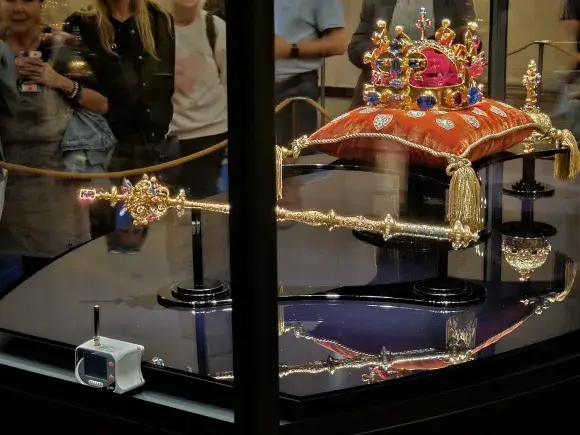
捷克王冠珠寶展覽現場實拍,可見左下角虹科 COMET 無線溫濕度記錄儀全天候守護微氣候,保護聖溫塞斯拉斯王冠、王權權杖與皇家寶球等陳列於防彈玻璃展櫃內的文物。
Hongke Case

[Hongke Case Study] COMET Wireless Temperature and Humidity Monitoring System Protects National Treasures

How can we prevent microclimate fluctuations from causing metal corrosion or gemstone cracking during the exhibition and long-term preservation of national treasure-level artifacts? This case study provides an in-depth analysis of how the organizers of the Czech Crown Jewels exhibition deployed Hongke’s COMET U3631M wireless temperature and humidity data loggers and the COMET Cloud platform. Through high-precision real-time monitoring with an accuracy of ±0.4°C and ±1.8% RH, along with SMS and email alerts, to safeguard the preservation environment for these cultural artifacts around the clock.
Read more
Hongke Case

[Hongke Case Study] Diagnosis of Poor Acceleration and Timing Deviation in a Chevrolet Cruze

The Chevrolet Cruze’s check engine light is constantly on, and the car lacks power during acceleration. Although the timing mark is normal, the system is reporting P0016 and P0017 trouble codes. How can the exact cause be pinpointed? This case study provides an in-depth analysis of how a repair technician used the Hongke PicoScope automotive oscilloscope and the WPS500X pressure sensor to perform a non-disassembly diagnosis. By cross-referencing cylinder pressure and timing waveforms, they precisely identified a 15° phase delay caused by wear on the crankshaft pulley’s half-moon key. This provided irrefutable waveform evidence, preventing the blind replacement of parts and thoroughly resolving the power loss issue.

Read more
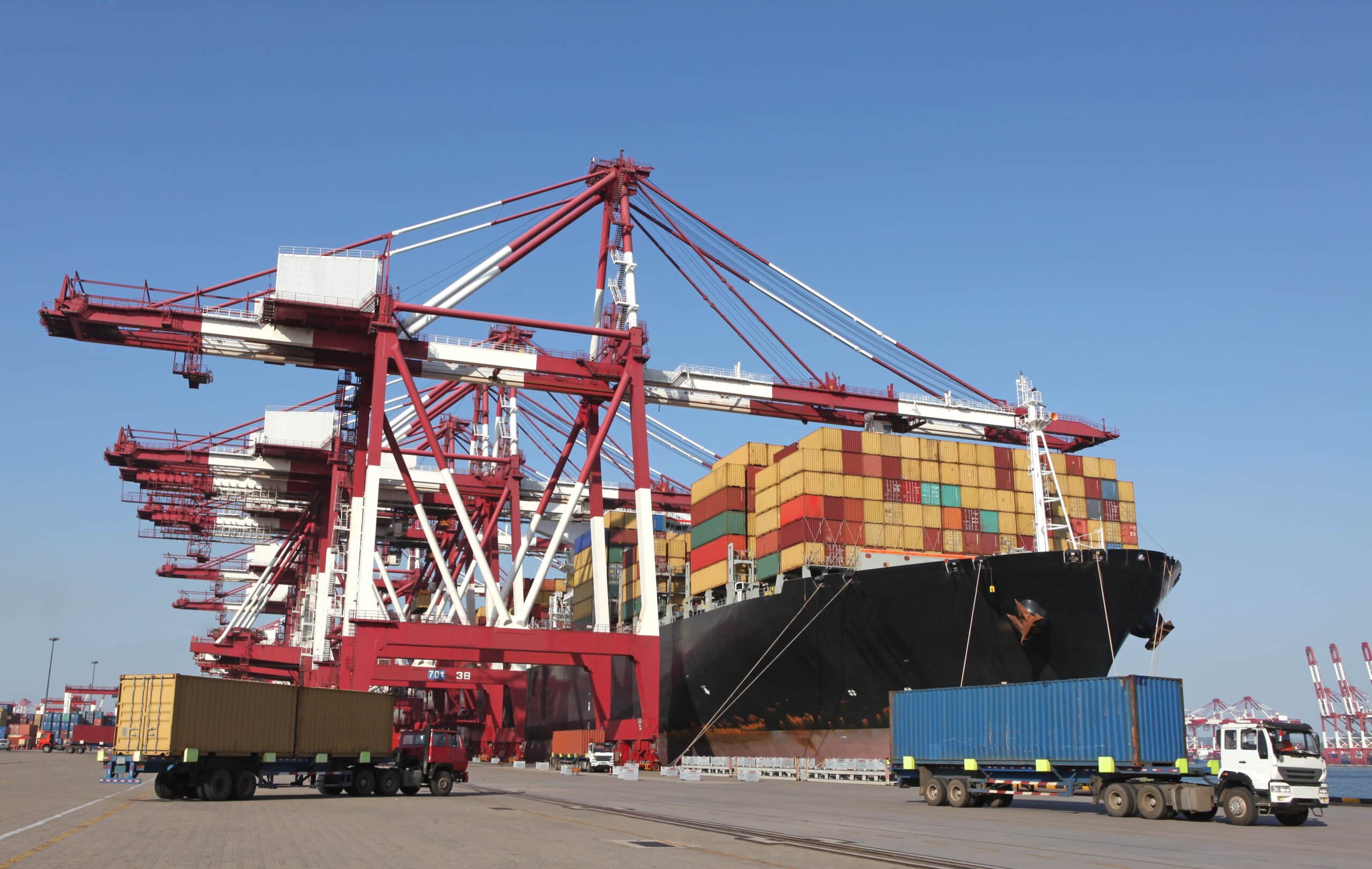
國際海運港口碼頭進行貨櫃裝卸與陸運接駁作業,展現跨境多式聯運供應鏈中的運輸風險監測場景。
Hongke Case

[Hongke Case Study] Impact Recorders Help Companies Determine Liability for Inventory Losses

How Is Liability Determined When Energy Storage Containers Are Damaged During Overseas Export? This case study provides an in-depth analysis of how a major exporter of energy storage systems deployed Hongke’s ASPION G-Log2 shock recorders with their shipments. By continuously monitoring three-axis acceleration and precise timestamps, the company cross-referenced abnormal shock events with logistics nodes in cross-border multimodal transport, precisely pinpointing severe impacts during the final leg of overseas transportation. This provided an irrefutable chain of objective data evidence, successfully resolving the crisis of overseas customer refusal to accept the shipment and high-value claims, and ensuring the smooth completion of acceptance.

Read more

Contact Hongke to help you solve your problems.

Let's have a chat