
Search

Hongke's latest articles

HongKe

I. Introduction: Strategic Changes at the Data Layer under the Critical Infrastructure Legislation

Add your title text here

[Hongke Case Study] Impact Recorders Help Companies Determine Liability for Inventory Losses

  • Customers: A major exporter of complete energy storage systems

  • Product Applications: Hongke ASPION G-Log2 Impact Recorder

  • Application Scenarios: International Multimodal Transport of Energy Storage System Containers

  • Transportation Routes: Mainland China Land Transport → Port Loading/Unloading → International Ocean Freight → Inland Transport in Europe → Final Delivery

I. Overview

國際海運港口碼頭進行貨櫃裝卸與陸運接駁作業,展現跨境多式聯運供應鏈中的運輸風險監測場景。

As global energy storage power plant projects accelerate their expansion overseas, energy storage containers have become a key form of new energy equipment exports. A single container integrates battery clusters, PCS (power conversion systems), fire suppression, temperature control, and control systems, involving numerous steps from loading at the factory to final delivery overseas. The longer the supply chain, the more difficult it is to determine liability for cargo damage—a challenge that no exporting company can avoid.

In this case, a Jiangsu-based energy storage equipment manufacturer encountered a similar situation when exporting energy storage containers to the Czech Republic. After the equipment arrived at the project site, it was discovered that the containers were visibly damaged. The overseas customer initially believed the problem stemmed from insufficient reinforcement during shipping and demanded that the shipment be rejected and financial compensation be provided.

The energy storage company, through the deployment of equipment shipped with the goods, Hongke ASPION G-Log2 Impact Recorder...the impact data from the entire transport process was retrieved and analyzed in conjunction with the on-site cargo damage assessment, ultimately providing an objective data basis for determining liability.

II. Key Challenges in the Cross-Border Transportation of Energy Storage Containers

Energy storage equipment is bulky and extremely heavy, and it undergoes multiple loading, unloading, and transshipment operations during transport. For export companies, what is truly needed is not simply a record of “whether any collisions occurred,” but rather the establishment of a chain of evidence documenting cargo damage corresponding to each stage of transport:

1. It is difficult to determine when the cargo damage occurred

Energy storage containers must pass through multiple transportation stages. If the container becomes dented or structurally damaged, it is impossible to determine from its appearance alone at which stage the problem occurred. Without process data, accidents can easily lead to a stalemate where each party sticks to its own version of events.

2. Still photos can only capture the final result

Although photos taken upon delivery can prove that the equipment was damaged, they do not directly reflect the nature of the impacts and vibrations the equipment experienced during transit. Information regarding the timing, amplitude, and direction of the impacts is often the key to analyzing the causes of cargo damage.

3. Cross-border transportation involves multiple parties with liability

A single shipment involves a manufacturing company, an inland logistics provider, a port handling operator, a shipping line, an overseas logistics provider, and the consignee. If the equipment status cannot be linked to a specific leg of the journey, the exporting company is highly likely to end up “paying the price” for someone else’s oversight.

4. Cargo damage may lead to project delays.

If damage occurs to the enclosure or mounting structure of energy storage equipment, end customers typically need to further disassemble and inspect the internal precision components. This triggers a chain of consequences, including equipment re-inspection, repairs, re-transportation, on-site downtime, and even project delays. For high-value energy storage equipment, the significance of transport monitoring lies not only in detecting anomalies but also in providing objective data for subsequent liability determination and risk management.

III. Case Study: Container Arrived with Visible Damage

儲能貨櫃跨境運輸到貨後的實拍貨損照片,顯示底部金屬固定支架受外力撕裂及緊固螺絲脫落受損。

In this case study, the energy storage container was shipped from the Jiangsu factory to an overseas project site in the Czech Republic. During transit, it went through a series of stages, including inland road transport, port loading and unloading, international ocean freight, and inland transport within Europe. After the equipment arrived at the site and was unpacked and inspected, a noticeable abnormality was discovered in the container:

  • Top of the cabinet: Extensive dents and deformation are present, with visible signs of impact from an external force.

  • Bottom Mounting Structure: Some of the fixed strapping brackets have torn, and some of the fastening screws have come loose, severely compromising the overall mounting structure.

The damage to the goods during transit raised questions among overseas end customers about the safety of equipment transportation, and they preliminarily determined that the damage was related to improper factory packing, securing, and protective measures. Consequently, the end customer refused to accept the entire energy storage system on the spot and demanded that the company bear the full financial burden for all economic losses, including container repairs, re-inspection of the internal energy storage components, and delays in the project schedule.

This situation puts export companies in a rather difficult position—if they cannot further specify the exact section of the transport route where the damage occurred, it is difficult for them to effectively respond to customers’ claims. In such cases, the impact data recorded during transport becomes the key to resolving the issue.

IV. Hongke ASPION G-Log2 Helps Companies Accurately Reconstruct the Transportation Process

虹科 ASPION G-Log2 運輸衝擊監測工作流程,結合電腦端參數配置、貨車裝載運輸及手機 App 即時讀取衝擊記錄儀數據。
Before the equipment leaves the factory, the company Impact Recorder Securely mount the device on the equipment frame, configure the trigger and monitoring parameters according to the transportation characteristics of the equipment being monitored, and allow the device to accompany the shipment throughout the entire journey.

1. Record the entire process starting from the time of shipment

G-Log2 continuously monitors changes in three-axis acceleration during transport and accurately records abnormal impact events. Each abnormal event is accompanied by a precise timestamp, enabling the impact data collected during transport to be matched one-to-one with actual logistics checkpoints.

Cross-border transportation is not a single, broad category, but can be broken down into the following segments: factory loading, inland transportation, port loading and unloading, ocean freight, overseas transshipment, last-mile delivery, and project sites. By cross-referencing time data with logistics documents, it is possible to pinpoint the specific segment where an anomaly occurred.

2. Read the data upon receipt of the shipment and conduct a comprehensive analysis that takes into account cargo damage.

Upon the equipment’s arrival, the company’s engineering staff immediately retrieved the transportation data from the G-Log2 and conducted a comprehensive comparison with on-site photos, logistics checkpoint records, and the actual damage to the container:

  • The analysis results show that: No abnormal impacts consistent with the cargo damage observed at the scene were detected during the manufacturing process in mainland China or during the initial transport phase; incidents involving significant abnormal impacts were concentrated inOverseas Last-Mile Delivery, and the time of occurrence perfectly aligns with the local transportation hub.

  • Combining this with damage characteristics such as dents on the top of the on-site cabinet and tears in the bottom mounting structure, the team successfully made a convincing technical determination regarding the specific section where the cargo damage occurred.

Although impact records themselves cannot be directly equated with legal rulings, their core value lies in transforming the “black-box” nature of the transportation process into quantifiable analytical data. When cross-referenced with logistics documents, on-site photographs, and loading/unloading records, they provide irrefutable, objective evidence to support liability negotiations among all parties.

V. Using Data to Clarify Liability and Resolve Crises Involving Refusal of Delivery and Claims for Compensation

based on G-Log2 Using the complete data on record, the company provided its overseas customers with clear shipping monitoring reports and correlated abnormal impact events with specific logistics nodes:
虹科 ASPION G-Log2 衝擊事件記錄報告截圖,顯示超過 ±2.00 g 閾值的三軸(X、Y、Z 軸)加速度異常數值及精確時間戳記

Compared to simply providing a single static photograph of the equipment as it left the factory, this comprehensive set of data can objectively verify whether any abnormal impacts occurred during transport, the specific time they occurred, the corresponding transport segment, and whether there is a correlation between the impacts and the on-site damage in terms of timing and mechanical conditions.

Armed with this detailed data report, the company successfully reconstructed the actual transportation process for its end customers, providing a solid factual basis for liability negotiations. Ultimately,The overseas customer has officially withdrawn its refusal to accept the shipment, and the equipment has successfully passed on-site acceptance.; At the same time, end customers also use this monitoring data and analysis report to file logistics claims with local carriers. A single set of transportation data thus serves both to clarify the responsibilities of exporting companies and to address the logistics claims needs of consignees.

VI. The Long-Term Commercial Value of Transportation Monitoring

The significance of this case lies not only in the successful resolution of a cargo damage dispute. For heavy equipment such as energy storage systems and power generation equipment—which are high-value and require long-distance transport—what deserves even greater attention is how to transform a one-time crisis response into a long-term, replicable supply chain risk management mechanism:

1. Implement end-to-end transportation traceability

Traditional approaches to handling cargo damage often involve passively identifying problems only after the goods have arrived; shock recorders move the monitoring point forward to the moment the goods leave the factory, allowing the entire process to be traced backward from the results as soon as an anomaly occurs.

2. To provide an objective basis for cross-border liability negotiations

Cross-border multimodal transport involves numerous parties with liability. By recording the time, direction, and magnitude of impacts and correlating them with logistics nodes, the scope of liability investigations can be significantly narrowed, thereby avoiding endless commercial disputes arising solely from on-site photographs.

3. A single dataset enables a closed-loop, multi-party collaboration

Transportation monitoring data serves more than just shippers—manufacturers can use it to evaluate whether packaging and securing designs are appropriate; logistics companies can use it to identify gaps in loading and unloading operations; consignees can use it for equipment inspection and claims; and insurance companies can use it as a key reference for accident investigations and claims settlement, thereby truly achieving a closed-loop risk management system spanning production, transportation, and delivery.

4. Provide data support for the optimization of future logistics solutions

As similar equipment continues to be deployed for monitoring across multiple overseas projects, companies can gradually accumulate real-world data across different shipping routes, logistics providers, port handling operations, and transportation modes. This data can then be used to optimize packaging and reinforcement solutions, select high-quality carriers, establish transportation risk thresholds for various types of equipment, and provide a basis for insurance underwriting and risk pricing.
Therefore, a transport shock recorder is not merely a “tool for providing evidence” after cargo damage occurs; it is also a core data asset that enables companies to continuously optimize the quality of their daily supply chain and logistics operations.

Conclusion

Hongke G-Log2 Featuring three-axis impact monitoring and precise recording of abnormal events, this solution is suitable for long-distance land, sea, and rail transportation, as well as international intermodal transport. It helps companies establish a full lifecycle data profile covering everything from shipment dispatch, transportation, and delivery to inspection and analysis of cargo damage. In this case study, by deploying G-Log2 Shock RecorderBy closely integrating transportation impact data with logistics nodes and on-site photos, the company successfully helped exporters clarify liability with their overseas customers and ensure smooth project delivery, demonstrating the critical value of data-driven transportation monitoring in cross-border supply chain management.

Please feel free to contact Hongke,Inquire about shock recorder application solutions and one-on-one technical consultations.

Other Articles

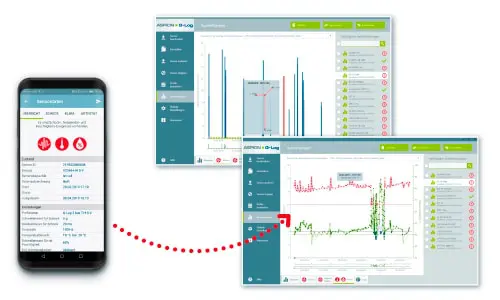
ASPION G-Log 2 衝擊記錄儀的流動應用程式與電腦版數據分析軟體介面,展示三軸衝擊與溫濕度監測圖表
Hongke Case

[Hongke Case Study] Siemens Energy Selects the ASPION G-Log 2 Shock Recorder

Siemens Energy’s facilities in Berlin, Germany, and Shanghai have fully adopted Hongke’s ASPION G-Log 2 shock recorders to provide shock, temperature, and humidity monitoring for high-voltage switchgear in compliance with the IEC 60721-3-2 standard. Discover this high-precision, cost-effective solution for global logistics and transportation safety today!
Read more
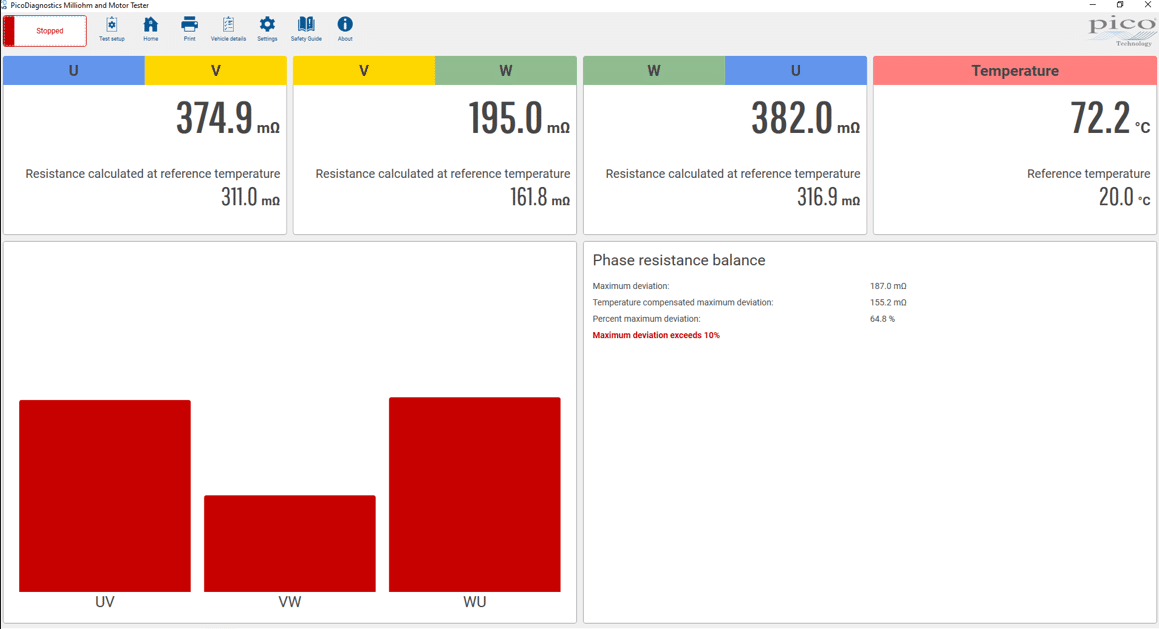
PicoDiagnostics 毫歐與馬達測試儀軟體介面:測量 BMW Valvetronic 三相馬達繞組阻值,顯示 U-V (374.9 mΩ)、V-W (195.0 mΩ) 與 W-U (382.0 mΩ) 存在 187.0 mΩ(64.8%)的嚴重不平衡,遠超 10% 容許上限。
Hongke Case

[Hongke Case Study] Using the Pico MT03A to Clear BMW Valvetronic Trouble Codes

BMW Reports DTCs 135808 and 135B11—Does That Mean You Have to Replace Parts Blindly? We Reveal How to Use the Pico MT03A Milliohm Meter and PicoScope Oscilloscope to Accurately Debunk Valvetronic Diagnostic Myths! Practical Testing Identifies 190 mΩ Motor Winding Imbalance and 5V Floating Ground, Avoiding False Open-Circuit Diagnoses and Significantly Improving Advanced Automotive Diagnostic Efficiency!

Read more
Hongke Dry Goods

[Hongke Solutions] ArangoDB Contextual Data Platform: Key Architecture for Next-Generation Network Asset Management (CAM/CMDB)

An in-depth analysis of how enterprises can transition from single LLM API calls to autonomous agentic systems. This article compiles real-world examples of AI agent deployments in production environments across six major industries, including retail and finance, and breaks down the underlying infrastructure logic—such as high concurrency, cross-interaction memory (Memory Infrastructure), and distributed state persistence.

Read more

Contact Hongke to help you solve your problems.

Let's have a chat