
Search

Hongke's latest articles

HongKe

Lorem ipsum dolor sit amet, consectetur adipiscing elit. Ut elit tellus, luctus nec ullamcorper mattis, pulvinar dapibus leo.

From Process Automation to Decision Automation: Moving the Efficiency Bottleneck from the Execution Side to the Judgment Side

In the wave of digital transformation over the past few years, theProcess AutomationIt has become a "standard" for enterprises: whether it is office automation and collaboration platform (OA), enterprise resource planning (ERP) control, simplification of the signing process, or automatic report aggregation. After a round of system upgrades, on the surface, processes become smoother and operations more consistent, but many managers will soon encounter the same pain point:No matter how fast the process runs, the decision-making is still lagging behind.

The key is:Process is not the same as decision-making.

Process automation solves the problem of "execution efficiency"; what really breaks through the efficiency ceiling is to systematize the matter of "judgment" and move towardDecision AutomationThe

01. Process Automation: Getting Things Done by the Book

Process AutomationThe biggest advantage is the ability to execute fixed tasks in a predefined sequence and synchronize the results. It is essentially "process-oriented" and does not have the ability to make judgments and decisions. Common application scenarios include:

  • Automatically initiates signatures: Once the triggering condition is established, the system will automatically submit the approval without the need for manual delivery.
  • Multi-Channel Data Integration: Automatically summarizes and generates reports to reduce manual statistical errors.
  • Automatic Node Reminder: Automatically notify the person in charge of the process when it progresses to ensure that information is synchronized in real time.

While it can make "things go by the book" more efficient, it can't answer the core questions of "should this go by" and "which option should be chosen". The following three scenarios will help you understand better:

  1. Discount signing: The process automatically sends the application, attachments, and associated transactions to the correct approver, but there is no way to determine if the discount meets the gross margin target or matches the customer value.
  2. Customer ClassificationThe process accomplishes data creation and flow, but does not allow for the definition of "high-value customer segments" or the flexible adjustment of the grading logic according to market conditions.
  3. Risk Control: The process leaves a clear trail of operations at each node, but it is not possible to assess the level of risk in a case, and it is difficult to make a consistent judgment on whether to release or reject a case.

In short, process automation is the transportation and scheduling of information and tasks; the real logic of decision-making still relies heavily on human experience, and operational efficiency is naturally stuck at the "human" level.

02. Decision automation: making judgment a manageable system capability

If companies want to make decisions faster, more consistent, traceable and auditable, they must separate the "logic of judgment" from the process and build it into a maintainable and evolvable decision-making capability.Decision AutomationThe core of the system is to allow the system to replace human beings to complete standardized and regularized judgments, and its capabilities can be disassembled into four facets:

  • Centralized management of rules: Store and maintain business rules in a centralized location to avoid conflicts caused by fragmentation across processes or individuals.
  • Visual ModelingThe visualization interface is used to express decision-making rules, which allows business departments and management to see and change the rules, and significantly reduces the threshold of technology implementation.
  • Automated decision making: The system outputs clear results (e.g., approval, rejection, referral for manual review, etc.) based on rules and real-time data, and the process simply accepts the results and advances to the next step.
  • Traceability and AuditabilityThe company's technology is designed to minimize compliance risk by providing clear rules and data to support every decision, as well as support for playback and stocktaking.

This means that the transformation and upgrading of enterprises is no longer just about "faster processes", but also about the simultaneous acceleration of "processes + decisions". With more consistent results and better governance, the value of digitalization can be truly released.

03. Process automation vs. decision automation (in-depth comparison)

Comparison DimensionProcess AutomationDecision Automation
core functionalityMoving tasks, performing fixed steps, transmitting informationPerforms judgment and outputs clear decision results
Target GroupProcess nodes, form information, operation stepsBusiness Rules, Decision Conditions, Data Logic
Core dependenciesManual decision making, process executionSystem default logic, automatic judgment completion
Core ValuesSave operation time and standardize processesImprove decision-making speed and consistency, reduce risk, traceability and auditability.

It is not difficult to see from this table:Process automation is the foundation; decision automation is the critical next step in breaking through the efficiency bottleneck and moving toward high-quality growth.

Why should management pay special attention to "decision making"?

Many business managers tend to fall into a misunderstanding: "fast processes = high operational efficiency". But in practice, the common consequence is:

  • The nodes seem to run out, but in the end they are stuck in manual judgment and signing, which lengthens the overall cycle.
  • Businesses with complicated rules and many judgmental conditions still rely on the experience of key personnel, which is inefficient and prone to human bias.
  • Risk control relies on people rather than rules, and it is easy to miss or misjudge, and it is not easy to trace back the responsibility and causes afterwards.

The real efficiency liberation of enterprises is not in "making steps faster", but in "making judgment faster, consistent and traceable".

04. Decisions: an automated platform for taking on the logic of decision-making.

To implement decision automation, you don't have to overthrow the results of existing process automation, but rather patch in a platform that can take on the logic of decision making. Take Decisions For example, it focuses on visually modeling, testing and deploying rules, and can update rules in real time without disrupting existing workflows, making rule management the core engine of the automation architecture.

On governance and auditing.Decisions It also emphasizes that rules, processes, and AI behaviors can be managed under a single governance framework for permissions, version control, and audit trails, with full documentation to support interpretable and auditable decision-making and compliance needs.

If your goal is to "run processes fast and make decisions fast," then you need to contact HongKe to take the decision logic out of the human brain and processes and turn it into a manageable, iterative system capability.

Other Articles

Hongke Dry Goods

[Hongke Solutions] Beyond Signals: Decoding Desite’s “Full-Stack” Technical Depth in the GNSS Field

In the GNSS field, many companies remain stuck at the “application-layer implementer” stage and struggle to meet challenges such as drone swarm coordination, high-precision positioning in extreme environments, and anti-jamming encrypted communications. Deste (a Hongke partner) has broken through the limitations of superficial integration to build end-to-end technical depth spanning “underlying technology—testing and validation—complex scenario applications.” This article provides an in-depth analysis of how Destar, through its strategic portfolio of patents and software copyrights, has built a GNSS technology moat from the “ground up.”

Read more
Hongke Dry Goods

[Hongke Insights] Behind the $135.6 Billion Overseas Expansion Bonanza, a Single Data Breach Could Undo All Efforts

The global cross-border e-commerce market is valued at a staggering $135.6 billion! However, when it comes to exporting fresh produce, pharmaceuticals, and sensitive, high-value products, gaps in environmental monitoring and data compliance are becoming a critical vulnerability for businesses. A single data interruption or temperature deviation could result in the destruction of an entire shipment and exorbitant fines. This article provides an in-depth analysis of the three major data risks in the cross-border supply chain and introduces Hongke ELPRO’s enterprise-grade data logging and cold chain monitoring solutions.

Read more
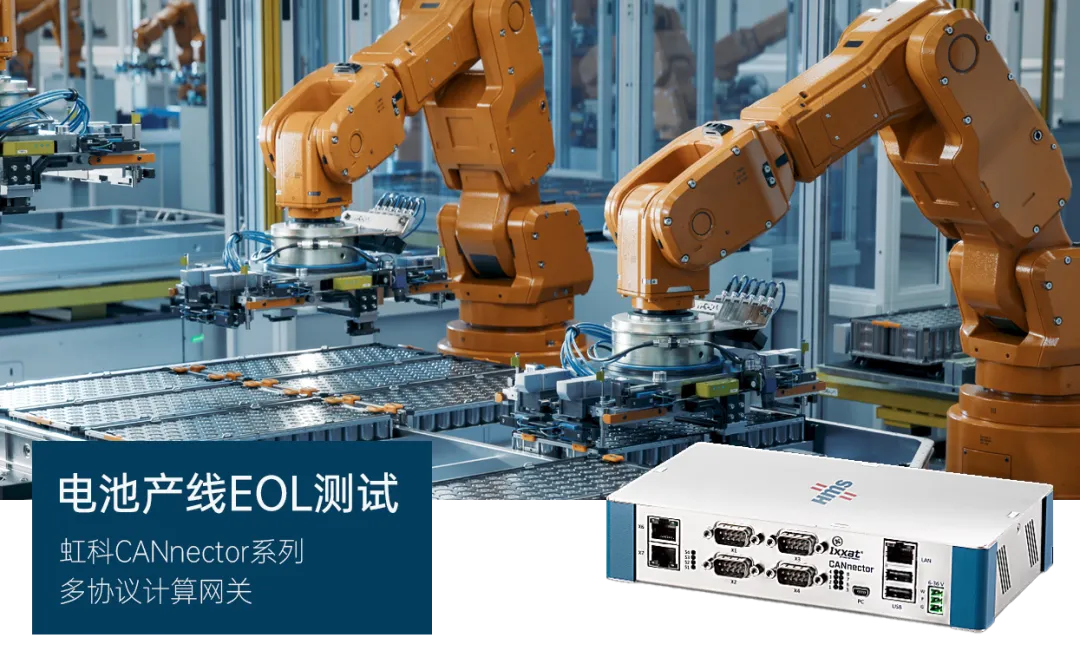
以DoIP網關為核心,虹科CANnector系列設備透過延遲最小化的協定轉換、獨立運行的硬體架構、以及一體化的測試平台能力,幫助客戶在電池 ECU 快閃記憶體環節實現了20%的效率躍升。
Hongke Dry Goods

[Hongke Solutions] Tight production line cycle times? Hongke CANnector enables efficient battery system testing with its DoIP gateway capabilities.

Production line cycle times for new energy vehicles are extremely tight, and traditional CAN buses face transmission bandwidth bottlenecks during Battery Management System (BMS) and battery pack testing. Leveraging its powerful DoIP (Diagnostics over IP) gateway capabilities, Hongke CANnector enables high-bandwidth, low-latency diagnostics and programming, significantly reducing production line test cycle times. This article provides an in-depth analysis of how CANnector overcomes transmission bottlenecks and enables efficient testing of battery systems.

Read more

Contact Hongke to help you solve your problems.

Let's have a chat