
Search

Hongke's latest articles

HongKe

Lorem ipsum dolor sit amet, consectetur adipiscing elit. Ut elit tellus, luctus nec ullamcorper mattis, pulvinar dapibus leo.

Lorem ipsum dolor sit amet, consectetur adipiscing elit. Ut elit tellus, luctus nec ullamcorper mattis, pulvinar dapibus leo.

[Hongke Applications] IDS Multi-Camera Imaging Technology Overcomes the Challenge of High-Precision Observation of High-Speed Dynamic Plasmas

Observational Challenges

Bottlenecks in Ultra-High-Speed Microscale Plasma Jet Imaging

A plasma jet is a converging, self-luminous ionized gas beam widely used in fields such as materials processing and plasma medicine. However, due to its microscopic scale, intense dynamics, and rapid evolution—with the entire process lasting only a few microseconds—it is extremely difficult to observe with high precision.

To address this challenge, the MPS research group at the Leibniz Institute for Plasma Science and Technology (INP) in Germany has focused its experimental research on the kINPen, a low-temperature, ambient-pressure plasma jet developed in-house. This device can generate highly dynamic plasma filaments with a discharge period of just 1 microsecond, a diameter of approximately 0.1 millimeters, and a length of less than 10 millimeters, making it an ideal model for studying the spatial morphology and propagation patterns of plasma discharges. To accurately capture the three-dimensional structure of transient discharges, the team set up a synchronized multi-camera imaging system and employedHongke Partner: IDS Industrial CamerasAs the core imaging device.

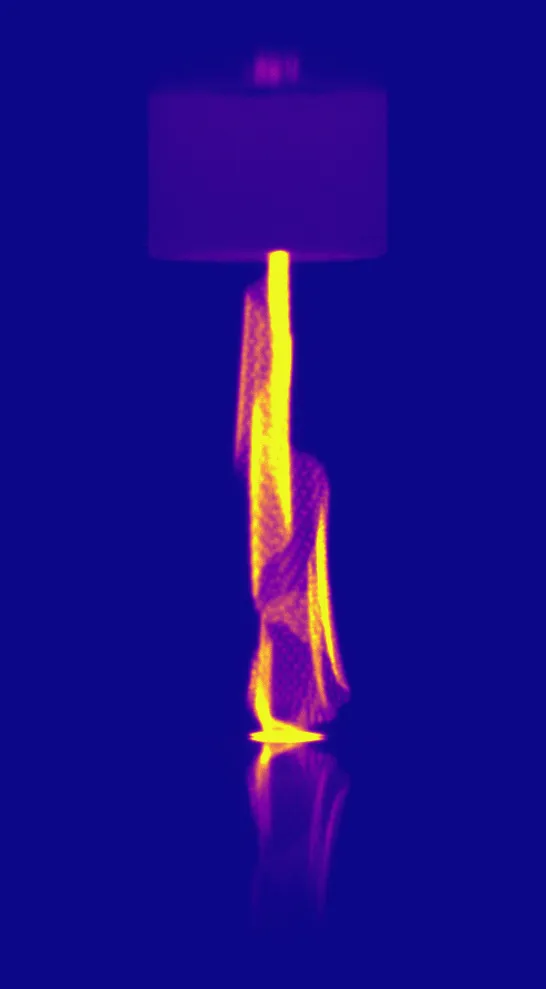
A kINPen plasma source probe equipped with a time-resolved discharge observation system (exposure time: 16 microseconds)

The core of the current research lies precisely in this issue of the spatial scale of plasma. Artur Wittich, a researcher at the Leibniz Institute for Plasma Science and Technology, explained: “Our research focuses on the three-dimensional spatial structure of plasma discharges. Experimentally observing this structure is a crucial step toward gaining a deeper understanding of plasma jets and their mechanisms of action, and ultimately toward achieving precise control.”

Extreme Imaging Requirements

Microsecond-Level Ultra-Short Exposures and Global Synchronized Capture

High-speed transient plasma discharges place extremely demanding requirements on imaging systems: with an evolution cycle of only a few microseconds and extremely small spatial scales, microsecond-level ultra-short exposures are required to capture complete, distinct discharge channels. In this experiment, we used an exposure range of 9.35–30.03 microseconds to acquire 8-bit monochrome single-frame images, tailored to meet the imaging requirements of ultrafast discharge scenarios.

The core challenge of the entire system lies inHigh-Precision Synchronized Triggering of Multiple CamerasOnly by synchronously capturing images with a full-field camera within the same extremely short time window can the characteristics of a single transient discharge be accurately recorded. Relying solely on traditional two-dimensional single-frame images is insufficient to reconstruct the true three-dimensional morphology of plasma filaments—such as their bending, displacement, and coiling—and precise three-dimensional reconstruction of the discharge structure can only be achieved through synchronized multi-view imaging.

In addition, to accurately capture homologous plasma filaments, the system must possess ultra-high temporal control precision and rely on stable, reproducible plasma discharge conditions to ensure the accuracy and reliability of the experimental data.

Calibration of the kINPen multi-camera imaging system was performed using standard 3D-printed calibration parts.

Based on the equipment's performance

Achieving Stable and Reproducible Imaging of High-Dynamic-Range Plasma

Under target-free conditions, a single measurement generates multiple plasma filaments; these filaments are known as “guided streamers,” which are extremely short-lived, linear discharge channels within the plasma; In contrast, observations involving contact with the target surface typically reveal only a single, overwhelmingly dominant discharge path. This phenomenon stems from what is known as the derived discharge mode: guided streamers establish a conductive path between the plasma source and the target surface, after which transient glow discharges flicker erratically along this path. Due to the memory effect, metastable particles generated by the previous discharge can promote the re-ignition of the guided streamer; the newly generated streamer will generally propagate along the original path, deviating only slightly due to gas flow.

When the kINPen plasma jet is excited by a high-frequency signal, this effect endows the visible plasma structures formed by multiple discharges with spatial reproducibility, thereby enabling stable visual observation.

This physical property lays the foundation for the systematic study of high-dynamic-range plasma discharges using image-processing-based measurement techniques.

IDS Multi-Camera Vision Solution

Core Support for Plasma 3D Reconstruction

To characterize the spatial structure of plasma discharges through experiments, the Leibniz Institute for Plasma Science and Technology has developed a multi-camera stereoscopic imaging system that utilizes 5 Taihongke Partner IDS Industrial Cameras Synchronous data acquisition captures the morphology of plasma discharges from multiple angles simultaneously. To achieve stable and reliable 3D reconstruction, in addition to performing high-precision calibration of the camera system, another key requirement is to reproduce the fine discharge structures with as little distortion as possible.

The system is equipped with an IDS 75-millimeter large-aperture lens, designed for a 1.2-inch large image sensor, with a maximum aperture of f/2.8. This optical configuration was chosen because the plasma discharge has an axial length of less than 10 millimeters and a radial width of less than 1 millimeter, placing stringent demands on the lens’s optical performance.

Dr. Philipp Mattern, a supervising engineer who completed his master’s thesis at the institute, explained: “At a viewing distance of about 500 millimeters, the self-luminescence of the plasma filaments is extremely faint—almost as dim as that of a firefly.”

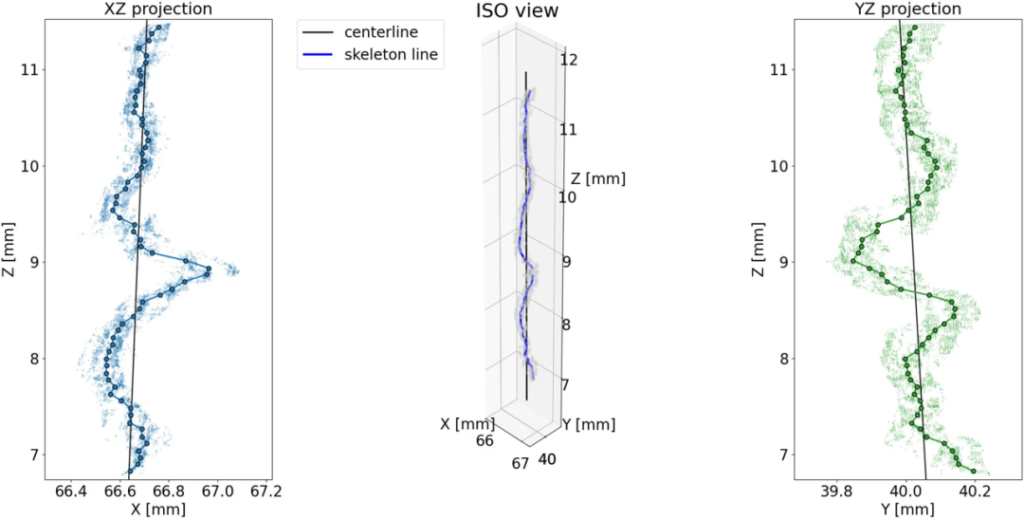
During the image analysis stage, structures with distinctive internal features within the plasma discharge are extracted and used as features for cross-image matching; based on these matched points, a three-dimensional point cloud of the discharge is reconstructed. Furthermore, the point cloud data obtained through this method provides, for the first time, a reliable basis for studying discharge paths. Not only can itVisualization of Plasma Structures...and can also be analyzed systematically.

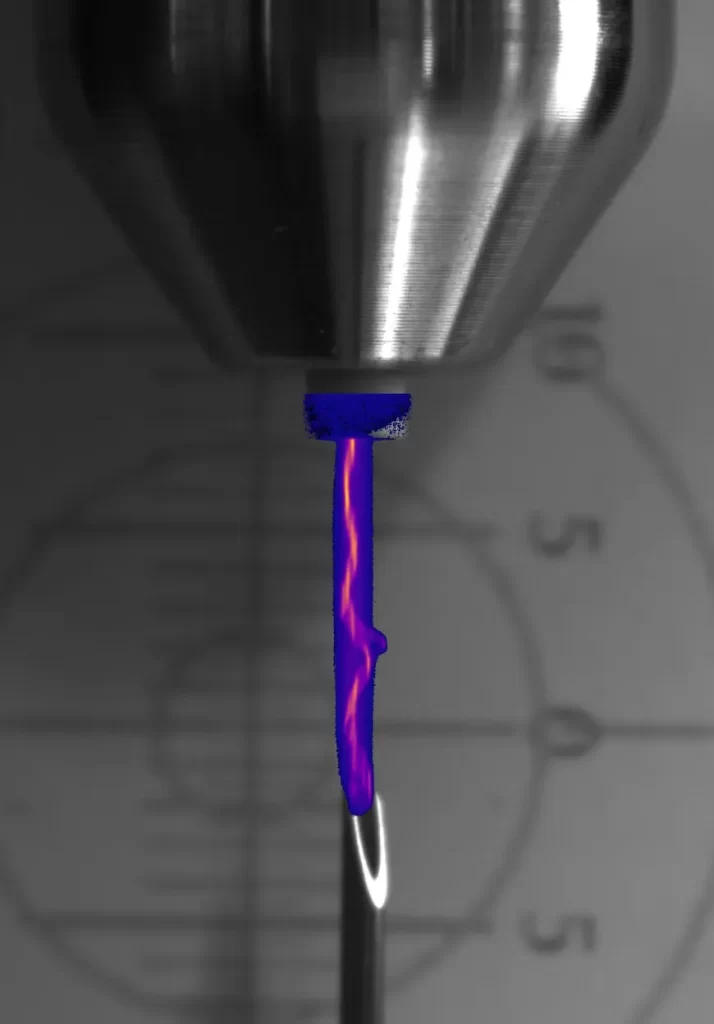
Morphology of a self-luminous plasma filament at a distance of 3 millimeters (exposure time: 40.76 microseconds)

Stringent Selection Criteria

Synchronous Triggering Capability Is the Key Factor

The complete image processing system is equipped with 5 unitsHongke Partner IDS uEye CP U3‑31J0CP Rev. 2.2 Industrial Camera, This camera supportsHigh-performance triggering and synchronization capabilities, suitable for multi-camera parallel capture scenarios. Dr. Philip Mattern completed the overall design of the imaging solution and selected the IDS hardware; M.E.S.S. (Mattern Engineering Software Solutions), the company he founded, provided scientific and technical support for this project. The camera system is capable of meeting stringent optical standards and temporal synchronization requirements.

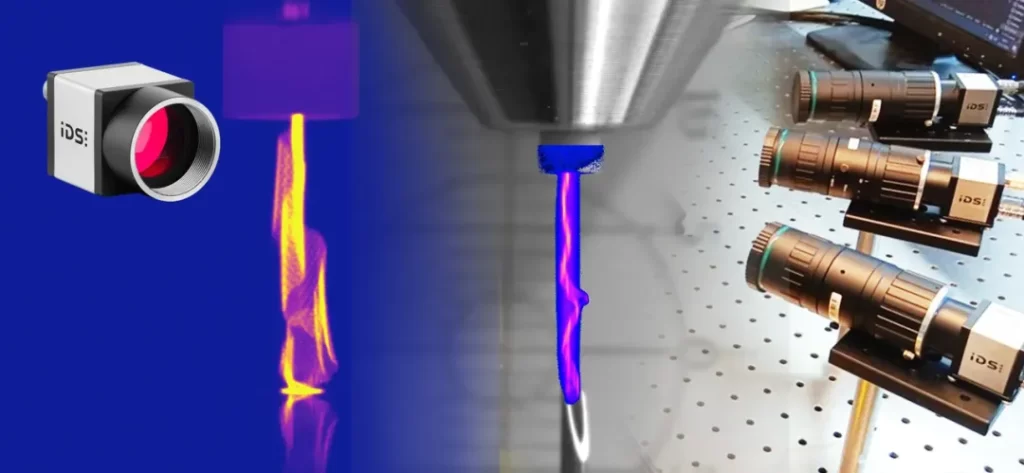
A multi-camera capture system consisting of five IDS industrial cameras, each arranged at 90-degree intervals around the discharge point

This camera selection process focuses on three key criteria:High-Precision Hardware Triggering,Ultimate Synchronization Performance,Stable Control of Ultrashort Exposures in the Microsecond Range. Given the ultrafast dynamic characteristics of plasma discharges, only by relying on these three core capabilities can we ensure that multiple cameras simultaneously capture the characteristics of the same discharge, thereby guaranteeing the consistency of experimental data.

SelectedHongke Partner: IDS Industrial CamerasEquipped with a Sony Pregius S Series IMX546 square CMOS sensor, it features 8.13 million pixels. The device combines global shutter and back-illuminated (BSI) technology to deliver stable performance in low-light conditionsMicrosecond-Level Short-Duration Exposure... effectively eliminates imaging distortions in transient plasmas and is perfectly suited for the high-precision imaging requirements of self-luminescent, ultra-short-lived plasma structures.

Researcher Arthur Wittig spoke highly of IDS’s technical support: the brand’s comprehensive technical documentation and professional services provided crucial support for the design, parameter tuning, and system setup of the multi-camera synchronized capture solution.

The entire system is based onHongke has integrated the IDS peak Software Development Kit (SDK) to support unified configuration, synchronized operation, and the reuse of parameter settings across multiple cameras, ensuring consistent experimental conditions across all groups and comparable data. Additionally, using the Python version of the IDS peak API, parallel data acquisition from multiple cameras can be easily achieved.,Synchronous Triggering,Full Automation of the Image Storage Process, significantly improving experimental efficiency and stability.

Technology Implementation and Validation

IDS Imaging Solutions Enable High-Precision Plasma Analysis

This in-house developed multi-camera imaging method is not merely for observational purposes; it is a technically feasible solution that has been experimentally validated. This study is the first to demonstrate that the kINPen jet—a highly dynamic plasma discharge—can be reconstructed as a three-dimensional point cloud model, enabling subsequent quantitative structural analysis. This lays a practical foundation for further research into the spatial propagation patterns of plasma jet discharges.

Furthermore, this method is not limited to kINPen plasma jets; with minor adjustments, it can be applied to other small-scale discharge structures.

Analysis of the Discharge Structure of the kINPen Plasma Jet

Application Outlook

IDS imaging technology can be applied to various types of discharge research

This study continues to investigate the characteristics of plasma jet discharges under various operating conditions, utilizing a multi-camera imaging system to achieve dynamic observations with high spatio-temporal resolution. This method is highly versatile and can be extended to the study of various dynamic structures. The team is simultaneously advancing research on optical techniques such as Schlieren and BOS to capture airflow and density changes around the discharge, thereby refining the experimental analysis framework.

The implementation of this study’s high-precision observation system is primarily attributable toHongke Partner IDS High-Performance Image Processing Solutions...overcoming the technical bottlenecks of traditional plasma observation. According to the Product Marketing Manager at IDS, a partner of Hongke, given the ultra-high dynamic characteristics of plasma discharges, the equipment utilizes a global shutter sensor and high-precision hardware synchronous triggering technology to achieveMicrosecond-Level Reproducible Exposure(math.) genusEffectively Eliminates Imaging Distortion(math.) genusEnsure synchronized capture in multi-camera systemsThe

This core technology can outputHigh Consistency,High ResolutionThe image data accurately supports 3D point cloud reconstruction and structural quantification analysis of plasma, ensuring thatExperimental Accuracy and Reproducibility... and also provides reliable technical support for subsequent multi-parameter extension studies on plasmas and dynamic fluids.

Conclusion

This plasma observation project has fully validatedHongke Partner IDS Camera Imaging SolutionsLeveraging high-precision synchronous triggering, BSI global-shutter sensors, and supporting development tools, this system offers a key advantage in ultrafast, microscale transient scenarios, solving the challenge of three-dimensional imaging of low-temperature plasma filaments. This imaging system enables 3D point cloud reconstruction and quantitative analysis of discharge structures and is compatible with the kINPen jet and various small-scale discharge devices. Supported by IDS’s technical services, the complete solution is easy to commission and highly reusable. This mature imaging system breaks through the limitations of traditional two-dimensional observation, providing a highly reliable observational tool for research into the mechanisms underlying plasma-based medical treatments and materials processing, as well as forMulti-angle Detection of High-Speed Fluids and Transient Luminous ObjectsProvides general technical references.

Other Articles

Hongke Dry Goods

[KnowBe4 Insights] 12-Hour Countdown: How Does KnowBe4 Turn Employees into Incident Early-Warning Radars?

Once the CISO regulations take effect, serious cybersecurity incidents must be reported within 12 hours, records must be submitted within 48 hours, and reports must be filed within 14 days. This article analyzes KnowBe4’s early warning mechanism, which uses automated workflows through PAB and PhishER to turn employees into cybersecurity early warning sensors, thereby shortening incident response times and meeting compliance requirements.

Read more
Hongke Dry Goods

[Hongke Insights] Guide to Cold Chain Compliance for Exporting Pharmaceuticals: How Can Temperature Monitoring Pass the FDA/GDP/WHO Tests?

As Chinese pharmaceutical companies expand into overseas markets, how can cold chain temperature monitoring meet the requirements of the U.S. FDA’s 21 CFR Part 11, EU GDP, and WHO PQS regulations? Hongke’s ELPRO LIBERO series of data loggers offers a plug-and-play, software-free, all-in-one compliance solution that meets air cargo security requirements, reducing the risk of cargo damage and customs clearance issues.

Read more
Hongke Case

[Hongke Case Study] Servers Australia Implements KnowBe4 to Achieve a 90% Training Completion Rate

Servers Australia, an Australian cloud hosting provider, had previously been able to only reactively handle cybersecurity incidents, with high risks of internal threats and phishing attacks. After implementing the KnowBe4 cybersecurity awareness training platform, the company established a company-wide cybersecurity culture through simulated phishing tests, comprehensive training resources, and employee risk analysis. Training completion rates exceeded 90%, effectively reducing human-caused security vulnerabilities and shifting the team from reactive remediation to proactive defense against ransomware and social engineering threats.

Read more

Contact Hongke to help you solve your problems.

Let's have a chat