
Search

Hongke's latest articles

HongKe

Lorem ipsum dolor sit amet, consectetur adipiscing elit. Ut elit tellus, luctus nec ullamcorper mattis, pulvinar dapibus leo.

Lorem ipsum dolor sit amet, consectetur adipiscing elit. Ut elit tellus, luctus nec ullamcorper mattis, pulvinar dapibus leo.

[Hongke Solutions] Practical Application of the Panorama SCADA System’s REST Web Service: Enabling Seamless Integration Between Industrial Automation and the Real World

Amid the current wave of Industry 4.0 and digital transformation, the role of SCADA (Supervisory Control and Data Acquisition) is no longer limited to simply displaying human-machine interfaces (HMIs) and managing alarm signals.

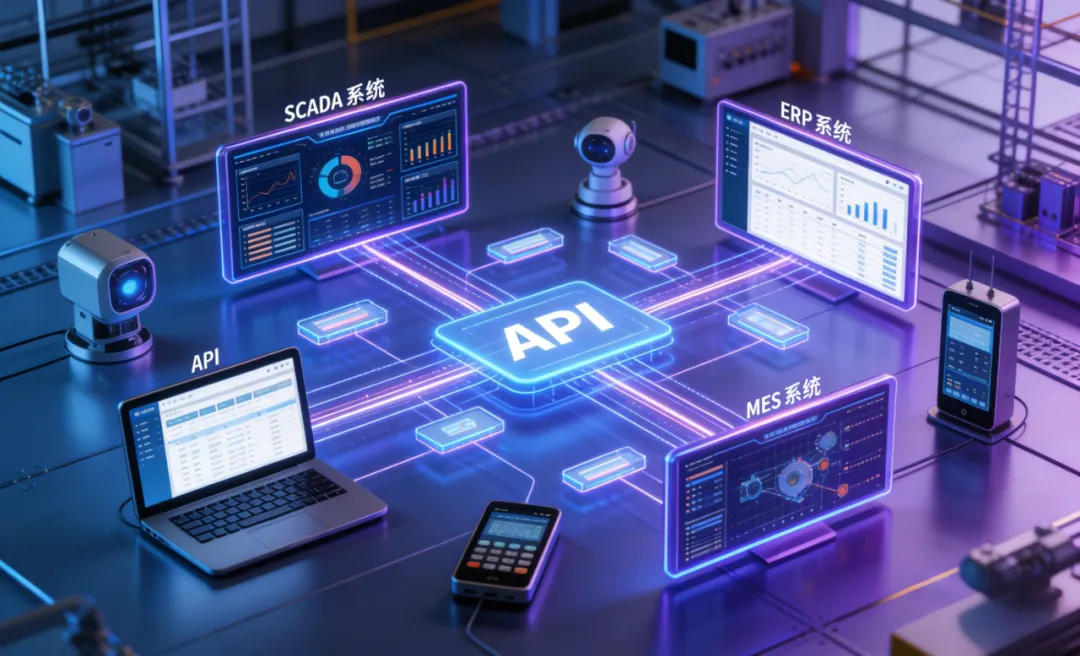
A modern SCADA system must possess robust contextual analysis capabilities. This means that the system must not only process internal data (such as data from sensors, PLCs, historian databases), but also cross-reference it with external dynamic data (such as energy prices, weather forecasts, and regulatory requirements), thereby automatically triggering the coordinated operation of third-party systems (such as CMMS [Computerized Maintenance Management Systems], enterprise reporting systems, and energy management platforms).

In this transformation driven by the convergence of IT and OT, REST Web Services (RESTful APIs) serve as the core technology that plays a crucial bridging role. They provide SCADA applications with a standardized, highly secure, and highly scalable method for accurately retrieving and publishing critical information.

In addition to technical advantages, companies face even more fundamental challenges at the operational level: an efficient monitoring solution requires “obtaining the right data at the right time” and enabling seamless data sharing among different stakeholders and digital tools.

01 What Is REST: Highly Compatible, Standardized, and Interoperable APIs

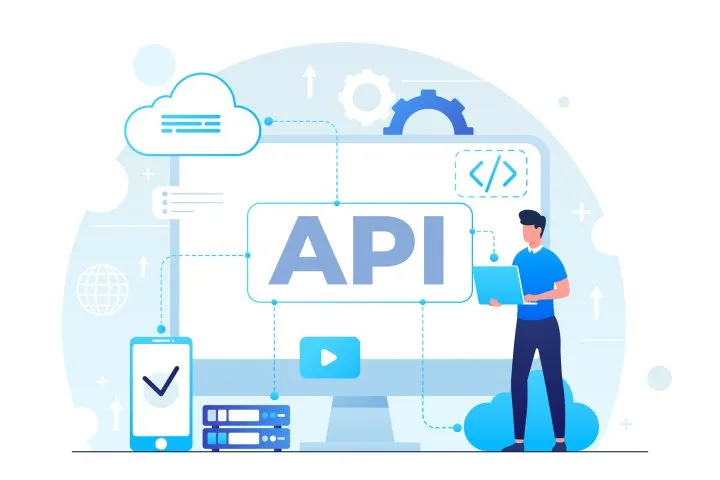
A REST Web Service (commonly referred to as a REST API) is a standard interface that allows two independent systems to exchange data via the HTTP/HTTPS protocols. In the vast majority of Industrial Internet of Things (IIoT) use cases, data exchange is performed using JSON Format(XML format is used in certain specific scenarios.) This lightweight architecture greatly facilitates deep integration between industrial systems and IT applications, cloud services, and big data analytics tools.

The REST architecture primarily relies on the following standard HTTP methods to organize and manage data exchange:

  • GET: Read/retrieve data (e.g., retrieve real-time weather forecasts, electricity rates from the power grid, or sensor measurement data).

  • POST: Send/create data (e.g., upload factory energy consumption data, publish information about specific production events).

  • PUT: Replace/update data (for example: remotely update system configuration parameters).

  • DELETE: Deleting Data (This method is rarely used in SCADA core control, but is very useful for specific system management and maintenance operations.)

It is precisely because of this streamlined, versatile, and globally standardized technical framework that REST APIs have become the mainstream standard for modern SCADA systems to connect with their industrial ecosystems.

02 Why Are REST Web Services Critical for SCADA Systems?

Natively integrating REST Web Services into SCADA applications can deliver immediate, tangible benefits with a high return on investment (ROI) for industrial enterprises:

1. Leveraging External Big Data to Enhance Industrial Monitoring Capabilities

When an HMI is able to integrate more external contextual information, its operational value is significantly enhanced. For example, this includes real-time weather data, energy market prices, power grid load signals, and environmental regulations. This diverse data helps operations teams analyze the causes of alarms more accurately and predict system anomalies in advance, thereby comprehensively optimizing operational decision-making and risk management.

2. Breaking Down “Data Silos” in Industrial Settings

The valuable field data collected by SCADA systems and historian databases should not be confined solely within the monitoring system. Through standard REST interfaces, this industrial data can be efficiently transmitted to:

  • Enterprise Portals

  • Energy Management System (EMS)

  • Automated Reporting and Analysis Tools (BI Tools)

  • Various core business application systems (such as ERP and MES)

3. Accelerate the deep integration of IT (Information Technology) and OT (Operational Technology)

REST employs standard protocols that are widely recognized and trusted in the global IT sector, greatly facilitating interoperability between industrial operational technology (OT) and enterprise information technology (IT). This not only significantly reduces the complexity of system integration projects but also greatly enhances the sustainability and future scalability of the overall industrial control system architecture.

4. Improve corporate responsiveness and the level of production automation

Modern SCADA systems should not only serve as “monitors” but also possess proactive “execution capabilities.” Through efficient REST data exchange mechanisms, enterprises can achieve:

  • Automatically Trigger Automated Workflows

  • Real-Time Key Performance Indicator (KPI) Alerts

  • Synchronize Core Data with Third-Party Systems

03 Hongke Panorama Suite: Efficient Data Exchange via REST Web Services

Launched by Hongke, Panorama Suite(A comprehensive platform integrating MES, SCADA, and Historian) now offers native support for REST integration.

Panorama's REST Web Service feature enables applications to flexibly use REST Web services for data exchange. The platform includes powerful REST Web Service Client Object, allowing engineers to send standard HTTP requests (GET, POST, PUT, DELETE) to the web server directly from application scripts and to precisely process the received responses.

For modern surveillance systems, one of the key advantages of Hongke Panorama is its support for “bidirectional REST communication”:

  • Receiving external information: Retrieve real-time data on weather, energy, telemetry, external repositories, and more to enhance SCADA overview views (dashboards), alarm systems, and historical trend analysis.

  • Send application data: Proactively send SCADA-internal energy consumption data, KPIs, equipment operating status, calculated metrics, and events to third-party services (such as compliance reporting systems, energy portals, and enterprise information systems).

This powerful bidirectional communication capability has truly transformed SCADA into a “data hub” for industrial operations. It can seamlessly integrate external contextual information, aggregate underlying field data, and distribute the right data to the systems that need it most at the optimal time.

04 Practical Application Cases of Hongke Panorama REST Web Services

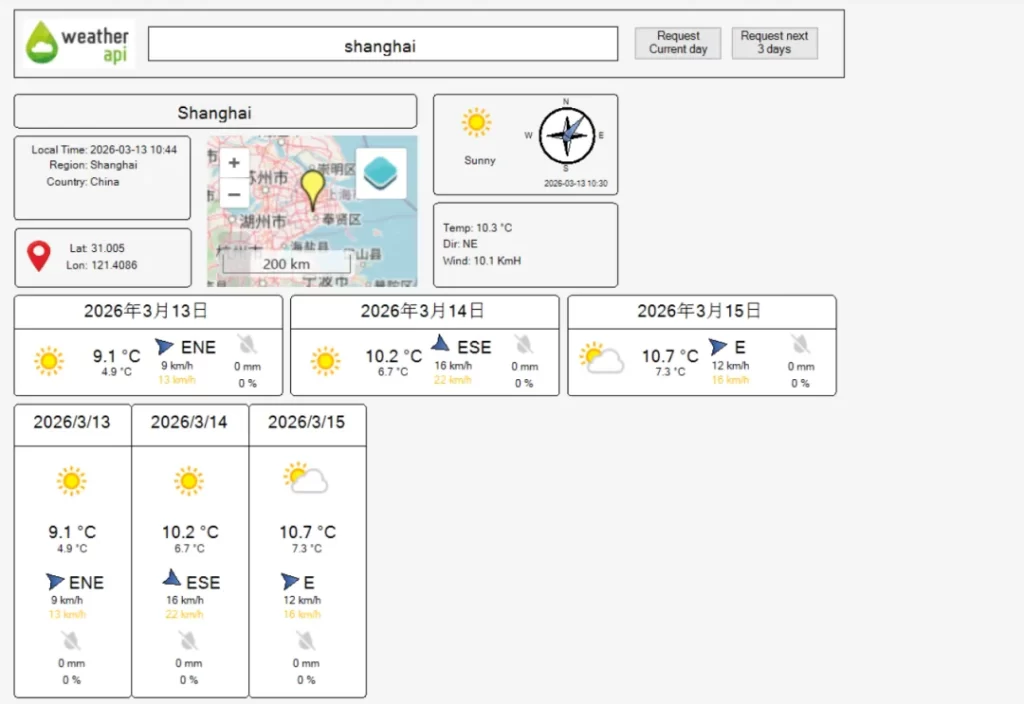
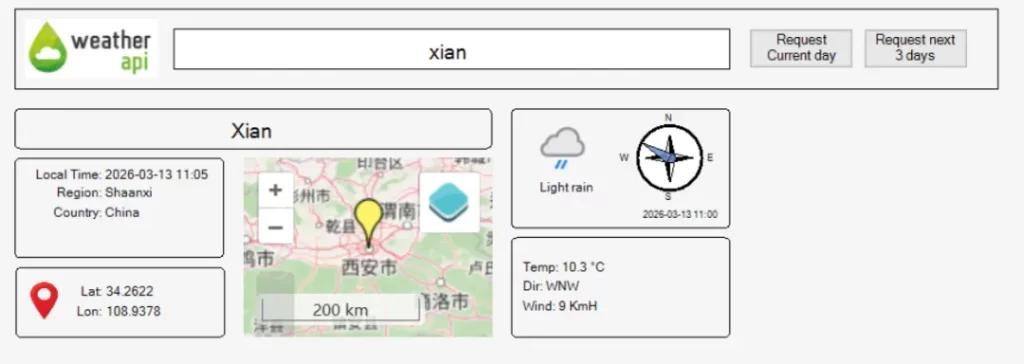
Case Study: Hongke Panorama WeatherAPI Demo Example

1. Integration of Regional Weather Data from Météo-France

For stakeholders in the water cycle management sector—which encompasses water production, transmission, distribution, wastewater treatment, stormwater management, and other related fields—weather is the most decisive key variable: Extreme weather events—such as heavy rainfall, storms, frost, heat waves, or droughts—all have a direct impact on water flow, storage levels, water quality, and the operational safety of infrastructure.

In practical applications of the Hongke Panorama platform, integrating professional weather services enables the following:

  • Conduct a comparative analysis by correlating alarm events and equipment operation events with specific weather events.

  • Predict the risk of overload or sewage overflow in hydraulic systems in advance.

  • Combine real-time and historical weather conditions to conduct an in-depth analysis of trends in flow, turbidity, and water levels.

2. Integration of Enedis Electricity Pricing Services

Energy is not only a major cost center for businesses, but also a highly flexible lever in operational management. By integrating real-time electricity pricing services into the Hongke Panorama platform, businesses can:

  • Display the current electricity rates in real time on the monitoring screen (HMI) and management dashboard.

  • Automatically calculate key performance indicators (KPIs) such as “cost per unit” or “cost per cubic meter.”

  • Assist management in developing more effective operational strategies, such as off-peak production, load shedding, and energy-optimized scheduling.

3. LX CONNECT (Sofrel) and the LogUp Telemetry System

For large-scale distributed networks and remote infrastructure, Hongke Panorama also serves as an indispensable core component in telemetry links.

One typical commercial application scenario is as follows: By communicating with the LX CONNECT (Sofrel) service, the system automatically reads and fully records the configuration information and measurement data from LogUp telemetry devices. This makes it easy to:

  • Capture and accurately record remote measurement values in real time.

  • The central control room provides centralized monitoring of the operational status of all distributed equipment.

  • Significantly simplify the configuration and maintenance of remote devices through reliable third-party services.

Conclusion: REST — The Standard Technology for Enhancing the Business Value of SCADA

REST Web Service It is leading industrial monitoring systems into a new era that is smarter, more open, and more efficient.

By precisely integrating key external data (such as weather, energy, and telemetry) and enabling automated data exchange with external systems (reporting tools, compliance management systems, advanced control systems, etc.), enterprises can:

  • Gain a more comprehensive, all-encompassing understanding of the actual operating conditions at industrial sites.

  • To analyze and forecast overall operational performance with greater precision.

  • Implement automated responses more quickly and nimbly.

leverageHongke Panorama Platformand its native, built-in REST Web Service Client FeaturesThese advanced integration capabilities have become standard features in modern SCADA applications, fully supporting technology and manufacturing companies in Hong Kong and Southeast Asia in unlocking the true business value of industrial monitoring data.

Other Articles

Hongke Case

HongKe Solutions] Observability Budget Busting: How Redis + Grafana Saved Hong Kong Banks $1.4 Million in 2 Years?

Hong Kong Bank, troubled by the high license cost of Dynatrace, adopted Redis+Grafana to build an open source observable architecture in accordance with the TM-E-1 regulatory standards of the Hong Kong Monetary Authority. By adopting a hierarchical strategy of APM for the core system and metrics monitoring for the rest of the services, the bank maintains 70% of the monitoring performance, saving US$1.4 million in monitoring expenses over two years, and the report data can also satisfy the monitoring requirements.

Read more

Contact Hongke to help you solve your problems.

Let's have a chat