
Search

Hongke's latest articles

HongKe

Lorem ipsum dolor sit amet, consectetur adipiscing elit. Ut elit tellus, luctus nec ullamcorper mattis, pulvinar dapibus leo.

Lorem ipsum dolor sit amet, consectetur adipiscing elit. Ut elit tellus, luctus nec ullamcorper mattis, pulvinar dapibus leo.

[Hongke Solution] Hongke’s PCAN-M.2 Interface Card Delivers a Highly Reliable In-Vehicle Communication Solution for Level 4 Autonomous Driving

As global autonomous driving technology accelerates toward Level 4 (highly automated driving), the number of onboard sensors in autonomous vehicles and their core data throughput are experiencing exponential, explosive growth. This major technological transformation poses unprecedented demands and technical challenges regarding the real-time performance, data transmission bandwidth, and the reliability and robustness of the overall network architecture of in-vehicle communication systems.

However, while most mainstream industrial PCs (IPCs) currently on the market offer extremely powerful computing capabilities, they generally face significant hardware limitations: They often lack native hardware support for core automotive-grade communication protocols such as CAN (Controller Area Network) and CAN FD (Flexible Data Rate CAN); At the same time, these general-purpose computing platforms struggle to meet the high standards required for smart vehicles in extreme in-vehicle environments, such as electromagnetic compatibility (EMC) and mechanical robustness.

01 Project Background and Challenges in Implementing the Project in the Asia-Pacific Market

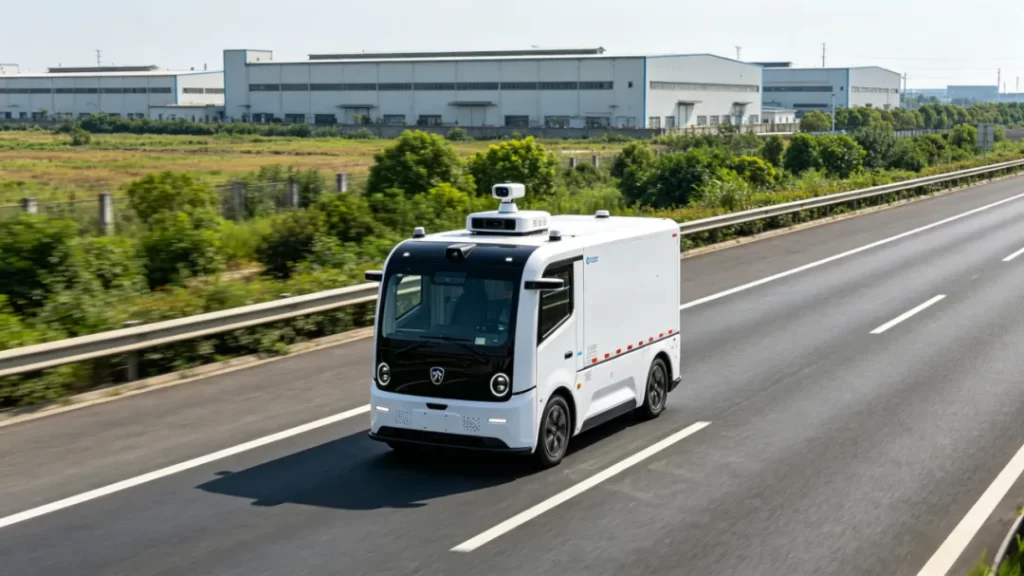
In a new mass-production R&D project for autonomous shuttle buses led by a top system integrator in the Asian market, the world’s leading provider of edge computing and industrial computer solutions— — ADLINK Technology — has introduced an Electronic Control Unit (ECU) with powerful AI decision-making capabilities, which serves as the central control hub and decision-making logic for the entire autonomous shuttle bus.

This system must deeply integrate data from multiple sensors—including LiDAR, millimeter-wave radar, high-resolution cameras, and cameras, and must establish highly secure, real-time data communication with the vehicle’s chassis actuators—including the steering, braking, and driving systems—within microseconds.

  • Customer Types: ADLINK—a global leader in industrial computers and edge computing solutions

  • End-User Scenarios: Smart Urban Transportation: Level 4 Autonomous Shuttle

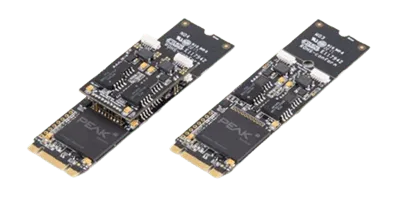
  • Core Solutions: Hongke PCAN-M.2 High-Performance 4-Channel In-Vehicle Communication Interface Card

In the early stages of solution deployment, although traditional industrial computing platforms possess powerful CPU and GPU computing power, they generally exhibit the following hardware communication bottlenecks in the in-vehicle environment that require urgent resolution:

  1. Communication Protocol Limitations: The low-level hardware of the computing host lacks native hardware decoding and driver support for automotive-grade and vehicle-grade communication protocols such as CAN 2.0 and high-speed CAN FD.

  2. Incompatibility with the in-vehicle environment: General-purpose computing platforms cannot meet the extremely stringent electromagnetic compatibility (EMC) standards required for in-vehicle applications, and they lack sufficient mechanical robustness to withstand the high-frequency vibrations encountered while the vehicle is in motion.

  3. Spatial Structural Conflicts: The system urgently requires a hardware communication interface module that is compact in size, offers extremely high vibration resistance, and can be directly embedded within the ECU mainboard.

  4. Certification Compliance Thresholds: The entire set of communication link hardware must fully comply with and pass certification under the core regulations for the automotive sector, including E-Mark (ECE R10) Automotive Electromagnetic Compatibility Certification,ISO 7637-2 Electromagnetic Interference Testing for Road Vehicles and ISO 16750-2 Certification of Environmental Conditions and Electrical Loads for Road Vehicles.

02 An Analysis of Hongke’s In-Vehicle Communication Solutions and Technical Architecture

To address the technical bottlenecks mentioned above, ADLINK ultimately decided toHongke PCAN-M.2 Four-Channel High-Performance In-Vehicle Communication Interface CardDeeply integrated into its platform designed specifically for autonomous driving ADM-AL30 Electronic Control Unit (ECU) In this context, it serves as a solid foundation for the vehicle’s underlying core communication system.

The Hongke PCAN-M.2 interface card can be securely inserted and removed directly from the ECU’s motherboard via a standard M.2 slot, significantly saving space inside the vehicle’s chassis while demonstrating exceptional resistance to physical vibrations. At the operating system level, this interface card offers excellent SocketCAN Native driver support, enabling seamless integration ROS 2 (Robot Operating System) An ecosystem that comprehensively ensures the efficiency, stability, and real-time communication of the underlying network.

Overview of the Platform's Hardware and Software Configuration

  • Central Processing Unit (CPU): The Latest 12th Gen Intel Core i9 / i7 High-Performance Processors

  • Graphics Processing Unit (GPU): NVIDIA RTX 4000 SFF Professional-Grade Edge Computing Graphics Card

  • Underlying Operating System (OS): Linux Ubuntu 22.04 LTS Stable Operating System

  • Open-Source Framework for Autonomous Driving: ROS 2.0 (Robot Operating System) / Autoware: A General-Purpose Software Stack for Autonomous Driving

An Analysis of the Core Communication Architecture for Autonomous Shuttle Buses

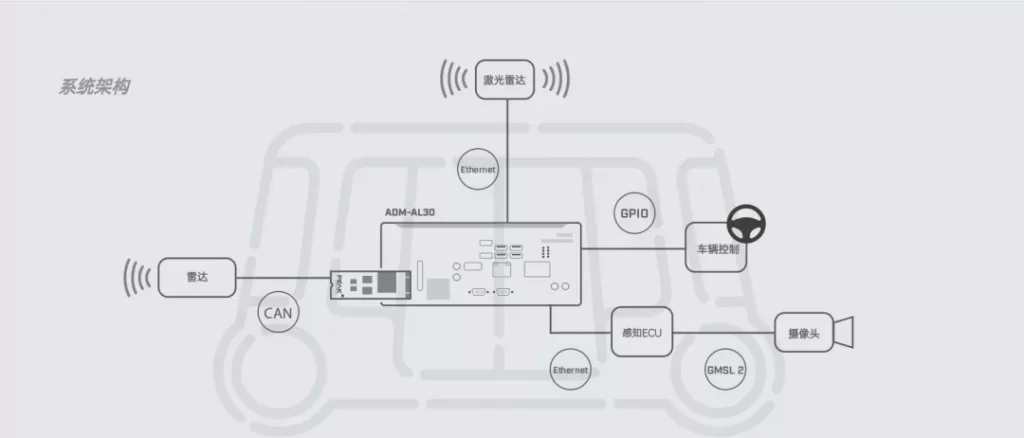
Within the overall communication system architecture of the entire autonomous shuttle, data flow and the transmission of control commands follow an extremely rigorous high-speed link planning scheme:

  • Multi-channel CAN (FD) bus: Through the embedded Hongke PCAN-M.2 interface card, the system can expand to support up to four fully independent, hardware-electrically isolated CAN/CAN FD bus channels, while remaining fully compatible with the traditional CAN protocol and supporting high-speed CAN FD data rates (with a maximum bandwidth of 12 Mbit/s)。

  • Optical LiDAR: Large volumes of high-precision LiDAR point cloud data are transmitted directly to the central electronic control unit (ECU) via a high-speed standard Gigabit Ethernet link.

  • High-Resolution Camera Data Link: Data from the in-vehicle cameras mounted on all four sides is processed through a high-performance GMSL2 Serial link (with a maximum data rate of 8 Gbit/s) The data is transmitted in real time to a dedicated perception and computing ECU; after being preprocessed at the edge, it is then transmitted at high speed via an Ethernet network back to the ADM-AL30 central decision-making computing platform.

  • Execute control command output: After the central computing platform completes dynamic traffic condition decision-making, the final core chassis control commands—such as vehicle propulsion, emergency braking, and dynamic steering—are transmitted in real time to the by-wire chassis actuators via a dedicated GPIO interface and a highly reliable CAN FD bus.

Key Advantages Derived from Core Application Value

  • ✔️ Four-channel, high-reliability in-vehicle communication: A highly stable physical-layer CAN/CAN FD data transmission link has been successfully established between the Central Electronic Control Unit (ECU) and various onboard sensors.

  • ✔️ Seamless integration with the software ecosystem: The hardware drivers interface directly with industrial-grade open-source autonomous driving software frameworks such as ROS 2.0 and Autoware through the Linux SocketCAN mechanism, significantly shortening the R&D cycle.

  • ✔️ Genuine automotive-grade hardware design: It adopts the extremely compact and robust M.2 standard form factor and features industry-leading resistance to electromagnetic interference (EMI) and electromagnetic radiation.

  • ✔️ Efficient, coordinated operation at the system level: It supports multi-channel parallel data communication, providing ample bandwidth for precise sensor fusion computing power and ensuring that vehicles can make rapid, real-time decisions within milliseconds even under complex road conditions.

03 Core Product Advantages and Competitive Differentiation

The reason Hongke’s PCAN-M.2 high-performance in-vehicle communication interface card has been able to stand out in the highly competitive B2B smart transportation supply chain is entirely due to its numerous core technical advantages in terms of hardware specifications and software compatibility:

  • ✅ Multi-channel, high-concurrency parallel communication: Provides up to 4 fully independent CAN/CAN FD transmission channels with advanced hardware electrical isolation. It supports parallel high-speed throughput for multiple data streams, perfectly meeting the demanding bandwidth requirements of autonomous driving systems for multi-source sensor fusion, and ensuring rapid delivery of control commands to the decision-making layer.

  • ✅ Compact and robust structural design: The hardware is extremely compact (measuring just 80 × 22 × 10.2 mm) and can be directly inserted into the M.2 slot on the ECU’s motherboard. This plug-in design not only significantly saves valuable internal space within the vehicle’s chassis but also fundamentally eliminates the risk of traditional external cables becoming loose due to vehicle vibrations, offering excellent vibration resistance.

  • ✅ Top-tier automotive-grade robustness and environmental adaptability: Full support for hardware components -40°C to 85°C With its industrial-grade wide-temperature operating range, it can easily handle the high temperatures and humidity of Southeast Asia, as well as the extreme heat dissipation challenges inside vehicle cabins. In addition, each channel of the interface card features up to 300V hardware electrical isolation This shielding provides exceptional electromagnetic interference (EMI) protection, completely isolating the core computing unit from electrical interference generated by the vehicle's high-voltage systems.

  • ✅ Seamless integration capabilities within the software ecosystem: With comprehensive native support for the SocketCAN technical architecture in mainstream Linux operating systems, it integrates seamlessly with leading open-source autonomous driving operating systems and software stacks such as ROS 2.0 and Autoware, eliminating the need for developers to spend significant time writing low-level drivers, and comprehensively ensuring high stability and ultra-low latency in real-time communication across the entire autonomous driving hardware and software system.

  • ✅ Efficient collaboration across the entire system: This interface card can work in close coordination with the computing power of the CPU/GPU chips inside the autonomous driving central ECU, enabling the efficient, low-load, real-time collection of data from multiple sensors, thereby fully freeing up the processor’s valuable computing power for core AI vision perception, path planning, and vehicle safety control algorithms.

Conclusion

The Hongke PCAN-M.2 in-vehicle communication interface card seamlessly integrates ultra-high transmission bandwidth, powerful real-time communication capabilities, high-standard automotive-grade reliability, and an extremely compact form factor, successfully providing autonomous driving electronic control units (ECUs) with the most critical underlying CAN/CAN FD automotive network communication capabilities.

In this mass-production project for autonomous shuttle buses in the Asia-Pacific region, Hongke interface cards have joined forces with ADLINK Technology’s ADM-AL30 high-performance computing platform, working together seamlessly. Not only did they perfectly meet the stringent requirements for high communication bandwidth in multi-sensor fusion architectures, but they also provided the most critical underlying hardware assurance for the safe and stable operation of autonomous vehicle control systems through a time-tested, rock-solid data communication link.

This article was officially published by Hongke Electronics. For more information on the communication architecture of autonomous shuttle buses and the underlying technical solutions for automotive-grade CAN FD interface cards, please visit the column on Hongke Technology’s official website.

Other Articles

Hongke Case

[Hongke Case Study] Hongke Panorama SCADA System: Enabling Industrial Automation and IT/OT Convergence Through REST Web Services

Learn more about how Hongke Panorama Suite uses standard REST Web Services (REST APIs) to enable bidirectional data exchange, break down data silos on the industrial floor, and seamlessly connect SCADA systems with real-world weather, energy, and telemetry big data—thereby comprehensively accelerating the deep integration of enterprise IT and OT.

Read more
Hongke Case

[Hongke Solutions] SimData High-Fidelity Virtual Dataset Solution: Perception Training for Autonomous Driving Based on aiSim

Hongke has launched SimData, a high-fidelity virtual dataset built on the aiSim simulation platform and fully compatible with the nuScenes format. It provides high-quality multimodal training data for autonomous driving perception algorithms, LiDAR, and BEV models, effectively addressing the challenge of data collection in extreme scenarios (Edge Cases). Click now to learn about the development process and see real-world results!

Read more
Hongke Dry Goods

[Hongke Insights] Single-Use vs. Reusable Cold Chain Data Loggers: A Guide to Pharmaceutical GDP Compliance and Selection for Transportation

How to Choose the Right Temperature Data Logger for the Pharmaceutical Cold Chain? This article provides an in-depth comparison of the pros and cons of single-use and reusable data loggers, in accordance with GMP/GDP compliance standards, to help pharmaceutical companies and logistics providers in Hong Kong and Southeast Asia optimize temperature control management in their supply chains and reduce compliance risks when expanding into international markets. Click to learn about expert selection solutions!

Read more

Contact Hongke to help you solve your problems.

Let's have a chat