
Search

Hongke's latest articles

HongKe

Lorem ipsum dolor sit amet, consectetur adipiscing elit. Ut elit tellus, luctus nec ullamcorper mattis, pulvinar dapibus leo.

This is sample text. Click the “Edit” button to change this text.

[Hongke Insights] How Does TSN Build a Deterministic Foundation for Embodied Intelligence?

While the industry is generally focused on a robot’s “brain” (AI computing power) and “cerebellum” (motion control), a more fundamental question is gradually coming to the fore:How exactly is efficient, real-time data exchange achieved between these precision modules?

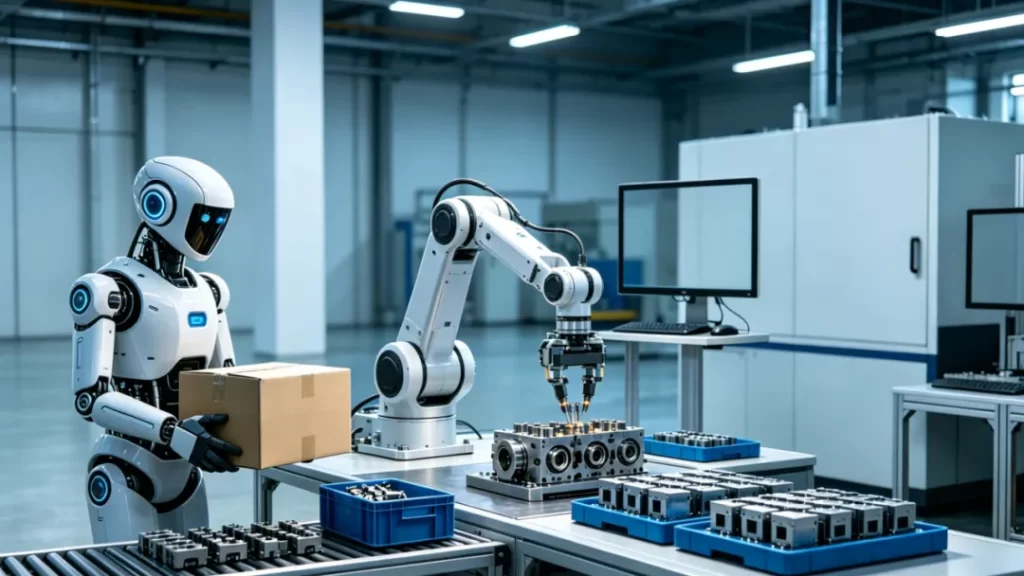
Embodied AI is by no means simply the combination of “AI + robotics”; rather, it requires intelligent agents to simultaneously perceive, reason, and act in the real world. However, the communication networks that underpin all these interactions are gradually becoming the core bottleneck hindering the evolution from “automated devices” to “autonomous intelligent agents.”TSN (Time-Sensitive Networking) technology is emerging as the ideal approach for building the "nervous system" of robots.

Solving the “Cable Dilemma” — Achieving Lightweight and Highly Reliable Robots

Current Bottlenecks

  • Coexistence of Multiple Protocols Leads to Complex and Inefficient Cabling: High-end robots often use multiple protocols simultaneously, such as CAN bus, EtherCAT, and proprietary Ethernet, resulting in complex wiring harnesses, difficult cabling, and poor space utilization; furthermore, cable wear and loose connections can easily lead to malfunctions.

  • Bandwidth is limited, resulting in low data transfer efficiency: Traditional fieldbuses are typically limited by bandwidth and protocol complexity, making it difficult to quickly and efficiently upload massive amounts of sensor data to the business layer, where it is needed to support AI algorithms and data analysis. This is also a key obstacle preventing the deep integration of information technology (IT) and operational technology (OT) at present.

The Core Value of TSN Technology

As a Layer 2 basic transmission technology, TSN can aggregate various data streams over a single physical link,Establishing a real-time link between business processes and on-site controlFor example, by leveraging TSN and IPv6 technologies, industrial control buses can be unified, thereby effectively reducing system complexity and significantly decreasing the amount of wiring required. The combined use of TSN and EtherCAT in the internal communication systems of embodied intelligent robots can simplify the cabling structure while ensuring highly stable data transmission.

Hongke TSN IP Core Solution

Hongke’s TSN IP core solution is designed to build a standardized “single-network convergence” communication architecture— —enabling a single optical fiber or network cable to simultaneously carry high-bandwidth video streams from cameras (8 to 11 megapixels) and nanosecond (ns)-level synchronized control commands for motors. At its core is network-wide nanosecond-level clock synchronization combined with the IEEE 802.1Qbv Time-Aware Shaper (TAS) mechanism,Fundamentally resolve the physical and logical challenges posed by the tangled internal wiring and coexistence of multiple protocols in traditional robotsThe

System Architecture

  • Clock Synchronization (IEEE 802.1AS): Hongke’s TSN IP core provides a precise, synchronized “heartbeat” for all devices in the network (such as vision sensors and joint motor controllers), which is an essential prerequisite for achieving precise scheduling.

  • Traffic Scheduling (IEEE 802.1Qbv): A communication cycle is divided into multiple time windows, making it easy to achieve precise scheduling:

    1. Dedicated Service Counter: Assigned to control signals (such as motor commands). Within this window, the network forwards only these high-priority commands to ensure deterministic low latency.

    2. Shared Window: Allocated to data such as video streams. This data is transmitted through other channels, sharing the bandwidth with key control signals on a "time-division" basis, ensuring that they do not interfere with one another.

  • Deployment Models: Equipment manufacturers can embed this IP core into their proprietary FPGA chips to rapidly develop TSN-capable sensors, controllers, or switches, thereby building a unified network that is standardized, open, and highly deterministic.

Application Value

  • Simplify the System Architecture"One-Network Convergence" can simultaneously carry high-bandwidth visual data and nanosecond-level control command streams over a single fiber optic cable or network line.

  • Significantly reduces the weight of the main unit: Significantly reduces internal wiring in the robot, lowers the weight of the robot body, and thereby improves overall energy efficiency.

  • Improve System Reliability: Effectively reduces the risk of operational failures caused by cable wear or loosening.

Achieving "Microsecond-Level" Synchronization — Enabling Precise Manipulation and Multi-Joint Coordination

Current Bottlenecks

The performance capabilities of embodied intelligent systems depend heavily on the synchronization accuracy among the device’s various modules. Whether a humanoid robot is performing complex, precision grasping maneuvers or a collaborative robot is working in close proximity to human workers, control commands must be delivered precisely to each joint with extremely low latency.

The Core Value of TSN Technology

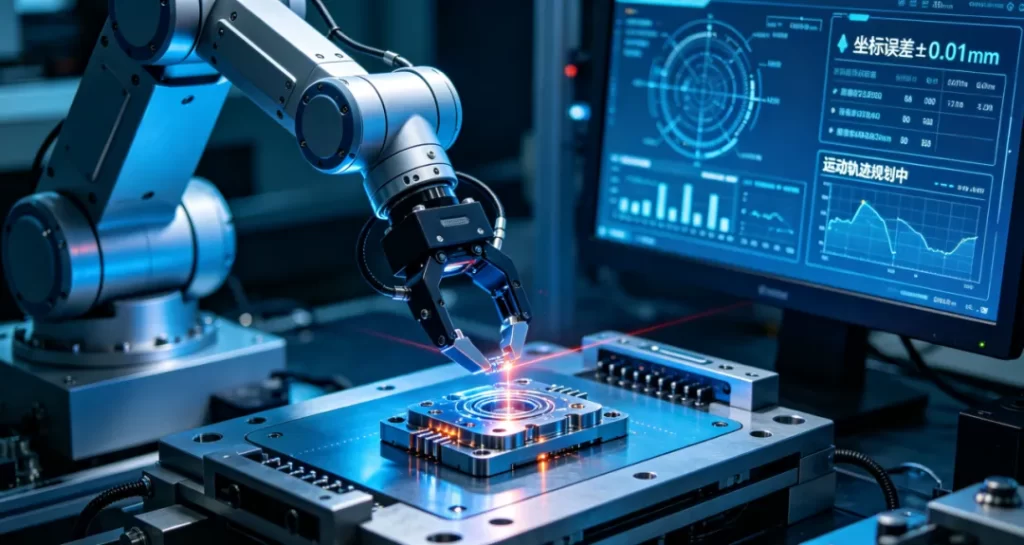
TSN technology enables the system toTime jitter is controlled to within 20 ns, compared to the millisecond (ms) latency commonly found in traditional Ethernet,Accuracy has improved by approximately three orders of magnitude. This outstanding performance is crucial for ensuring high-speed, coordinated motion across the robot’s multiple joints and microsecond (μs)-level execution accuracy; it serves as the core foundation for achieving complex dynamic balance control and precise manipulation.

Hongke TSN IP Core Solution

Hongke's TSN IP Core Solution FeaturesUltra-high-precision synchronization capability, achieving the following key metrics in reducing forwarding latency and improving scheduling efficiency:

Through the IEEE 802.1Qbv gating mechanism, Hongke’s TSN IP core allocates a “dedicated time window” for control signals, fundamentally eliminating the latency uncertainty caused by network congestion.

  • Message Scheduling Accuracy: IEEE 802.1Qbv accuracy up to ±16 ns

  • Forwarding Queue Gate Control Accuracy: IEEE 802.1Qbv accuracy up to ±16 ns

  • Synchronization and Real-Time Capabilities: IEEE 802.1AS time synchronization accuracy is controlled to Within ±50 ns(In the best-case scenario, this can be as low as a little over ten nanoseconds or even less.)

Application Value: Empowering High-End Manufacturing and High-Risk Operations

In key application scenarios such as industrial precision assembly requiring millimeter-level accuracy, flexible production lines, and intelligent inspection in high-risk, complex environments, the deterministic communication capabilities provided by TSN areEnsuring the success rate of mission execution and the security of system operationsa key technological cornerstone.

Revamping System Architecture — Building Scalable System Collaboration Capabilities

Current Bottlenecks

Traditional robots are often “information silos,” making it difficult for them to integrate seamlessly into the Industrial Internet of Things (IIoT); they lack a unified, deterministic communication architecture for scenarios such as multi-robot collaboration and remote control.

Advantages of Hongke's TSN IP Core Solution

✔️ Flexible Development and Porting: Provides a comprehensive solution comprising endpoints and switches, allowing equipment vendors to flexibly deploy them at key nodes in real-world applications, thereby significantly enhancing development flexibility.

✔️ Long-Distance "Three-Network Convergence": By leveraging higher bandwidth and TSN fiber-optic networks, it enables remote real-time control, high-definition video streaming, and the synchronized transmission of background data, perfectly supporting the robot’s high-definition visual data.

✔️ Fundamentals of Swarm Intelligence: To provide a robust, deterministic communication foundation for brain-inspired architectures such as embodied intelligence operating systems that utilize "cerebrum-cerebellum coordination."

✔️ Proven by the industry and the market: It has passed conformance testing on multiple industry testbeds and various test instruments, delivering higher precision and superior communication quality.

Conclusion

The application of TSN in the field of embodied intelligence is by no means a simple technology transfer, but rather a profound restructuring of system architecture. By integrating standards, deterministic latency, and ultra-high bandwidth, it builds a highly efficient and collaborative “nervous system” for embodied intelligent agents.

Hongke’s TSN IP core solution uses nanosecond-level synchronization and converged networking technology to completely overcome the three major bottlenecks of embodied intelligence: “cable clutter, control latency, and data silos.” The solution reduces the robot’s weight by minimizing 50% cabling and provides robust support for precise operations with 20 ns synchronization accuracy, fully integrating the “perception-decision-execution” closed-loop, and establishing an unshakable, deterministic communication foundation that enables robots to transition from individual intelligence to collective collaboration.

Other Articles

Hongke Dry Goods

[Hongke Insights] The Wave of Chinese Innovative Drugs Going Global: A Comprehensive Guide to Pharmaceutical Cold Chain Compliance and Temperature Monitoring During Transport

2026 will mark a boom period for the global expansion of China’s innovative drugs and biologics. How can you ensure that cross-border shipments comply with FDA 21 CFR Part 11 and EU GDP regulations? ELPRO LIBERO temperature recorders from Hongke offer a training-free, globally recognized pharmaceutical cold chain compliance solution, helping biotech companies successfully expand into global markets such as Hong Kong and Southeast Asia.

Read more
Hongke Dynamic

[Authoritative Recognition] Hongke MSR Named One of the World’s Top 15 Shock Data Logger Companies

Hongke’s MSR Data Logger has been ranked among the top 15 in the global shock data logger market! Designed specifically for precision instruments, semiconductor equipment, and cold-chain logistics, it provides high-precision three-axis shock, vibration, and temperature/humidity monitoring, comprehensively ensuring the safety of B2B cross-border logistics and supply chains. Learn more about our professional-grade transportation environment monitoring solutions today.

Read more
Hongke Dry Goods

[Hongke Insights] Plug the Gaps Before Deploying AI: Minimize Data Breach Risks with “Real-Time Monitoring + Access Control”​

As generative AI and AI agents are widely adopted in enterprises, behaviors such as prompt injection, over-agency, and unintentional data leaks by employees continue to amplify data leakage and compliance risks, creating an urgent need for proactive security solutions. This article leverages the Lepide Data Security Platform to build a comprehensive protection system centered on “pre-deployment governance + in-operation monitoring.” Through real-time sensitive data monitoring, fine-grained permission controls, end-to-end auditing, and automated incident response capabilities, it can integrate with SIEM and SOAR systems to form a closed-loop risk management system. The platform automatically consolidates excessive permissions, and abnormal behavior triggers rapid response measures such as account freezing and system isolation. This addresses the challenges of excessive AI permissions and confidential data leaks while meeting compliance requirements under regulations such as GDPR, thereby establishing a robust data security defense for enterprises implementing AI.

Read more

Contact Hongke to help you solve your problems.

Let's have a chat