

【虹科方案】虹科 GNSS 模擬器高斯噪聲解析 – 提升定位精度與接收機性能
深入解析虹科 GNSS 模擬器中高斯噪聲對定位效果的影響。了解如何透過科學模擬提升接收機性能與定位精度,適用於香港及東南亞 B2B 技術測試環境。
Lorem ipsum dolor sit amet, consectetur adipiscing elit. Ut elit tellus, luctus nec ullamcorper mattis, pulvinar dapibus leo.
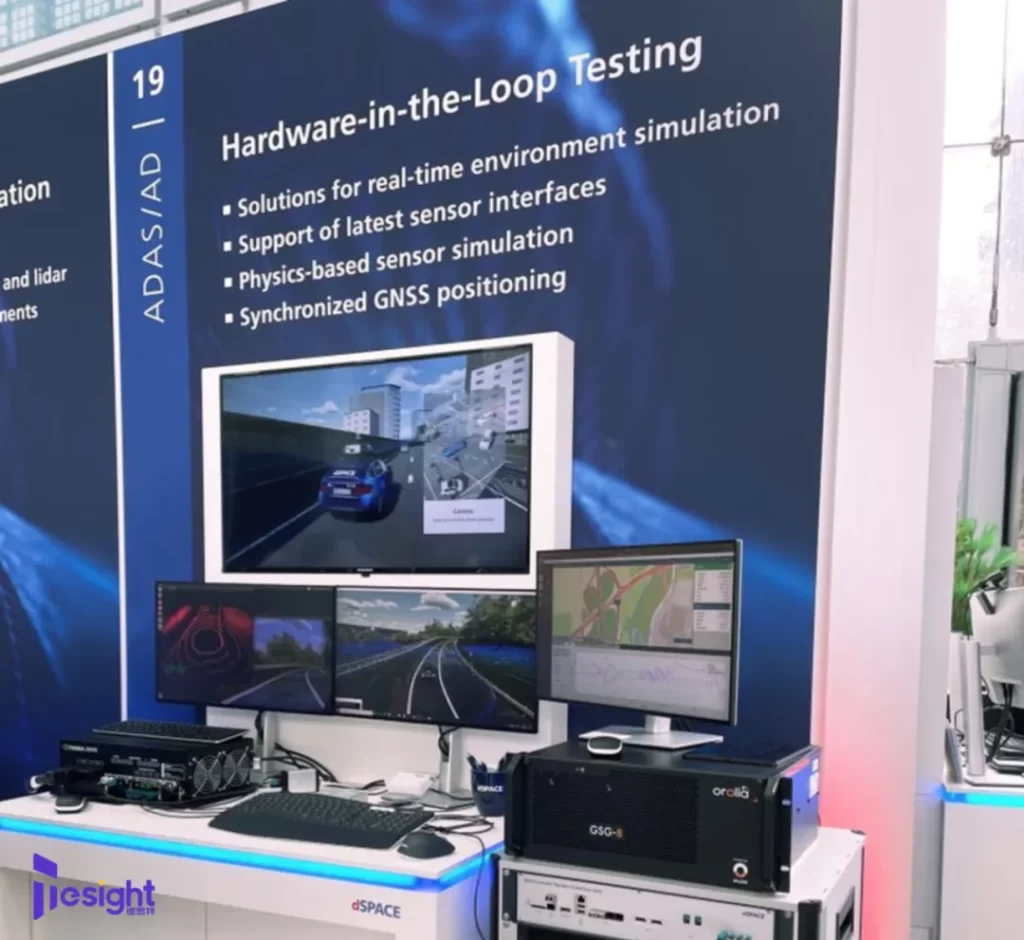
dSPACE, a world-renowned provider of simulation and verification solutions, has successfully constructed a GNSS-based Hardware-in-the-Loop (HIL) simulation system for driving functions. The system can be widely used in automotive scenarios such as autonomous driving, V2X, and smart cabins, and is highly flexible and versatile, making it suitable for all kinds of complex test environments.
dSPACE is a global player in the field of simulation and verification, and a pioneer in aerospace and defense innovation. Its product portfolio covers the entire development chain from conceptual design to mass production support for applications in autonomous driving, electric vehicles, motors, battery management systems, fuel cells, power electronics, charging infrastructure, and more.
dSPACE also offers a wide range of simulation models to support all stages of development, from functional development to ECU testing.

The importance of GNSS signals in autonomous driving lies in their ability to provide accurate, reliable and stable positioning information. Whether it is V2X communication or autonomous driving function verification, all core applications rely on satellite-supported positioning capabilities.
However, the availability of different GNSS systems varies greatly, and the quality of GNSS signals can be easily affected by topographical environments (e.g., urban canyons, viaducts, dense buildings). In addition, GNSS signals can be subject to unintentional interference, malicious interference, or spoofing attacks.
To ensure the robustness and reliability of the application in everyday scenarios, it is essential to rely on more powerful and stable GNSS simulators.

The whole system is mainly composed of the following parts:
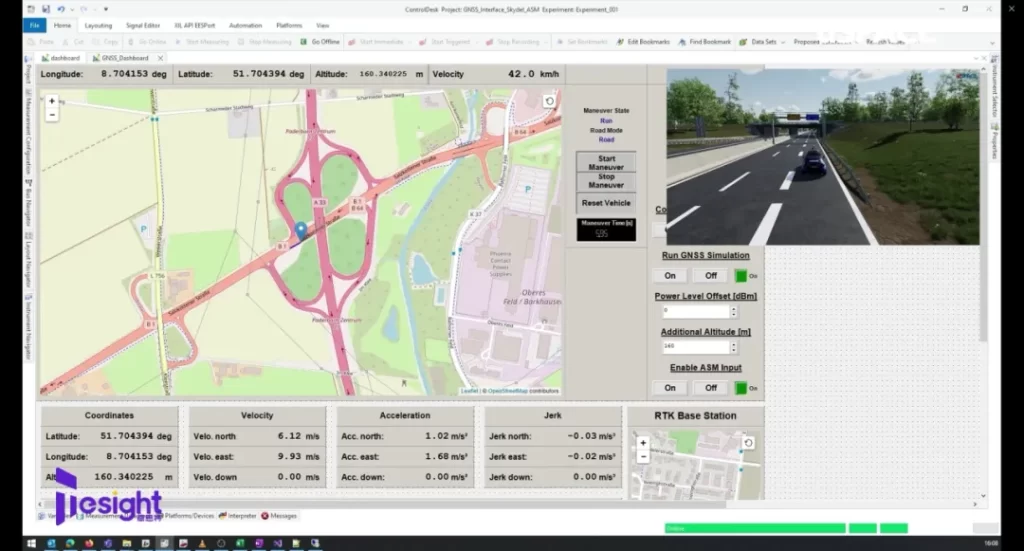
In this solution, the HIL simulator can specify the 3D trajectory and related scenes, and output the position information (latitude, longitude, altitude), 3-axis velocity, 3-axis acceleration and acceleration. Attitude information such as 3-axis angular velocity can be obtained using an ASM module, and the data is transmitted in real time to the GNSS simulator, which then feeds it back to the device to be tested using RF signals.

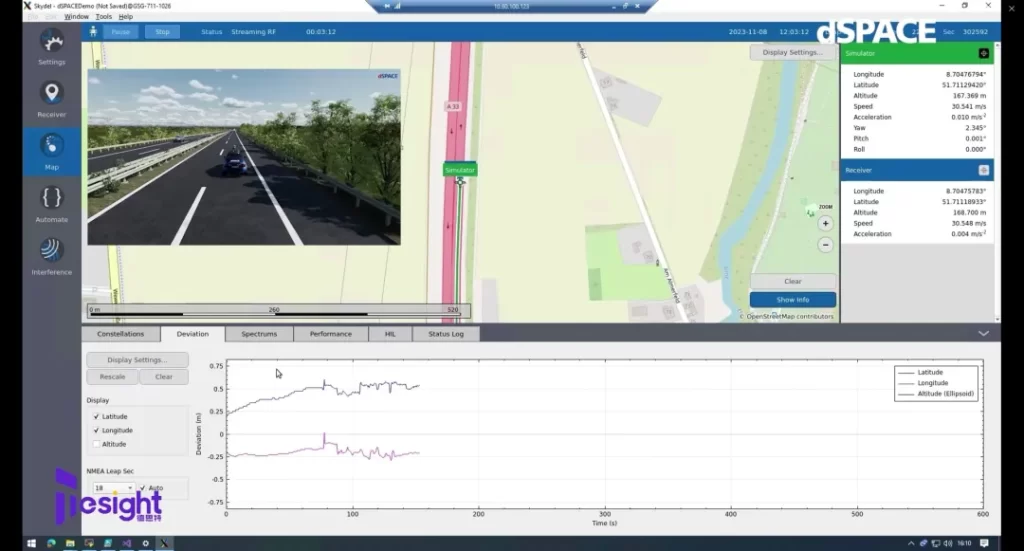
During the GNSS simulation process, you can observe the GNSS data output from the simulator and received from the device under test in real time, and you can check the positioning error and compare the performance of the simulation coordinates. By monitoring the interaction between the GNSS simulator and the DUT (Device Under Test) in real time, the performance of the positioning algorithm and GNSS modules in different environments can be more accurately evaluated.

In this way, the GNSS module can be fully integrated into HIL's 3D simulation scenarios, enabling it to perform a wide range of complex environmental and operational tests in a laboratory environment. The ability to simulate a wide range of road conditions and environmental changes without the need for extensive on-road measurements dramatically improves testing efficiency, while providing more quantifiable data for performance optimization and algorithm adjustment.
The GNSS simulator enables highly accurate geolocation simulation and satellite signal generation. When the GNSS signal generator is integrated into the dSPACE ASM model, the system automatically selects the default GNSS test scene and controls the signal generator.
In a typical autonomous driving test, the starting position, date, driving route and driving maneuvers can be parameterized in the ASM model, and various GNSS constellations (GPS, Galileo, GLONASS, BeiDou, etc.) and signal degradation modes can be selected. the HIL simulator continuously transmits the vehicle position data to the signal generator, which generates a simulated signal based on the scene and outputs it as a real RF signal to the GNSS device to be tested. The HIL simulator continuously transmits the vehicle position data to the signal generator, which generates a simulated signal based on the scene and outputs it to the GNSS device to be tested in the form of a real RF signal.
Through this complete process, the positioning status, error behavior and performance limits of GNSS modules in various complex scenarios can be completely reconstructed, effectively supporting the rapid verification of autonomous driving perception and positioning tests.

深入解析虹科 GNSS 模擬器中高斯噪聲對定位效果的影響。了解如何透過科學模擬提升接收機性能與定位精度,適用於香港及東南亞 B2B 技術測試環境。

虹科MSR衝擊振動記錄器可為物流運輸、軌道運輸、電力能源、工業自動化等領域提供高精度、可靠的衝擊振動監測解決方案。透過引入虹科MSR165衝擊微型振動記錄儀,海信日立成功建構了一套科學的數據監測體系,實現了對設備運輸環境的精準量化與產品設計的持續優化。

虹科 PCAN Router 提供 CAN / CAN FD 通訊橋接解決方案,支援跨 EE 架構信號轉換,無需修改 ECU 軟件即可完成 POC 驗證與測試整合,適用於汽車電子、自動駕駛與車載系統開發。