
Search

Hongke's latest articles

HongKe

Lorem ipsum dolor sit amet, consectetur adipiscing elit. Ut elit tellus, luctus nec ullamcorper mattis, pulvinar dapibus leo.

[Hongke Solutions] Introduction to the AR Smart Healthcare Solution: How Can Remote Consultations, Intraoperative Guidance, and Medical Training Be Implemented?

The core value of AR in smart healthcare lies in enabling medical staff to access information, share first-person views, and connect with remote experts—all without using their hands. For hospitals, healthcare groups, educational institutions, and medical device companies in Hong Kong, AR can serve as an on-site platform for remote collaboration, procedural guidance, training documentation, and technical support.

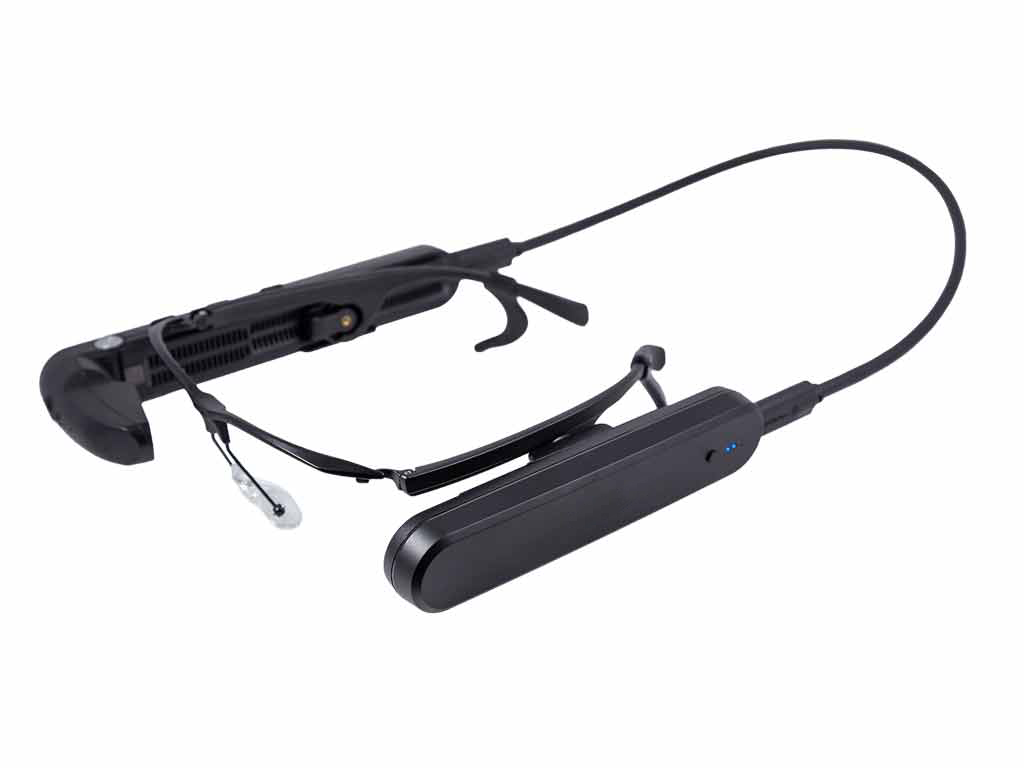
Hongke's AR medical solution consists of Vuzix AR smart glasses, a remote collaboration platform, and enterprise deployment services. It can be applied in scenarios such as pre-hospital emergency care, remote consultations, intraoperative guidance, medical training, remote monitoring, and medical device after-sales support.

01 Why Is AR Needed in Medical Settings?

Traditional video conferencing can connect different locations, but participants on-site usually still need to hold a smartphone or tablet, and the camera’s field of view may not align with the actual operational perspective.

By wearing AR smart glasses, on-site medical staff can transmit a first-person view in real time to experts while keeping both hands free to perform examinations, procedures, or equipment maintenance. Remote experts can then provide guidance through voice commands, screen annotations, screen freezes, and document sharing.

This model primarily addresses three types of problems:

  1. Experts were unable to arrive on time, collaboration across departments or regions involves higher costs;

  2. It is difficult to fully document the process., the training content relies on on-site demonstrations;

  3. Medical Device MalfunctionA manufacturer representative or experienced engineer is needed to resolve the issue on-site.

02 In what scenarios can AR medical solutions be applied?

1. Telemedicine Consultations and Ward Rounds

Healthcare professionals wearing AR glasses can transmit the patient’s on-site condition, equipment displays, and procedural steps to experts, facilitating real-time discussions among multiple parties.

In the case of the University of Malaya Medical Center, AR smart glasses were used for virtual ward rounds for patients in the neurocritical care unit, allowing residents and specialists in different locations to jointly review on-site information.

2. Intraoperative Collaboration and Demonstration

Surgery or clinical procedures can be transmitted to remote experts via first-person-view video. Experts can provide verbal or visual cues based on the video feed, eliminating the need for on-site personnel to repeatedly check other handheld devices.

These types of applications are best suited as tools for collaboration, demonstration, and process documentation; however, their specific use must still comply with healthcare institutions’ clinical management, information security, and equipment usage regulations.

3. Prehospital Emergency Care

Emergency medical personnel in ambulances can use AR smart glasses to transmit real-time updates on the patient’s condition and vital signs to the hospital emergency room, allowing on-site specialists to assess the situation early and provide emergency treatment guidance, thereby ensuring a seamless transition to “treatment upon arrival.”

4. Medical Training

Through first-person video recording and interactive annotations, surgical procedures or operations performed by senior physicians are transformed into standardized educational resources, making it easier for interns and trainees to review the material and learn standard operating procedures (SOPs).

5. Medical Device After-Sales Service

When medical equipment malfunctions in a hospital, on-site engineers or medical staff can wear AR glasses to connect with experts from the manufacturer for remote diagnostics, guidance on replacing parts, and troubleshooting, thereby significantly reducing equipment downtime.

03 What are the components of the plan?

Vuzix AR Smart Glasses

As a lightweight, ergonomic hardware device that supports high-definition first-person view video, voice control, and a heads-up display, it allows medical staff to have their hands completely free.

AR Remote Collaboration Platform

It offers features such as low-latency video transmission, cross-platform connectivity (PC/tablet/mobile phone), on-screen annotation, real-time document sharing, and secure recording throughout the entire process.

04 What Needs to Be Assessed Before Implementing the System in Hong Kong Healthcare Institutions?

  1. Network Infrastructure and Stability: Is the Wi-Fi/5G network coverage and bandwidth in hospitals and operating rooms sufficient to support high-definition video transmission?

  2. Data Privacy and Information Security: Does the solution comply with Hong Kong’s Personal Data (Privacy) Ordinance (PDPO) and the standards for the encrypted transmission of medical data?

  3. System Integration Capabilities: Can the AR platform integrate with the hospital’s existing PACS (Picture Archiving and Communication System) or HIS (Hospital Information System)?

  4. Equipment Disinfection and Clinical Applications: Are AR glasses easy to clean and disinfect, and do they meet the hygiene standards for operating rooms and sterile environments?

05 Which organizations should be prioritized for evaluation?

  • Public and Private Hospitals and Healthcare Groups: Those seeking to improve the efficiency of cross-departmental expert consultations and optimize emergency care processes.

  • Medical Universities and Teaching Hospitals: Those who need to establish a first-person perspective clinical demonstration and training database.

  • Multinational Medical Device Manufacturer: Those looking to reduce travel costs for field service engineers and improve the efficiency of remote equipment maintenance.

Other Articles

Hongke Case

[Hongke Solutions] Hongke PCAN-M.2 Interface Card – Case Study: L4 Autonomous Vehicle On-Board Communication Solution

This article explores how Hongke’s PCAN-M.2 four-channel CAN FD interface card can be deeply integrated into ADLINK’s autonomous driving ECU to create a high-bandwidth, low-latency, ISO automotive-grade, highly reliable in-vehicle communication solution for Level 4 autonomous shuttle buses. Click to read the full B2B technical case study and architecture analysis!

Read more
Hongke Case

[Hongke Insights] A Buyer’s Guide to Enterprise-Grade Smart Glasses: 8 Key Differences Between AR Glasses in Industrial and Medical Applications

Are you evaluating AR smart glasses for warehouse logistics, modern manufacturing, or telemedicine? This article provides an in-depth comparison of the eight key differences between consumer-grade and enterprise-grade smart glasses. Hongke offers professional AR solutions for businesses in Hong Kong and Southeast Asia that feature high security, support for MDM management, and reduced TCO. Read the buying guide now!

Read more
Hongke Dry Goods

[Hongke Insights] The Wave of Chinese Innovative Drugs Going Global: A Comprehensive Guide to Pharmaceutical Cold Chain Compliance and Temperature Monitoring During Transport

2026 will mark a boom period for the global expansion of China’s innovative drugs and biologics. How can you ensure that cross-border shipments comply with FDA 21 CFR Part 11 and EU GDP regulations? ELPRO LIBERO temperature recorders from Hongke offer a training-free, globally recognized pharmaceutical cold chain compliance solution, helping biotech companies successfully expand into global markets such as Hong Kong and Southeast Asia.

Read more

Contact Hongke to help you solve your problems.

Let's have a chat