
Search

Hongke's latest articles

HongKe

Lorem ipsum dolor sit amet, consectetur adipiscing elit. Ut elit tellus, luctus nec ullamcorper mattis, pulvinar dapibus leo.

Lorem ipsum dolor sit amet, consectetur adipiscing elit. Ut elit tellus, luctus nec ullamcorper mattis, pulvinar dapibus leo.

HONGKE SOLUTIONS] The Effect of Gaussian Noise on Positioning Effect in GNSS Simulation

preamble

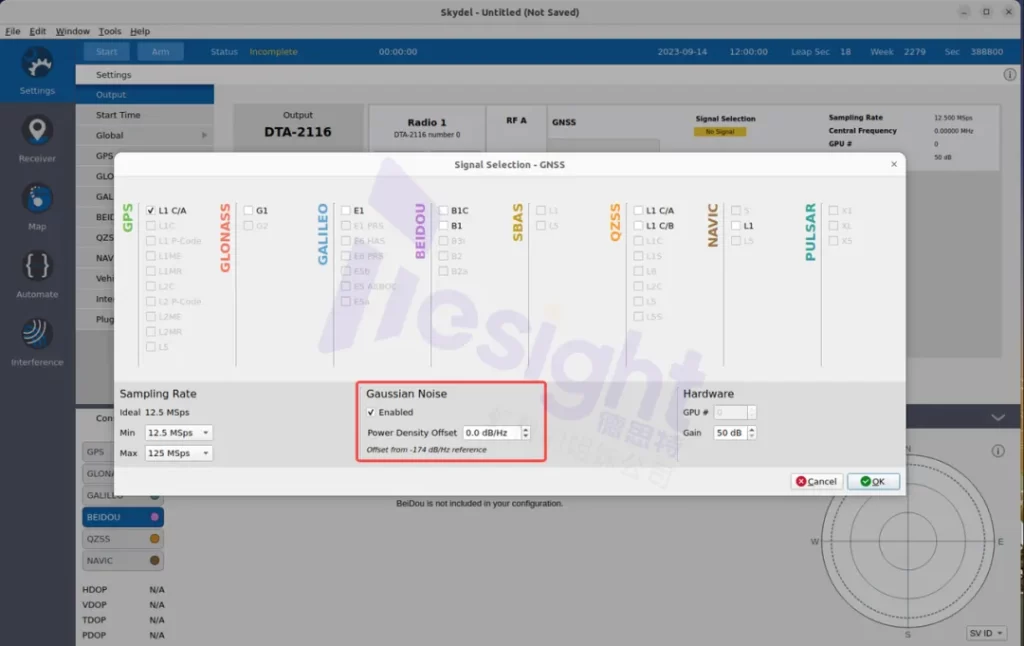
In the setup interface of HONGKE GNSS simulator, the system provides a "Gaussian Noise" configuration option, which allows users to choose whether or not to enable the Gaussian Noise overlay function according to the test requirements after setting up the constellation frequency point. Gaussian White Noise (AWGN) is often considered as the baseline configuration for simulating the real electromagnetic environment in GNSS radio frequency simulation tests. However, engineering practice has shown that the effect of noise on receiver performance is not linearly monotonic.

Regarding the practical application of this feature and its impact on positioning results, we have received feedback and questions from some users: "Why is the positioning more stable with noise enabled? "Why does enabling noise cause star loss in weak signal environment?

Therefore, this paper will deeply analyze the logic of Gaussian noise in GNSS simulation.

Physical Definition and Necessity of Gaussian Noise in GNSS Simulation

In an ideal mathematical model, satellite signals are perfectly tuned to the BPSK sequence at a specific frequency; however, in real physical environments, signals are inevitably overlaid with thermal noise. The introduction of Gaussian noise in the HONGKE GNSS simulator is based on the following two necessities:

  1. The Physics: Satellite signals reach the ground at very low power (~ -130dBm) and are usually drowned out by the thermal noise at the front end of the receiver. By adding AWGN, the simulator can precisely control the carrier-to-noise ratio (C/N0), creating a bridge between "digital simulation" and "RF physics".
  2. Receiver Algorithm Stress Test (The Stress Test)The core capability of a GNSS receiver is to extract valid signals from noise. Without noise, the test only examines the receiver's "logical correctness" (whether there are bugs in the program); with noise, the test is about the receiver's "signal processing performance", including sensitivity, tracking accuracy, and loop bandwidth design.

Test Case Analysis: Effect of Gaussian Noise on Localization Results

In real-world tests, the relationship between noise and localization is complex and non-linear, especially in the following two extreme scenes.

Special case 1: Without Gaussian noise test, the localization effect is worse.

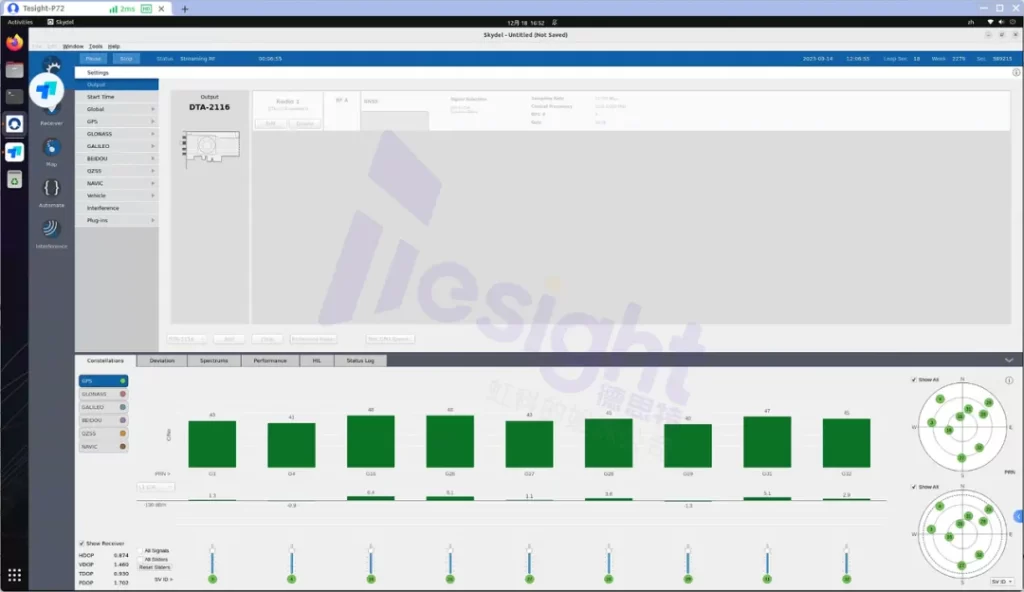
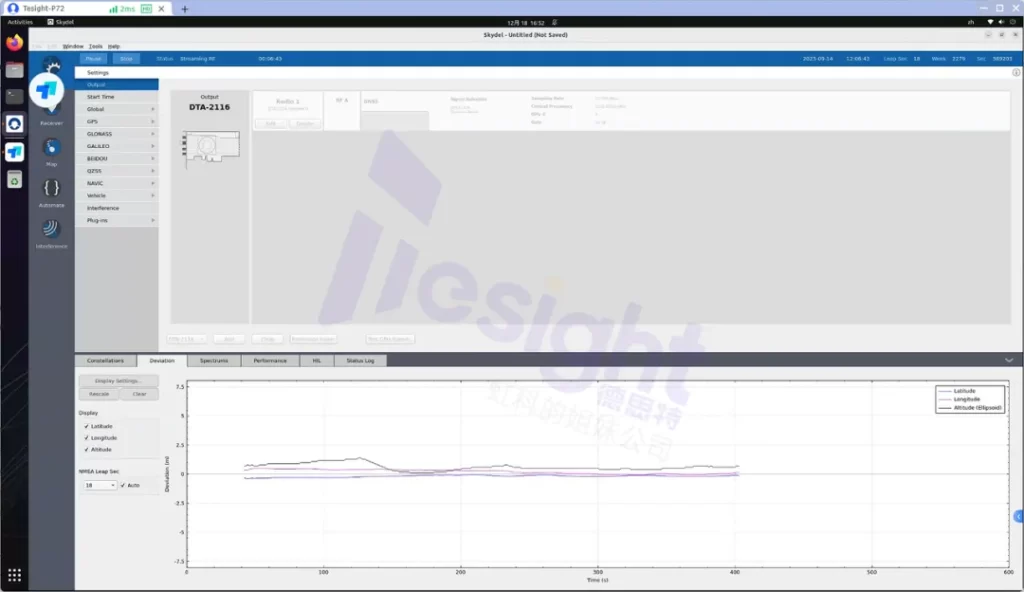
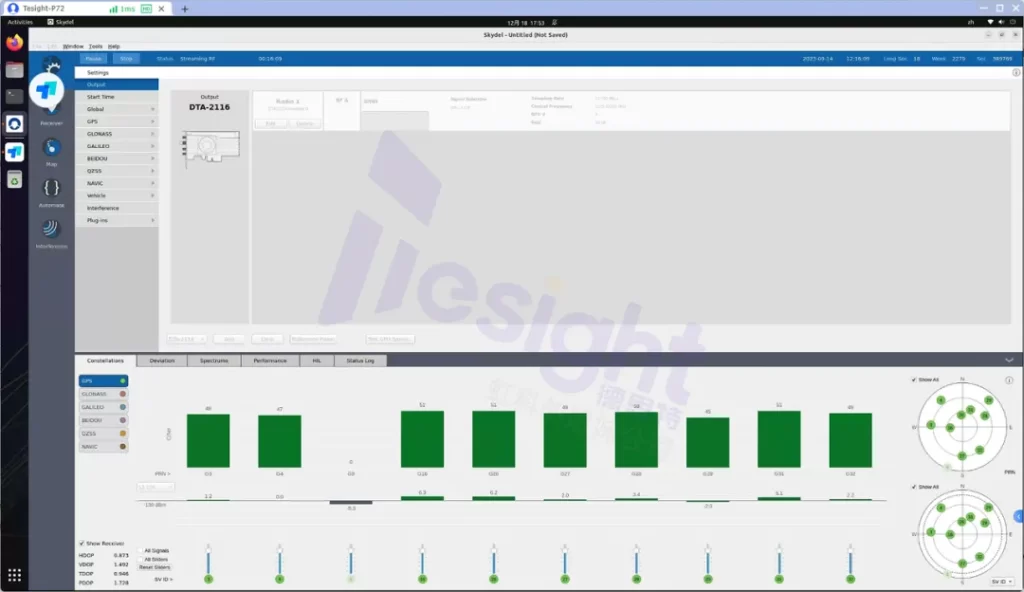
Test Scene: Select static coordinates, enable GPS L1CA for simulation, perform 10-15 minutes of GNSS simulation with/without Gaussian noise, and connect the receiver to observe the positioning results.

Test Results::

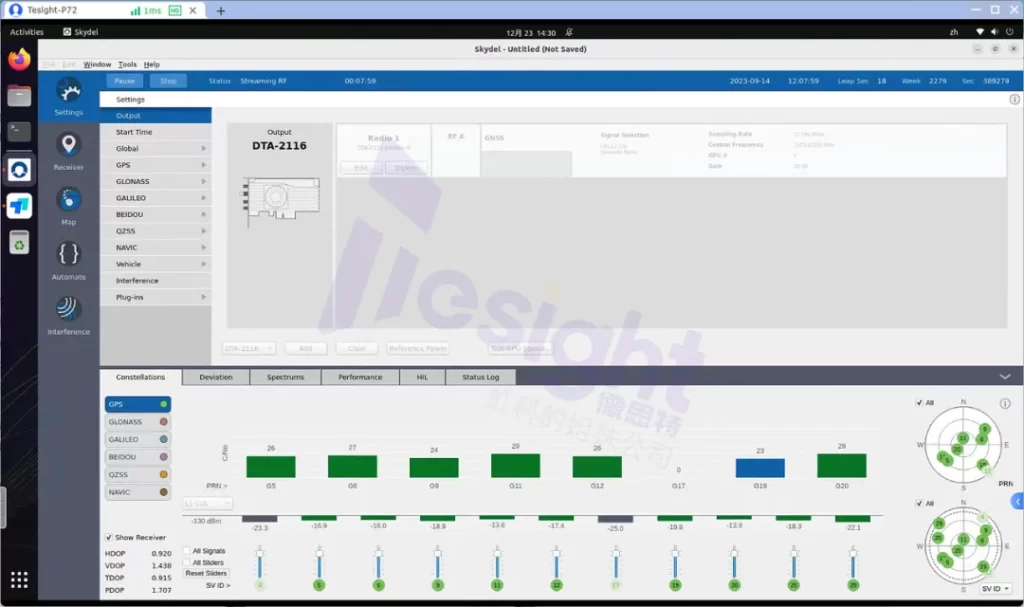
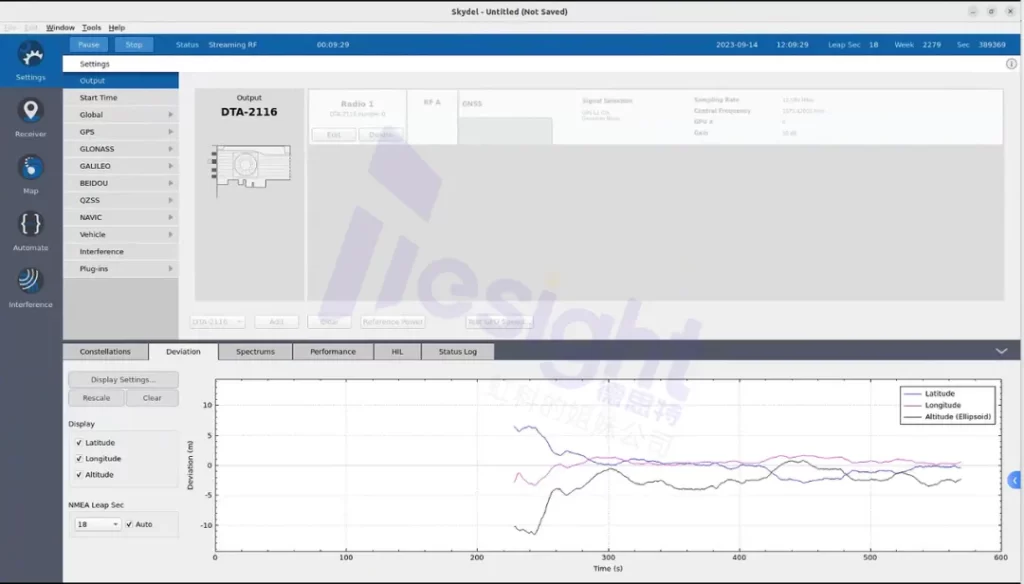
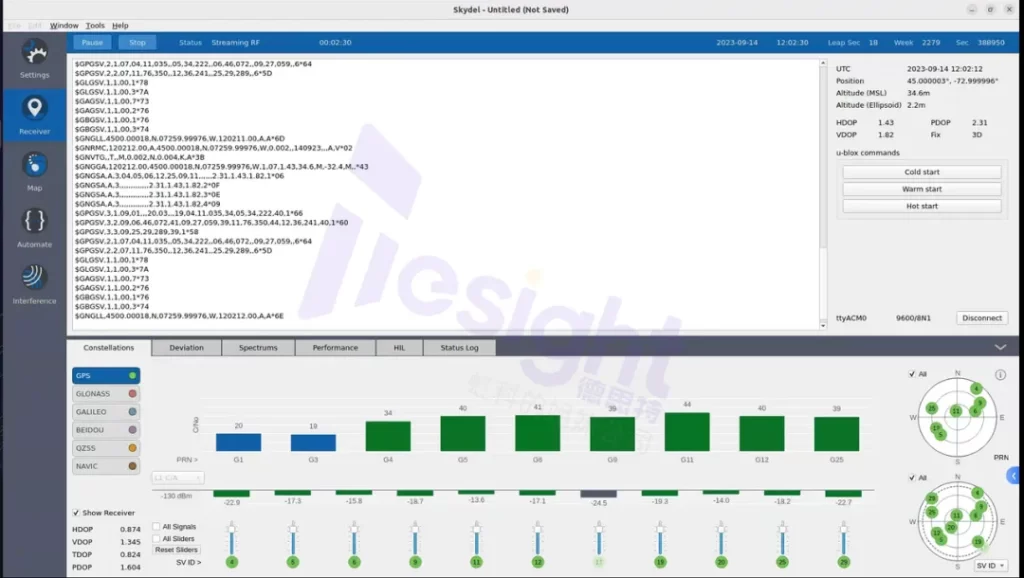
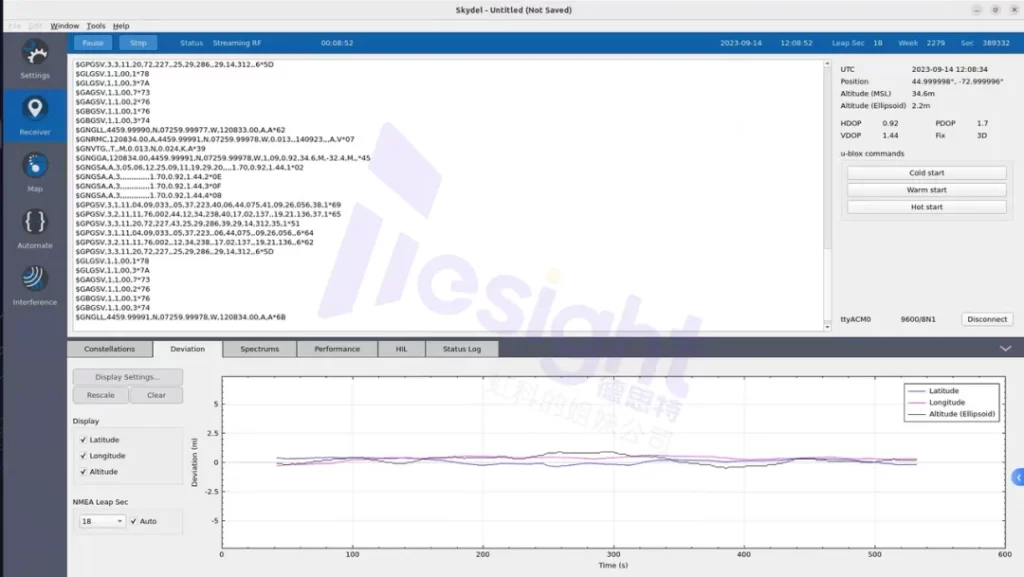
  • Add Gaussian Noise: S/N 41-47 dBc for all satellites observed, slow convergence but no jumps in positioning results (140 seconds), latitude and longitude altitude errors of about 1m, slight jitter present.
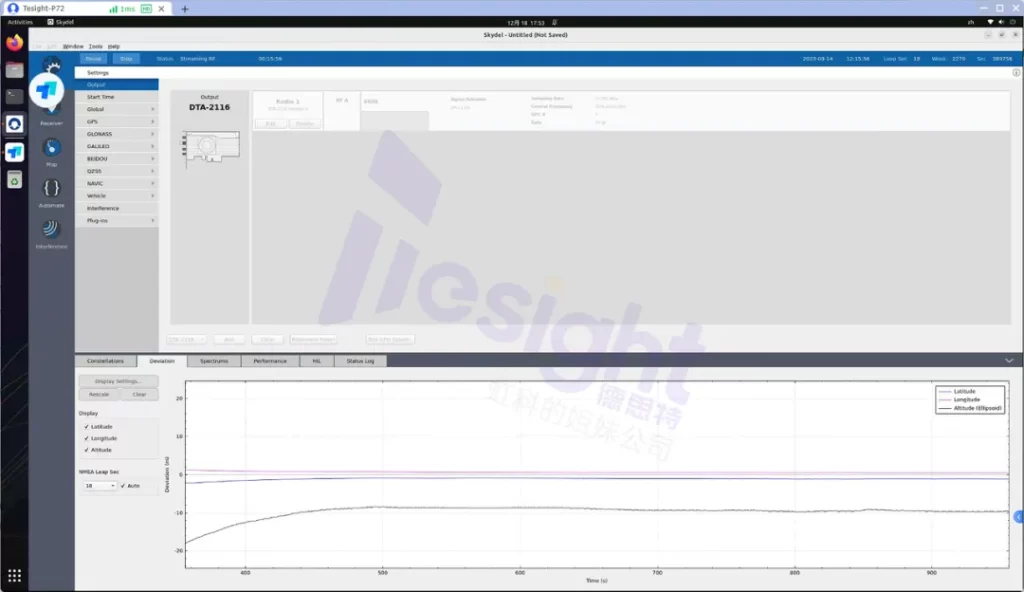
  • No Gaussian noiseThe satellites were observed to have signal-to-noise ratios of 45-51 dBc, extremely slow convergence (500 seconds), latitude and longitude errors of about 2m, altitude errors of 10m, and extremely smooth and almost jitter-free trajectories.

Analysis of the phenomenon: At standard signal power, turning off the simulator noise improves the receiver signal-to-noise ratio, but the localization convergence time is significantly longer and highly systematic bias is present.

Analysis of causes::

  1. The "deadlock" effect of the Karman Filter (KF)
    • The KF relies on the covariance matrix of the observation noise (R) and the covariance matrix of the prediction error (P) to calculate the Karman gain (K).
    • When the input signal is completely free of noise, the observed residual (innovation) is very small, and the filter mistakenly recognizes that the system is perfect and reduces the gain excessively, resulting in a longer convergence time.
  2. Correlator "dead zones" and quantization error
    • The receiver discriminator has a digital quantization accuracy limitation.
    • The right amount of noise can create dithering, which improves quantization resolution; without noise, small errors can accumulate into fixed deviations (e.g., height error of 10m).

Special case 2: Low power environment, added noise causes increased positioning error.

Test SceneThe following is an example of a GPS L1CA simulation: static coordinates, GPS L1CA simulation enabled, external 30dB attenuation added to reduce the output power to about -140dBm, 10-15 minutes of GNSS simulation with/without Gaussian noise added, and the receiver positioning results observed.

Test Results::

  • Add Gaussian NoiseThe signal-to-noise ratio is 24-30 dBc, the localization convergence is slow (300 s), the latitude/longitude error is 3 m, the altitude error is 5 m, and the jitter is severe.
  • No Gaussian noiseThe signal-to-noise ratio is 34-44 dBc, the localization is fast converging (40 seconds), the latitude and longitude altitude error is about 1m, and there is almost no jitter.

Analysis of the phenomenon: In indoor or sheltered environments, the addition of Gaussian noise reduces the signal-to-noise ratio, resulting in slower localization and increased error, and lower power may cause the receiver to lose lock.

Analysis of causes::

  1. Signal-to-noise ratio below Shannon's limit and detection thresholds
    • If the signal is already weak and the noise is superimposed so that the signal-to-noise ratio is too low, the C/N0 will fall below the minimum detection SNR and the positioning will be inaccurate.
  2. Phase-Locked Loop (PLL) Cycle Hopping
    • At low Load-to-Noise Ratios, Gaussian noise causes phase jitter beyond the linear range of the phase detector, resulting in frequent Cycle Slips and unavailability of high precision localization observations.

Practical Guide: How to set up analog noise scientifically

The GNSS simulation should follow the principle of "graded testing":

  1. Algorithm Verification Level (Logic Verification)
    • Settings: Turn off Gaussian Noise
    • Purpose: To check the correctness of program logic, astrological interpretation and coordinate system conversion, not concerned with positioning accuracy.
  2. Performance Benchmark
    • Setup: Enable Gaussian noise, calibrate C/N0 to standard (recommended C/N0=44dB-Hz, i.e. Skydel interface -174dB/Hz)
    • Purpose: To simulate a real open-air environment where RMS, CEP, and TTFF are used as receiver performance acceptance criteria.
    • Note: In standardized tests (e.g. GB/T-45086.1), Gaussian noise is generally not enabled to avoid affecting the accuracy of RF power measurement.
  3. Stress Testing
    • Setting: Decrease signal power or increase noise density
    • Purpose: To test the receiver limits, plot the C/N0 and positioning error curves, and find the Sensitivity Threshold.

Forward-looking proposals

With the evolution of GNSS technology, pure AWGN simulation can no longer meet the demand for high-end testing and should be emphasized in the future:

  • From AWGN to Colored Noise: Real ambient noise is not all white and contains multipath or electromagnetic interference components, a relevant noise model should be introduced to test the robustness of the Kármán filter.
  • AI Noise Reduction Algorithm TestingDeep Learning: Deep learning improves the receiver's ability to handle non-Gaussian noise, and the test requires the creation of a library of atypical noise to evaluate the generalization ability of the AI model.

Other Articles

Hongke Case

Hongke Solution] Hongke High Fidelity HIL Simulation Solution - L3/L4 Autonomous Driving Test and aiSim Simulation Platform

HONGKEI's high-fidelity HIL (Hardware-in-the-Loop) simulation solution is based on the aiSim simulation platform, which supports L3/L4 autonomous driving test, multi-sensor simulation, and SiL/MiL/HiL verification, providing a high-confidence intelligent driving test environment for OEMs, Tier1s, and autonomous driving technology enterprises.

Read more
Hongke Case

HongKeys Solution] How to land CRA compliance? Network security engineer perspective to bring you to understand the logic of compliance and ONEKEY security and compliance platform value.

With the EU's Cyber Resilience Act (CRA) coming into force, product security and supply chain transparency have become mandatory requirements for companies entering the European market, with the CRA requiring manufacturers to establish security mechanisms throughout the entire product lifecycle and to provide SBOM, vulnerability management, and evidence of compliance. With the gradual implementation of the EU Cyber Resilience Act (CRA), product security and supply chain transparency has become a mandatory requirement for enterprises to enter the European market, and the CRA requires manufacturers to establish a security mechanism throughout the product lifecycle and provide SBOM, vulnerability management, and evidence of compliance. The ONEKEY Safety and Compliance Platform helps enterprises to quickly complete compliance diagnosis and vulnerability management, and establish a traceable and verifiable product safety and compliance system.

Read more
Hongke Case

Hongke Solution] Making Compliance Training a "Quantifiable Line of Defense": Using KnowBe4 to Connect the Safety Awareness + Compliance Training Chain

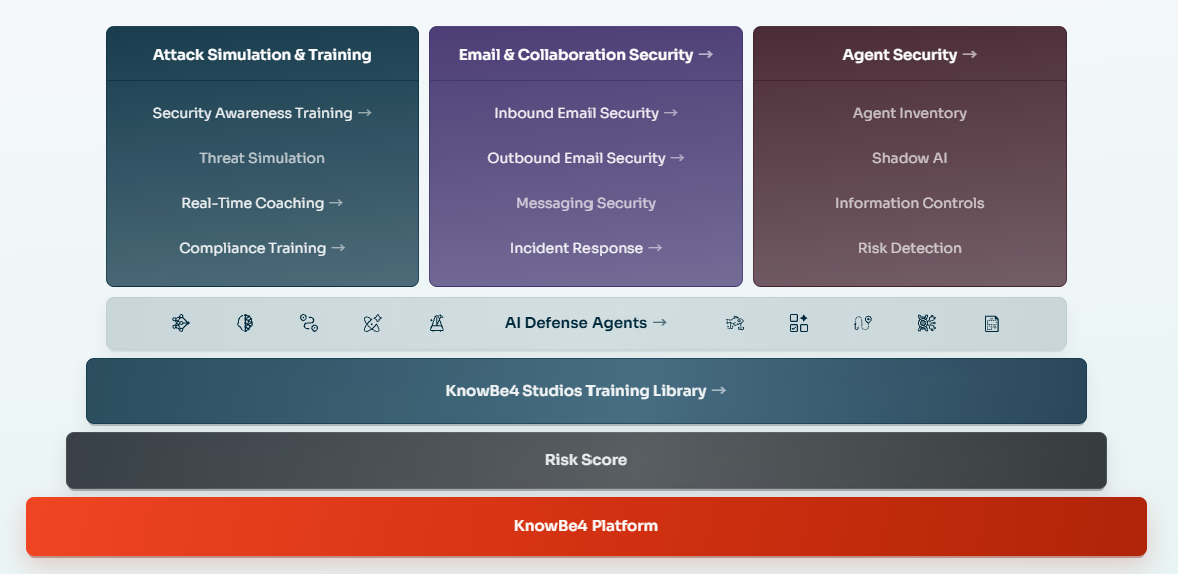
In the context of digital transformation and increasing regulatory requirements, it is often difficult for enterprises to truly reduce human risk if they still manage compliance training and information security awareness training separately, KnowBe4 establishes a closed-loop management model of "test, train, retest, and data feedback" through simulated phishing tests, security awareness training, and the Compliance Plus compliance training library. Enterprises can integrate compliance courses and safety training into end-to-end training governance, and establish a quantifiable, traceable and auditable compliance training system.

Read more

Contact Hongke to help you solve your problems.

Let's have a chat