Search

Hongke's latest articles

HongKe

Lorem ipsum dolor sit amet, consectetur adipiscing elit. Ut elit tellus, luctus nec ullamcorper mattis, pulvinar dapibus leo.

Lorem ipsum dolor sit amet, consectetur adipiscing elit. Ut elit tellus, luctus nec ullamcorper mattis, pulvinar dapibus leo.

How to Reduce the Technical Barrier of GNSS Complex Scenarios through Automated Tests

As the application of Global Navigation Satellite System (GNSS) in in-vehicle terminal equipment, intelligent transportation networks and active security systems spreads and deepens, the related industry test standards are also being upgraded. With the new generation of standards GB/T 45086 This means that regulations are no longer limited to basic functionality verification, but rather, through nearly 80 sophisticated Test Cases, stringent and systematic requirements are imposed on positioning performance, long-term stability, and the ability to respond in real-time to complex scenarios.

This means that the traditional testing method, which relies on manual construction of the test environment, manual execution of the test process and offline processing of data, is gradually becoming ineffective and obsolete - not only is it difficult to meet today's intensive research and development cycle in terms of efficiency, but it is also impossible to ensure the consistency, repeatability and reproducibility of test data. Long test cycles that can take days, configuration errors that are easily introduced by human intervention, and data synchronization across hardware devices are increasingly overwhelming test engineers and R&D teams.

In this context.GNSS Automation TestIt is no longer just a simple "efficiency optimization and enhancement tool", but has become an inevitable technical choice for enterprises to cope with the complexity of testing standards and the expansion of engineering scale.

HONGKE AutoGNSS Automation Test PlatformThe platform was born out of this urgent market need: by systematizing and packaging the test process, hardware control and core data processing, the platform transforms complicated GNSS tests into an automated core capability that can be reused, efficiently executed, and accurately verified.

So, what are the practical pain points of the industry that AutoGNSS has precisely solved? What kind of core technology has its R&D team gone through behind the scenes? Looking ahead, how will artificial intelligence (AI) technology further lower the entry threshold for professional testing?

This time, we have invited the Technical Director of Rainbow Technology to join us. Akio and R&D Director LeoIn this session, we will bring you first-hand in-depth technical explanations and industry insights around the necessity of GNSS automated testing, the core challenges in the R&D process, and the future evolution trends of the products.

If you are a professional test engineer focusing on in-vehicle navigation, UAV development, or smart terminal device development, then the following interview may be just the answer you've been looking for to automate your transformation standards.

01 Responding to Tightening Industry Standards: How to Make Complex GNSS Tests "Out-of-the-Box"?

Q: In recent years, national and industry regulations and standards for GNSS technology have become increasingly stringent. In your opinion, what are the core technical challenges for the current testing work brought by this trend of "standardization"?

AkioFirst of all, it must be clearly pointed out that there is a fundamental difference between the recent trend of "standardization" and the traditional concept of "batch standardization of production lines". Take GB/T 45086 For example, the standard has nearly 80 test cases for location-based navigation terminal equipment, and its evaluation dimensions and indicators have long gone beyond the simple “Pass/Fail” binary judgment.

This trend of refinement imposes high technical requirements on the construction of the underlying structure of the test solution, the precise selection of test instruments and equipment, the design of automated test processes, and the post-analysis and processing of huge amounts of test data.

The core technological challenge we face is this:How to transform the extremely complex testing logic into the ultimate "Out-of-the-box" user experience through the packaging of the underlying technology? To this end, our R&D team is continuously optimizing the software system architecture and streamlining the front-end operation logic to ensure that even users without a deep industry background can quickly get started. At the same time, our technical team is working to make the entire testing process simpler and smarter through the deep integration and empowerment of AI technology.

02 From "test novice" to "expert output": AutoGNSS removes technical barriers once and for all

Q: From a macro perspective of the industry, what do you think is the core pain point that AutoGNSS automation tool solves for customers? If you were to put it into words, how would you describe it?

AkioIf we were to summarize it in one core phrase, it would be "reduce costs, increase efficiency, and cross the threshold".

Let's take GB/T 45086 as an example. As one of the cornerstone core standards of AECS (Automotive Emergency Call System), most of its direct users come from automobile companies, automobile manufacturers and related enterprises upstream of the industry chain. These engineers may be deeply involved in vehicle R&D or related automotive electronics, but are not necessarily well versed in the underlying technical principles of GNSS and the complexity of RF signals. In the face of increasingly stringent compliance requirements, users often face huge learning costs, time pressure and expertise blind spots.

The core value of AutoGNSS is to "eliminate the technical barrier and psychological pressure". We hope to achieve the goal that even if users do not fully grasp the underlying physical and communication principles, as long as they follow the standardized operation manual and configure it, they can efficiently solve most of the complex test problems. In addition, the built-in AI tools in the software system can significantly accelerate the efficiency of technical knowledge extraction and retrieval, and assist users to smoothly complete the leap from "testing novice" to "expert report output".

03 Full Chain Traceability and Data Traceability: Ensuring Every Test is Traceable

Q: How does the R&D team ensure the rigor, compliance and authority of the test logic and final results in the process of accurately translating national standards and industry regulations into automated scripts?

AkioThis is an extremely critical core issue. In the absence of uniform compliance standards in the general testing software market, we ensure the absolute reliability of the test results through two major mechanisms, namely, "full-link traceability" and "data traceability":

  • At the test logic levelThe core key lies in the precise control of the GNSS simulator hardware and the reconstruction of complex scenes. Our system is equipped with an extremely sophisticated API operation trace recording capability, together with the scene visualization function, R&D personnel and end-users can very intuitively compare the compliance of control commands with the requirements of the standard clauses, to ensure that there is no deviation of the test logic in the execution process.

  • At the test result levelAutoGNSS provides a standardized API interface that fully supports the export of raw data from all data processing stages. This in-depth data traceability ensures that every test conclusion and report is well documented and can withstand scrutiny by industry experts.

04 Three core technologies: accuracy, compatibility and high stability

Q: What are the biggest technical bottlenecks and challenges in deploying an efficient GNSS automated test platform?

LeoUnder the highly specialized application of GNSS Simulation Testing, I slowly think that the biggest technical bottlenecks and R&D challenges are mainly focused on the following three core dimensions:

  • Extreme accuracy in data synchronizationThis is the core lifeblood of the entire automated test process. In the actual test process, there is a natural asynchrony between the software control commands, the RF Signals generated by the simulator, and the positioning data output by the Receiver. If the system is unable to accurately complete the time stamp alignment (Time Alignment) and delay compensation, additional systematic errors will be introduced, which will directly lead to the distortion of the results of automated testing.

  • Integration Challenges of Multiple Heterogeneous Hardware Devices: GNSS simulation testing is faced with an extremely complex and heterogeneous hardware environment. The control protocols of instruments and test equipment from different vendors are different, and the communication protocols of DUTs (Device Under Test) from different customers are also very different. The automation platform must be perfectly adapted and compatible with different standard hardware devices in order to ensure that the whole test framework has strong versatility and high scalability.

  • Software Stability under Long-Term Continuous TestingThe GNSS industry is characterized by a large number of long duration tests requiring days or even weeks of continuous testing, which puts severe demands on the automation software in terms of memory management, high-frequency log writing pressure, and the overall robustness of the system. In an unattended automated test scenario, in the face of possible Serial Port Disconnection, equipment stops responding (crash) or network anomalies, the platform must be equipped with a perfect exception capture and fault tolerance mechanism. Otherwise, any small software defects will cause the entire long-term test mission to be aborted.

05 Total change in efficiency: 4 to 5 times faster overall R&D cycle time

Q: With the introduction of the AutoGNSS automated test tool, approximately how much time can a product complete a standard compliance test cycle?

AkioThe efficiency gains can be described as all-encompassing and revolutionary. While the specific benefits vary depending on the technical background of the individual engineer, the results of the efficiency gains are significant at all core stages of the test process:

  • Learning Costs and Environment StageIn traditional testing mode, it takes at least 30 hours for engineers to study the regulations and standards from scratch and build the test environment manually; however, with AutoGNSS's pre-configured test framework and typical industry use cases, this process can be dramatically shortened to only 1-2 hours. Moreover, the software is pre-configured with relevant use cases for popular mainstream standards in the market, so that users can call them directly.

  • Implementation Stage: Automated test software realizes fully automatic switching, dynamic configuration and execution of test cases, significantly reducing the frequency of manual intervention. Especially for complex test cases with long cycles and high time-consumption, automated testing is currently the only technical solution with practicability.

  • Data Processing and Report Generation StageThe advanced data processing module built into AutoGNSS allows the team to completely eliminate the traditional manual data import, manual calculation and scripting processes, and perfectly realizes the real-time processing of data and the fast one-click generation of test reports.

According to a comprehensive multi-dimensional evaluation, after the introduction of AutoGNSS, the overall testing efficiency of enterprises can be improved by at least 4-5 times, significantly shortening the time-to-market testing and development time.

06 The Difficulty of Episodic Packet Loss: From "Failure to Investigate" to "Underlying Roots"

Q: In the process of co-tuning the software algorithms with the simulator hardware, have you ever encountered a tricky problem that recurs over and over again but it is difficult to find the root cause? How did the R&D team solve it?

LeoThe most typical and representative of the technical challenges we encountered in the process of system interoperability and integration testing were the followingEpisodic Data Packet Loss (DPL)The

During high-precision simulation tests, the algorithm side often experiences very short signal interruptions, causing the system to incorrectly determine that the equipment has been disconnected, which in turn triggers abnormal test interruptions. Since these phenomena are random and sporadic, initially we strongly suspected that there was a bug in the software parsing logic or the data transmission link was unstable. However, after several rounds of routine troubleshooting, we were unable to find the exact root cause.

In order to locate the problem thoroughly, we conducted a study between the hardware interface, the underlying system kernel and the upper core algorithms.Full Link Burial and MonitoringThe problem is not in the algorithmic layer, but hidden in the data transfer. By comparing the Raw Byte Stream at each layer, we are surprised to find that the problem is not at the algorithmic level, but hidden in the data transmission.BufferThe following is an example of an overflow problem. When the simulator pushes huge amount of data at high frequency, the buffer at the bottom of the system overflows at specific high load transient, which directly leads to the loss of data packets.

Once the root cause of the problem was identified, the solution became clear. We further optimized the underlying communication mechanism of the system and introduced a more efficient and dynamic Buffer Management Strategy, thus eradicating this historical problem of occasional packet loss.

07 AI Artificial Intelligence Enablement: Dramatically Reducing the Operational Barrier - Realizing Accurate Intelligent Diagnosis

Q: What changes will AI technology bring to AutoGNSS in the future? What is the core direction of empowerment and development?

LeoIn my opinion, the core direction of AI's empowerment of AutoGNSS in the future is to further lower the threshold of professional industrial software operation and access. In the past, due to the complexity of the operation logic and the high barrier of professional knowledge, engineers usually need to undergo several systematic trainings before they can barely get started with this kind of high-end industrial-grade software.

The most significant change brought by AI is that it can greatly simplify the complex parameter configuration of professional software, and even assist in completing some of the automated operations. For example, in the past, building a specific high-precision simulation environment required test engineers to have a deep theoretical understanding of various test parameters in GNSS simulation (e.g., multipath effect, ionospheric delay, etc.). In the future, AI can automatically complete the optimal test configuration based on simple task descriptions (Natural Language) inputted by users, so that engineers do not have to spend a lot of their core energy on boring learning and checking heavy manual documents.

On the other hand, a professional knowledge base based on big data and AI can provideIntelligent Analysis of Log Data and Accurate TroubleshootingThe amount of data generated by long term GNSS testing is extremely large. The amount of data generated by long-term GNSS testing is extremely large, and in the past, positioning-related testing problems often required highly experienced professional engineers to spend hours analyzing logs line by line. With the introduction of AI tools for automated scanning and semantic analysis, the system can easily and automatically locate the location of anomalies from the massive amount of information, and accurately identify the causes of the anomalies, directly providing the R&D team with visualized diagnostic results and remediation recommendations.

Other Articles

Hongke Case

[Hongke Insights] A Buyer’s Guide to Enterprise-Grade Smart Glasses: 8 Key Differences Between AR Glasses in Industrial and Medical Applications

Are you evaluating AR smart glasses for warehouse logistics, modern manufacturing, or telemedicine? This article provides an in-depth comparison of the eight key differences between consumer-grade and enterprise-grade smart glasses. Hongke offers professional AR solutions for businesses in Hong Kong and Southeast Asia that feature high security, support for MDM management, and reduced TCO. Read the buying guide now!

Read more
Hongke Dry Goods

[Hongke Insights] The Wave of Chinese Innovative Drugs Going Global: A Comprehensive Guide to Pharmaceutical Cold Chain Compliance and Temperature Monitoring During Transport

2026 will mark a boom period for the global expansion of China’s innovative drugs and biologics. How can you ensure that cross-border shipments comply with FDA 21 CFR Part 11 and EU GDP regulations? ELPRO LIBERO temperature recorders from Hongke offer a training-free, globally recognized pharmaceutical cold chain compliance solution, helping biotech companies successfully expand into global markets such as Hong Kong and Southeast Asia.

Read more
Hongke Dynamic

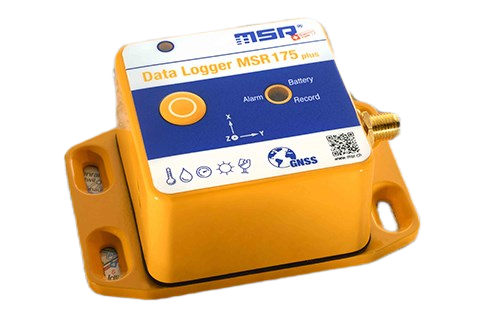
[Authoritative Recognition] Hongke MSR Named One of the World’s Top 15 Shock Data Logger Companies

Hongke’s MSR Data Logger has been ranked among the top 15 in the global shock data logger market! Designed specifically for precision instruments, semiconductor equipment, and cold-chain logistics, it provides high-precision three-axis shock, vibration, and temperature/humidity monitoring, comprehensively ensuring the safety of B2B cross-border logistics and supply chains. Learn more about our professional-grade transportation environment monitoring solutions today.

Read more

Contact Hongke to help you solve your problems.

Let's have a chat