Search

Hongke's latest articles

HongKe

Lorem ipsum dolor sit amet, consectetur adipiscing elit. Ut elit tellus, luctus nec ullamcorper mattis, pulvinar dapibus leo.

Lorem ipsum dolor sit amet, consectetur adipiscing elit. Ut elit tellus, luctus nec ullamcorper mattis, pulvinar dapibus leo.

Rainbow Tech] Microfluidic Droplet Generation Technical Guide: Principles, Experimental Equipment, Applications and Solutions to Common Problems

In recent years.Droplet generation technologyresearch has shown significant growth, thanks in large part to itsHigh-throughput single-cell analysisThe technology has outstanding advantages in areas such as The technology has a wide range of applications, covering not onlyPharmaceutical R&DandClinical DiagnosisIn addition, it has been extended to the food and cosmetic industries, as well as to the paint industry. Compared to conventional production technologies, theMicrofluidic droplet generationIt can realize significant cost savings and is a cutting-edge direction that has attracted the attention of the industry and continues to develop.

I. Principle of droplet generation

The droplet is in a precise geometrical structure with aMicrofluidic ChipIn theMicrofluidic pumpsThe precise control of the liquid is provided by two immiscible liquids (typicallyaqueous solutionandoil phaseThis is a "passive" method of droplet generation. This is called "passive" droplet generation, whereas "active" droplet generation requires the use of external forces such as electric fields, magnetic fields, or centrifugal forces. The common passive generation geometries are categorized into the following three types:

01 Crossflow (T- or Y-knots)

  • principle::continuous phase(e.g. oil) flowing along the main channel.dispersed phase(e.g. water) is fed through the side channel. The two phases meet at a T- or Y-shaped intersection, and the continuous phase produces theshearing forceThe dispersed phase is "sheared" to form droplets.

  • Droplet Size Factors: two-phase flow rate ratio, continuous phase viscosity, flow rate, and interfacial tension. Normally, the flow rate of the continuous phase is higher than that of the dispersed phase.

Cross-flow droplet generation (water-in-oil W/O)

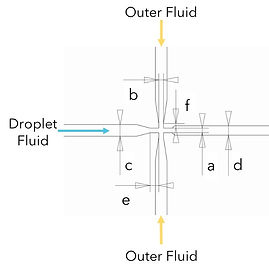
02 Fluid focusing ("+" or X-node)

  • principle: The two phases converge at the intersection point and the channel usually narrows there. The successive phases pinch and squeeze the dispersed phase from both sides, causing it to break off and form droplets at the focusing point.

  • Droplet Regulation: The droplet size can be increased by decreasing the flow rate of the continuous phase.

Fluid-focused droplet generation (water-in-oil W/O)

03 Co-current focusing

  • principle: The dispersed phase channel is completely surrounded by the continuous phase channel. As the dispersed phase flows into the continuous phase it is subjected to shear and eventually forms droplets in the form of Dripping or Jetting.

Co-current focused droplet generation (water-in-oil W/O)

Laboratory equipment

In general, the start of the droplet generation experiment requires at least preparation:2 microfluidic pumps (or 1 multichannel pump)It is used to precisely control the flow rate of the continuous phase (oil) and the dispersed phase (water) respectively.

Recommended Equipment:

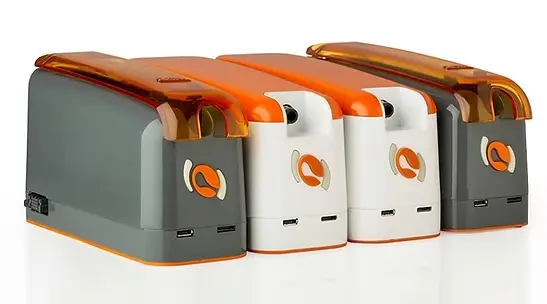
1. Hongke Cellix 4U Multi-Channel Pressure Pump

By pressurizing the reservoir, the fluid is propelled into the wafer.

  • Technical parameters: Volume flow rates between 1 µL/min and 1 mL/min, four independent pressure control channels, response time less than 50ms.

  • Core Advantage: It can effectively improve the efficiency of high-throughput experiments and is very suitable for fluid dynamics fluid focusing and droplet generation experiments.

2. Hongke Cellix ExiGo single-channel microfluidic syringe pumps (2 required)

Samples can be loaded using a syringe or connected to a reservoir using an autosampling manifold.

  • Technical parameters: Flow rate range from 10 nL/min to 13 mL/min with an accuracy of ±0.5% and a response time of less than 50 ms.

  • Core Benefits: Supports standard injectors, allows user-defined parameters, and supports automated system integration.

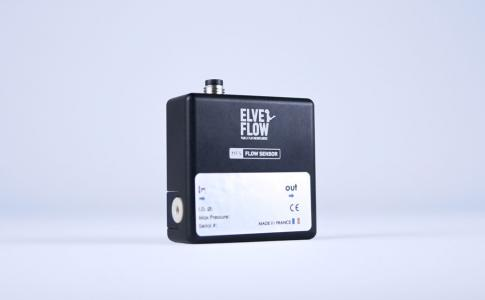
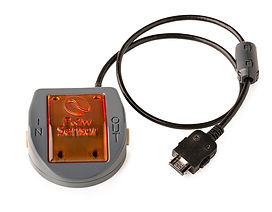
3. 2 flow sensors

Provides real-time flow feedback control of the oil and water phases to ensure a stable flow rate, resulting in droplets that are highly uniform in size, volume and frequency.

  • Recommended Equipment: Hongke Elveflow Flow Sensor

  • Technology: Thermal Time-of-Flight (TTofF) technology for precise flow rate measurements in microchannels. Six sensor models are available, covering a range of water flow rates from 0.007 to 40,000 µL/min with an accuracy of up to 5%, providing an excellent price/performance ratio.

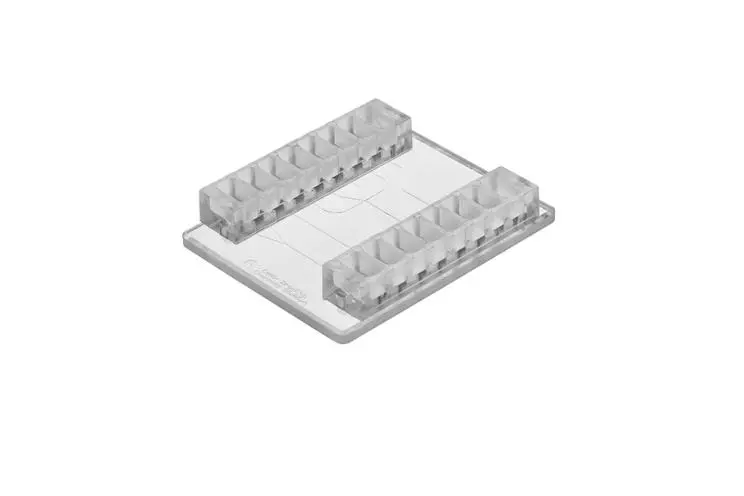
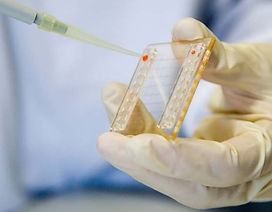
4. microfluidic wafers with suitable geometries

The geometry of the intersection is the key factor in determining the droplet size, which is then influenced by the concentration of the interfacial active agent and the two-phase flow rate ratio.

  • Stable channel surface chemical treatment:

    • Water-in-Oil (W/O) Droplets: The channel surface needs to be hydrophobic and can be pre-treated with Rainbow Cellix's DropCoat.

    • Oil-in-Water (O/W) Droplets: The channel surface needs to be hydrophilic, and the DropChip wafers from HONK Cellix are pre-treated with hydrophilic treatment.

  • Interfacial activator: Used to stabilize the oil-water interface and improve droplet stability (usually added to the oil phase).

  • Continuous phase oil

  • Connecting to the receiver

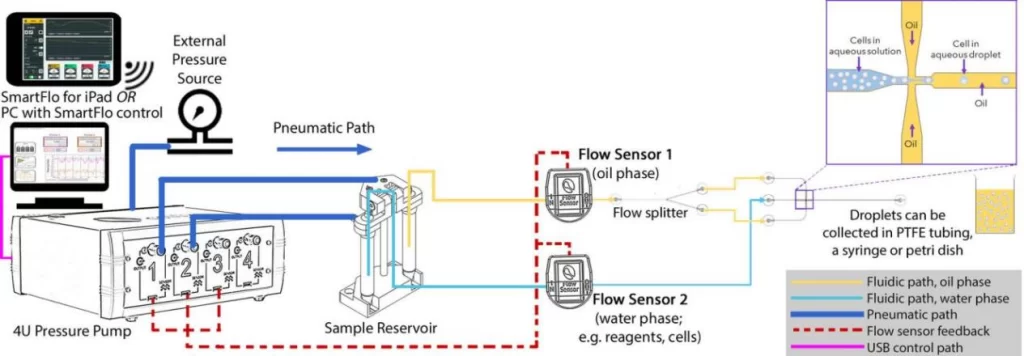
Example Experimental Setup: Fluid Focusing Method to Generate Water-in-Oil Droplets

  • : Rainbow Cellix 4U pressure pump (using 2 of the channels)

  • Sample containers: 1 reservoir (for 4U pumps) or 2 syringes (for ExiGo pumps)

  • Flow Sensors: 2

  • wafers: Hydrophobically treated microfluidic wafer (with fluid dispenser and droplet generation junction)

  • Other materials: Interfacial activator, oil, connecting piping

Fluid Focusing Device with 4U Pressure Pump

Common Problems and Solutions in Droplet Generation Experiments

01 FAQ 1: At the beginning of the experiment, two pumps (oil phase and water phase) were directly connected to the wafer at the same time!

The order in which different solutions/liquids are injected into the microfluidic channel is important because the flow sensor is calibrated for a specific type of liquid, such as an oil-based or water-based solution. If you try to coat the wafer with a solution to ensure hydrophobicity of the channel, or pre-fill the wafer with an oil phase when it is connected to a pump with an aqueous phase, there is a high risk that the oil will back up into the sensor connected to the aqueous phase pump. Since the aqueous-phase flow sensor is calibrated for aqueous solutions only, the flow of a non-aqueous solution (e.g., oil) into the sensor will result in an erroneous detection of the aqueous-phase flow rate at the start of the experiment.

Flow sensors calibrated to liquid type

Suggested Solutions::

  • Disconnect the pump with the water phase from the wafer.

  • The microfluidic channels of the wafer are pre-coated with a solution to ensure hydrophobicity.Rainbow Cellix Recommended DropCoat Pre-treatment for droplet generation.

  • Pre-fill the microfluidic channels of the wafer with oil phase, remembering to keep the aqueous phase pump off at this time!

  • Connect the aqueous phase microfluidic pump to the flow sensor and pre-fill it with aqueous phase until a droplet of water comes out of the end of the line. Connect the line to your microfluidic chip only at this point.

02 FAQ 2: What are the key factors affecting droplet stability?

The two main factors that affect droplet stability areChannel Surface Chemical Properties(hydrophobic in the case of oil droplets in water and hydrophilic in the case of water droplets in oil) and in the case ofInterfacial activators added in the oil phaseThe key is then to adjust the flow ratio between the oil phase and the water phase. The key is then to adjust the ratio of flow between the oil phase and the water phase.

Utilizes DropCoat coated biochip to ensure hydrophobic channels

Suggested Solutions::

  • Water-in-Oil Systems Need to Ensure Channel Drainage: Use DropCoat Processing Channel, Static 10 minutesRinse with air or oil phase.

  • Preprocessing Chip Channel: Fill the channel with continuous phase (oil) first.

  • Attempts can be made to increase the concentration of interfacially active agents in the oil phase.

03 FAQ 3: Droplet generation stops in the middle of the experiment and both the oil and water based phases become laminar (unstable flow).

Suggested Solutions::

  • Check to see if hydrophobic treatment of the channel has been completed (for water-in-oil systems).

  • Check the entire system for leaks or clogs (e.g. bubble effects).

  • Keep the oil-phase flow rate constant and slowly increase the water-phase flow rate, taking care to avoid oil-phase backflow into the water-phase sensor.

Rainbow Cellix Pump Packages

04 FAQ #4: What is the most important factor affecting droplet size?

The most critical factor that affects droplet size isGeometry of Microfluidic WafersThis is especially true for the oil and water phases at the intersection of the oil and water phases.JunctionThe

Suggested Solutions::

  • Geometry: When selecting the channel geometry of a microfluidic chip, especially at the oil-water interface, make sure it can easily generate the droplet size you expect.

  • Surfactant: The concentration of the surfactant (usually added to the oil phase) has a relatively small effect on droplet size. By varying the concentration of the surfactant, you can fine-tune the flow ratio of the different phases to achieve very small size differences; i.e., you can make the droplet contain more water and make it slightly larger.HOSCORecommended DropSurf Interfacial ActivatorUsed in droplet generation studies.

  • Flow rate ratio of oil phase to water phase: In the case of a microfluidic wafer with a fixed geometry, changing the flow rate of the two phases has a much smaller effect than on the droplet size. Although it is still possible to introduce subtle changes, there is usually only a very narrow range of flow rates for a given fixed geometry, so the flexibility offered by this approach is more limited.

The geometry of the node is one of the biggest factors affecting droplet size.

05 FAQ 5: How to select biocompatible droplet generating oils and surfactants?

This is a common problem for researchers interested in cell-related applications.

  • Suggested Solutions: Mineral oils are effective and widely available as continuous phases, but biocompatible surfactants are less available and more expensive.HOSCORecommended DropOil Used in droplet generation studies.

06 FAQ #6: How to accurately measure droplet stability (size, distribution) and monodispersity?

It is important to note that most conventional software programs work in a two-dimensional (2D) dimension, so accuracy is often limited. Even very small changes in droplet diameter can significantly affect the overall volume of the droplet.

Suggested Solutions: In developing and characterizing the droplet, we use theScattering (3D) Technology--This allows us to accurately measure droplet size, volume and frequency. The amount of work involved in the characterization of droplets is considerable, but if you want absolutely reliable data, we strongly recommend three-dimensional methods such as scattering.

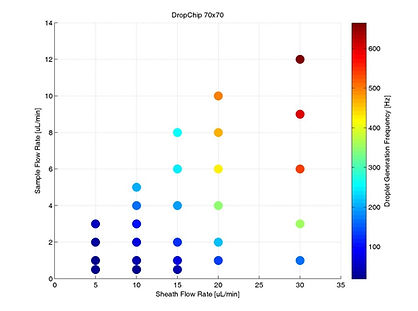
The frequency of droplet generation depends on the flow ratio.

Other Articles

Hongke Case

Hongke Solution] aiSim Helps Southeast Asian EVs to Comply with Overseas Standards: ASIL-D Certification Simulation Solution

aiSim is the world's first automated driving simulation platform certified by ISO 26262 ASIL-D. aiSim is the first automated driving simulation platform certified by ISO 26262 ASIL-D in the world. Focusing on the compliance pain points of Southeast Asian EV companies going to Europe and the U.S., aiSim provides legally binding test reports to help you shorten the validation cycle, significantly reduce compliance costs and accelerate product launches.

Read more
Hongke Case

Hongke Case] Transportation Logger Buyer's Guide: Precision Equipment and Cold Chain Logistics Monitoring Solutions

Difficulty in clarifying the responsibility of cargo transportation damage? HongKe provides professional transportation recorder selection guide. In-depth analysis of impact monitoring, temperature and humidity tracking, real-time alarms and range options help precision instruments, electrical equipment and high-value cargoes to travel safely to the sea. Check out our nanny-grade logistics monitoring solutions now!

Read more
Hongke Dynamic

HONGKE News] HONGKE AR Power Solution Won the Most Valuable Solution of the Year Award of Automation 2025 China

Hongke's AR power industry solution was honored as the "2025 China Automation Annual Most Valuable Solution". The solution integrates AR glasses, ARSOP and AI recognition, effectively improves the efficiency of power operation and maintenance, realizes 80% return on investment (ROI), and helps enterprises in digital transformation.

Read more

Contact Hongke to help you solve your problems.

Let's have a chat