

Search

Hongke's latest articles

HongKe

Lorem ipsum dolor sit amet, consectetur adipiscing elit. Ut elit tellus, luctus nec ullamcorper mattis, pulvinar dapibus leo.

Lorem ipsum dolor sit amet, consectetur adipiscing elit. Ut elit tellus, luctus nec ullamcorper mattis, pulvinar dapibus leo.

[Hongke Solutions] Panorama Essentials Lightweight SCADA Solution: Enabling Rapid Deployment and Web-Based Visual Monitoring

Traditional large-scale SCADA systems can entail high implementation costs and lengthy deployment cycles. For many equipment manufacturers, small and medium-sized manufacturing enterprises, and localized digital transformation projects, the primary concerns are whether the system can be deployed quickly, accessed easily, implemented at a lower cost, and support future expansion.

As a result, lightweight SCADA is gradually becoming a key development trend in the field of industrial monitoring.

01 Industrial Monitoring Needs Are Moving Toward a More Streamlined Approach

In traditional industrial projects, SCADA systems are primarily used to collect field data, monitor equipment operating status, and manage alarm information; they are a key component of the digitization of production processes.

For large factories, a comprehensive SCADA platform can meet complex management needs. However, for equipment manufacturers, single production lines, small production units, or localized retrofit projects, users often prefer a system that can be quickly deployed and effectively address practical monitoring challenges.

As a result, lightweight SCADA systems have gradually become a key choice in the field of industrial monitoring. While meeting core requirements such as equipment status monitoring, data visualization, and alarm management, lightweight SCADA systems simplify project implementation through a more streamlined architecture.

02 Panorama Essentials: A Lightweight SCADA Architecture for Real-World Applications

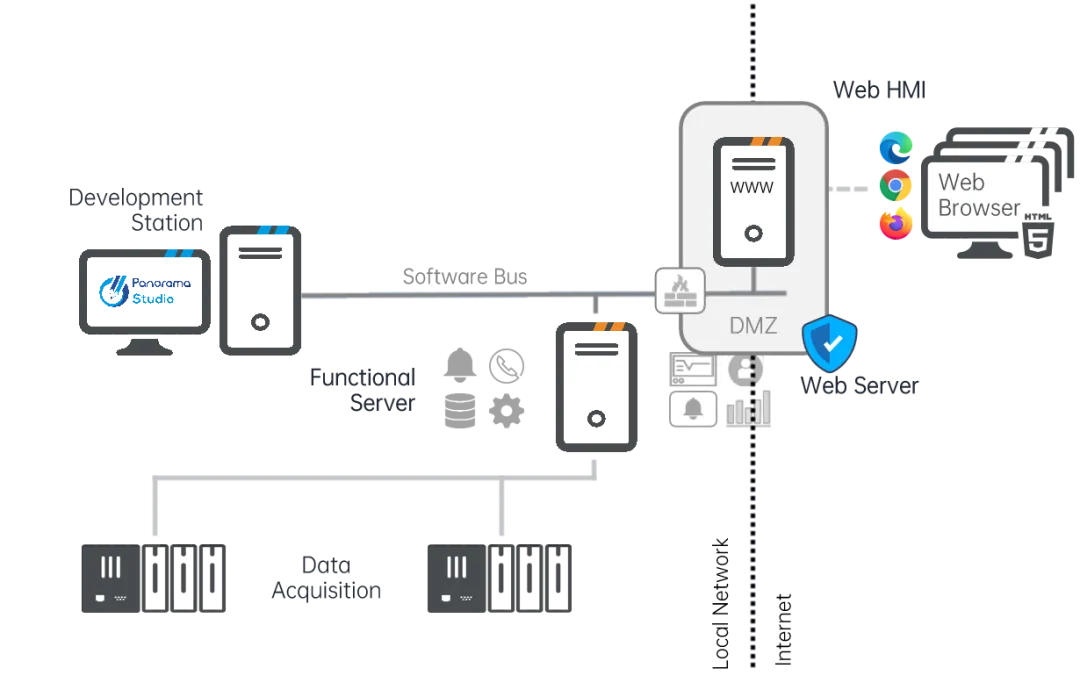
Panorama Essentials Architecture

Hongke Panorama Essentials is a lightweight SCADA solution designed for rapid deployment, helping users monitor equipment status, visualize data, and access systems via the web with reduced implementation complexity.

Its core competencies are primarily reflected in the following areas:

1 Unlimited Web-Based Access

Traditional industrial monitoring systems typically rely on fixed clients, requiring users to view data and screens on designated terminals.

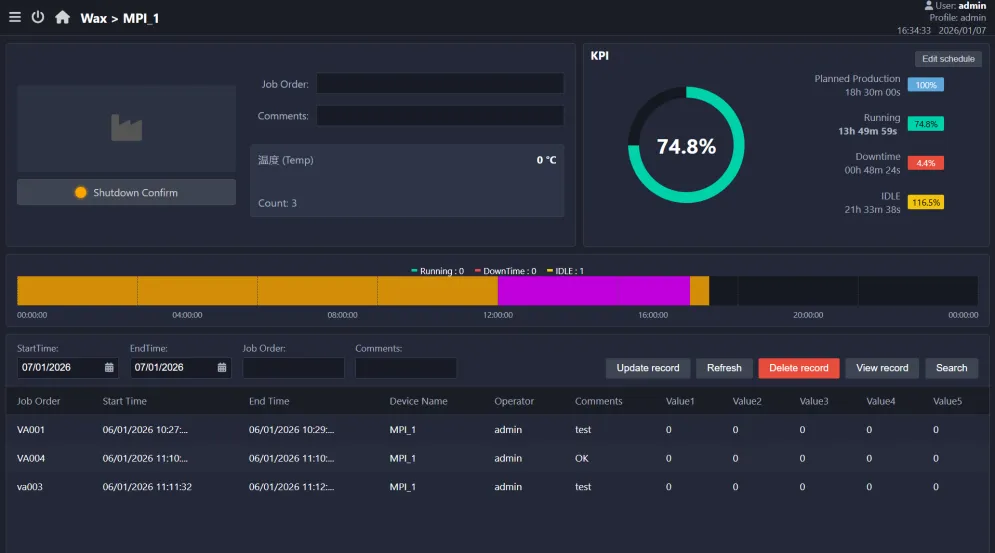
Hongke Panorama Essentials supports web-based access with no limit on the number of users. Users can view device operational status, surveillance footage, and alert information through a web browser.

This approach enhances the system’s flexibility: field personnel can quickly check equipment status; managers can access operational information more conveniently; and monitoring data can be shared more efficiently across multiple departments and locations.

Web Client Demo

For scenarios requiring remote access or collaborative management of applications by multiple users, a web-based architecture can further enhance the availability of SCADA systems.

2. Intuitive Visual Monitoring

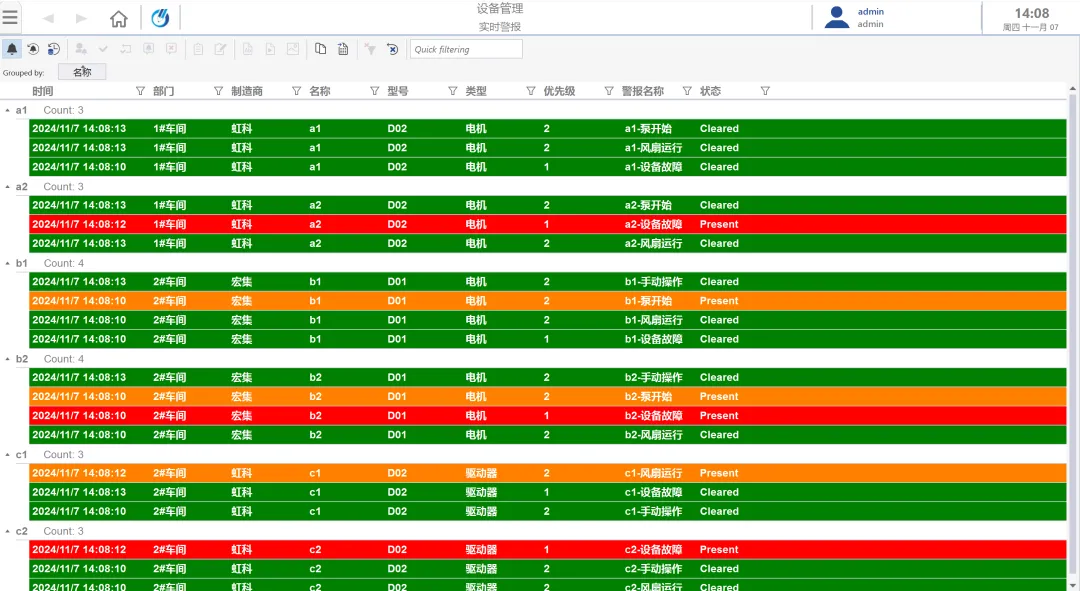
The core value of an industrial monitoring system is to help users quickly understand on-site conditions. Hongke Panorama Essentials displays equipment status, operating parameters, and alarm information through an intuitive visual interface.

For production and operations personnel, clear monitoring screens help them quickly identify equipment abnormalities, improve the efficiency of their response to malfunctions, and thereby gain a more accurate understanding of production operations.

Web-Based Alert Management

3. Rapid Deployment, Lowering the Barrier to Digital Transformation

For many companies, digital transformation often requires a phased approach, starting with key equipment or critical processes. Compared to building complex, large-scale systems all at once, lightweight SCADA systems are better suited to a “small-scale implementation, gradual expansion” approach.

Hongke Panorama Essentials helps enterprises shorten project implementation cycles, reduce initial investment, and validate the effectiveness of digital applications more quickly by streamlining the system deployment process. It is particularly well-suited for scenarios such as equipment monitoring, production line visualization, energy monitoring, and localized automation upgrades.

4. Support for Future Expansion and Ongoing Upgrades

Industrial digitization is typically an ongoing process, and companies may add new equipment, new data sources, and new application features as their business needs evolve.

Hongke Panorama Essentials supports gradual expansion based on project needs, allowing enterprises to start with basic monitoring and continuously enhance their digital applications.

03 The Practical Value of Panorama Essentials

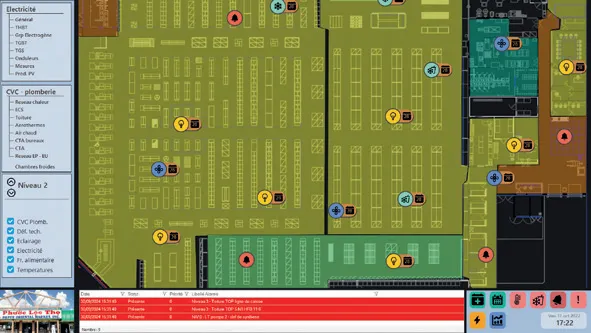
A Supermarket Building Management System Built on Essentials

As a lightweight SCADA solution, Hongke Panorama Essentials primarily helps companies simplify the implementation of digital transformation. It enables users to:

  • Faster System Development Streamline complex deployment processes and accelerate the launch of monitoring projects

  • More Convenient Access to Information Web-based access allows more users to obtain real-time on-site information

  • More Intuitive Operations Management Visual Interfaces Improve Efficiency in Understanding Equipment Status

  • More Flexible Future Expansion Support businesses in gradually improving their digital systems based on their needs

Conclusion

As the digital transformation of industry continues to advance, enterprises’ requirements for SCADA systems are shifting toward “flexibility, efficiency, and ease of deployment.”

Hongke Panorama Essentials is a lightweight SCADA solution that retains core industrial monitoring capabilities while supporting web-based visualization, rapid deployment, and flexible scalability, enabling enterprises to achieve digital management more efficiently.

Other Articles

Hongke Dry Goods

[KnowBe4 Insights] 12-Hour Countdown: How Does KnowBe4 Turn Employees into Incident Early-Warning Radars?

Once the CISO regulations take effect, serious cybersecurity incidents must be reported within 12 hours, records must be submitted within 48 hours, and reports must be filed within 14 days. This article analyzes KnowBe4’s early warning mechanism, which uses automated workflows through PAB and PhishER to turn employees into cybersecurity early warning sensors, thereby shortening incident response times and meeting compliance requirements.

Read more
Hongke Dry Goods

[Hongke Insights] Guide to Cold Chain Compliance for Exporting Pharmaceuticals: How Can Temperature Monitoring Pass the FDA/GDP/WHO Tests?

As Chinese pharmaceutical companies expand into overseas markets, how can cold chain temperature monitoring meet the requirements of the U.S. FDA’s 21 CFR Part 11, EU GDP, and WHO PQS regulations? Hongke’s ELPRO LIBERO series of data loggers offers a plug-and-play, software-free, all-in-one compliance solution that meets air cargo security requirements, reducing the risk of cargo damage and customs clearance issues.

Read more
Hongke Case

[Hongke Case Study] Servers Australia Implements KnowBe4 to Achieve a 90% Training Completion Rate

Servers Australia, an Australian cloud hosting provider, had previously been able to only reactively handle cybersecurity incidents, with high risks of internal threats and phishing attacks. After implementing the KnowBe4 cybersecurity awareness training platform, the company established a company-wide cybersecurity culture through simulated phishing tests, comprehensive training resources, and employee risk analysis. Training completion rates exceeded 90%, effectively reducing human-caused security vulnerabilities and shifting the team from reactive remediation to proactive defense against ransomware and social engineering threats.

Read more

Contact Hongke to help you solve your problems.

Let's have a chat