- Home
- Technical Products
Enterprise Cloud IT Solutions
Test Measurement
Industrial Measurement
- Solutions
Enterprise Cloud IT Solutions
Test Measurement
- Latest Articles
- About Us
EN
HONGKE ECU Simulation Solution
Supports CAN/LIN/SENT/DSI3/PSI5 networks, providing a test environment similar to that of a real ECU.
The ECU (Electronic Control Unit) is the core component of the electronic control system of an automobile, which is responsible for receiving sensor signals, processing data, and controlling the operation of the actuator to realize various vehicle functions.The ECU simulator provides a test environment similar to that of the real ECU by simulating these input and output signals, which assists the developers in verifying the hardware and software design of the ECU. The ECU simulator provides a test environment similar to the real ECU to help developers validate the ECU hardware and software design.
reduce costs and increase efficiency
Reduces reliance on real-world testing, thereby reducing development and testing costs
increase efficiency
Accelerates testing cycle and shortens time-to-market
Enhancing Quality
Simulates a wide range of operating conditions and failure scenarios to enhance ECU reliability and safety.
Virtual Verification Support
Functional verification can be carried out at the early stage of software development, reducing the cost of later modification.
- Signal Processing: Receives and analyzes signals from various types of vehicle sensors, such as temperature, speed, pressure, etc., and converts the raw data into the values required by the control strategy.
- Actuator Drive: Based on the processed data, the ECU controls vehicle actuators (e.g., engine, lights, etc.) to realize specific vehicle operations.
- Offline testing: Test logic is pre-completed by built-in firmware and can be processed offline.
- Signal Simulation: It can simulate the input/output signals of various ECUs of the vehicle, such as vehicle speed, engine speed, and so on.
- Fault Injection: Simulates various failure scenarios that the ECU may encounter to evaluate its fault tolerance and safety.
- Offline testing: Test cases can be executed through scripts and automated tools to improve testing efficiency and accuracy.
- Signal Simulation: It can simulate a variety of automotive sensors and actuator signals, such as temperature, pressure, speed, etc., which makes it convenient to conduct tests without connecting real sensors and actuators.
- Troubleshooting: By simulating the signals under the fault condition, it helps engineers to quickly locate the problem and observe the response of the vehicle control system to the fault signals in order to determine the cause and location of the fault.
- Control System Calibration: Provides accurate analog signals for calibrating various parameters in the control system to ensure that the vehicle maintains optimal performance under different operating conditions.
- Simulated sensor data for testing and verifying the performance and functionality of vehicle dynamics control systems.
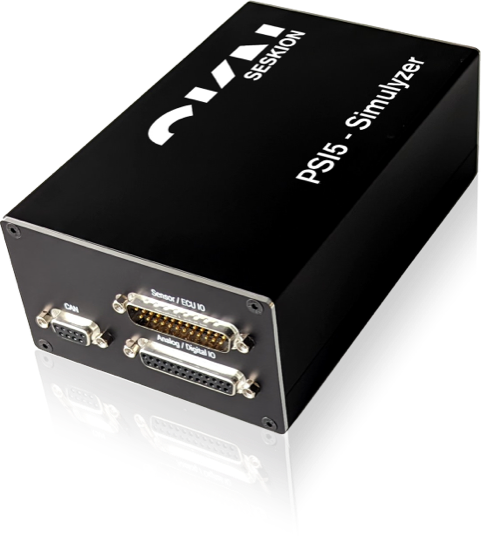
- Simulates the performance of the seat belt pretensioner to ensure its stability and reliability under various working conditions.
- Sensor technology development is simplified by the ability to read data quickly and easily and use it to proactively intervene in the process.
- Engine Control: Includes crankshaft position sensors, camshaft position sensors, etc.
- Transmission control: e.g. transmission input/output speed sensors.
- Safety system monitoring: e.g. wheel speed sensors, acceleration sensors, etc.
Application Example 1: BCM Unit Testing
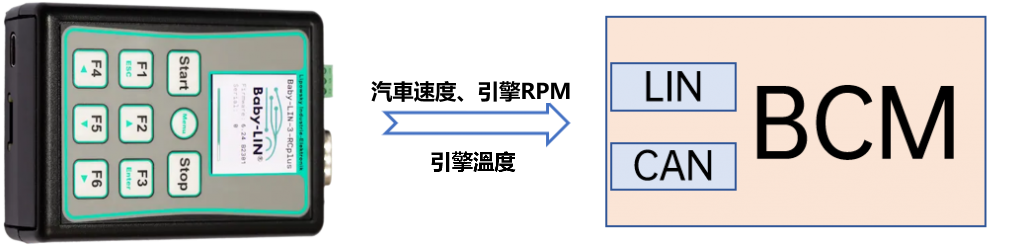
The motor simulator (BabyLIN-RCPlus device) stimulates existing BCM units by simulating physical condition signals such as vehicle speed, engine rotation speed (RPM), and engine temperature. These parameters can be adjusted in an intuitive and easy-to-use manner via the device buttons.
The user can control the motor simulator through the control elements on the front panel of the unit or through software, and the LCD display will show various status information. The LCD display shows various status information. The buttons are preset to adjust the speed, engine RPM, engine temperature and other signals, and can be switched to an alternative mode to control the two digital outputs or PWM power regulation.
Application Example 2: Sensor Function Test
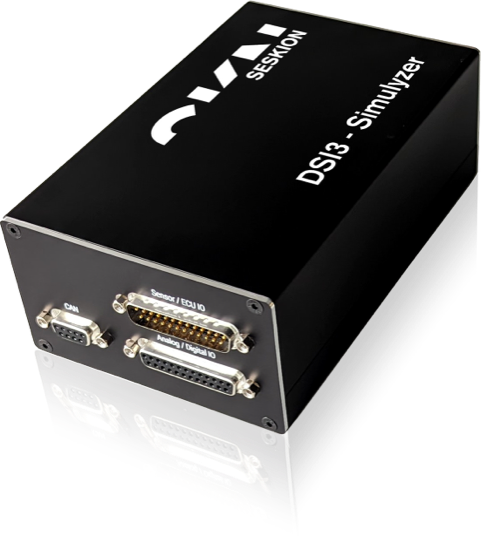
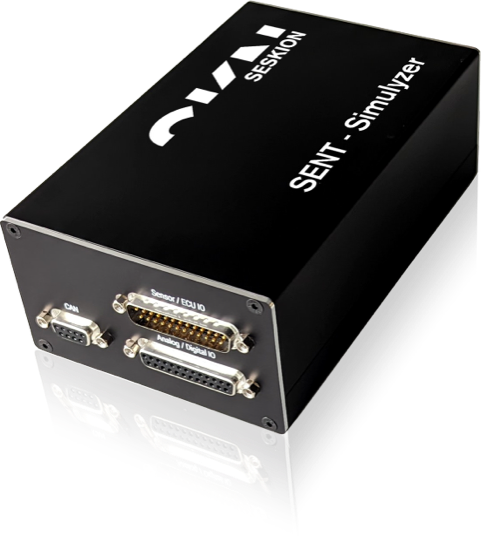
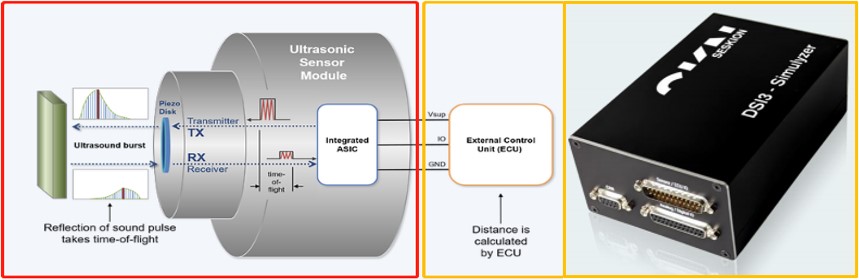
The DSI3 emulator simulates the ECU and interacts with the sensor signals through the DSI3 interface. It can be used in off-line test scenarios for sensor module calibration, including drive frequency, anisotropy coefficient, as well as analog and digital gain factor calibration, to ensure consistent echo detection results.
The DSI3 simulator can also simulate the sensor itself, such as an ultrasonic sensor. One channel can be used to simulate different current waveforms, while the other channel receives data from the ECU by detecting the bus power waveform. The data signals are simulated by current modulation to aid in the development and validation of the controller.
More ECU-specific solutions
HONGKEI has been specializing in automotive R&D and testing for more than 10 years. In addition to providing hardware and software products such as CAN/CAN FD/LIN/Vehicle Mounted Ethernet/TSN, we also fully utilize our years of experience and actively integrate various technical resources to provide comprehensive and in-depth one-stop solutions for our customers.
ECU Offline Simulation
Hi-Tech Automotive Bus Offline Simulation Solution
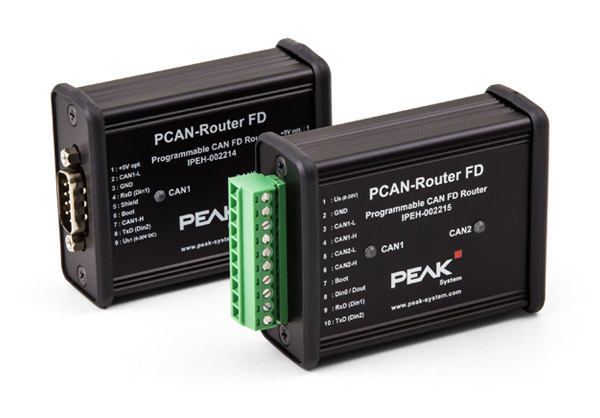
Based on the PCAN-Router series, HONGKE's gateways use programmable firmware to customize the CAN/CAN FD message structure and automatically send out message signals to establish offline communication. The firmware is written in C language and the response logic can be freely configured to realize ECU emulation.
ECU Function Test
ECU function test, handheld LIN test
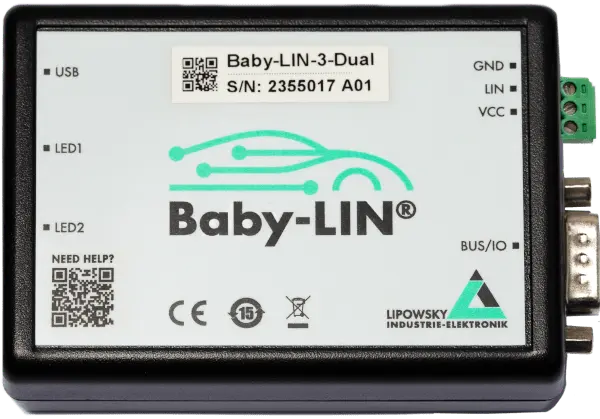
HONGKE's LIN/CAN bus automotive component test solution is a highly integrated professional test suite based on Baby-LIN series products, which helps customers to efficiently complete the quality, functionality, and control of automotive components during the testing and production stages.
Low Load ECU Aging Detection
Low Load ECU Aging Detection Program
Through hardware and software collaboration, HONGKE's ECU Fault Injection Test Solution simulates a variety of possible ECU failure scenarios and records ECU response data, helping to quickly and efficiently assess ECU reliability.

Hongke Case
HongKe Solutions] HongKe PCAN Router - CAN FD Communication and EE Architecture Bridging Solution (POC Verification)
Read more
HongKeTechnology
March 20, 2026

Hongke Case
HongKeys Solution] HongKeys PCAN Card - Solving the Challenges of CAN Communication and Electronic Control System for Tunnel Boring Equipment
Read more
HongKeTechnology
February 3, 2026
Professional technical support from HONGKEI to help you succeed in your project.
HongKe offers a complete range of PEAK CAN / CAN FD solutions, including adapters, protocol analyzers, routers, data loggers and protocol converters. The products are suitable for automotive electronics, industrial automation, and research and testing scenarios, supporting high-speed data transmission and stable communication, making them the best choice for in-vehicle bus and CAN architecture projects.