
Search

Hongke's latest articles

HongKe

I. Introduction: Strategic Changes at the Data Layer under the Critical Infrastructure Legislation

Add your title text here

[Hongke Solutions] A Comprehensive Guide to AR Applications in Hong Kong’s Healthcare Sector: 6 Key Scenarios and a Proof-of-Concept Guide

As smart healthcare and digital health transformation accelerate in Hong Kong and the Greater Bay Area, augmented reality (AR) technology is moving from proof of concept to clinical and operational practice. For Hong Kong’s public and private hospitals, medical education institutions, and medical device companies,AR Smart Glasses(such as the Vuzix series) combined with dedicatedTelemedicine Platform(such as S Med), which is redefining the boundaries of medical collaborationThe

So, which healthcare scenarios in Hong Kong best demonstrate the commercial and clinical value of AR? And how should healthcare institutions conduct proof-of-concept (PoC) studies? This article will provide an in-depth analysis of six major application scenarios for AR in Hong Kong’s healthcare sector and strategies for its implementation.The

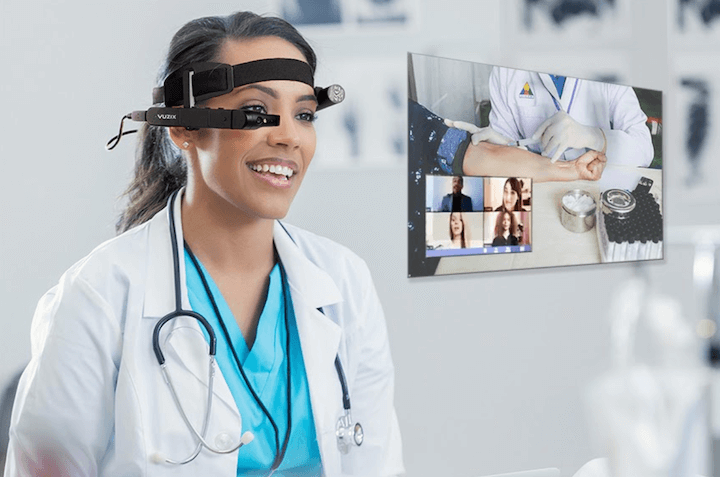
醫護人員佩戴 Vuzix AR 智能眼鏡進行遙距會診與多方視像巡診畫面展示

I. The Core Value of Medical AR: Three Key Characteristics

When evaluating whether to adopt AR smart glasses technology, healthcare institutions should not blindly pursue “hospital-wide digitization.”. Experience has shown that the most valuable AR medical applications typically have the following three core characteristics::

  1. On-site personnel must keep their hands free (hands-free)::
    When medical staff or engineers are treating patients or repairing equipment, they must keep both hands free to perform their tasks and cannot hold a cell phone or tablet.
    The
  2. First-person view (POV) live footage is required::
    Remote experts need to see exactly “the details that on-site personnel see,” rather than the fixed-angle view of a video conference camera.
    The
  3. Real-Time Collaboration and Process Documentation::
    The process requires remote annotation, data sharing, dynamic guidance, or the recording of first-person perspective footage for use as training and debriefing materials.
    The

II. The Top 6 Priority Application Scenarios for AR Smart Glasses in Hong Kong’s Healthcare Sector

based on Vuzix AR Smart Glassesand S Med Telemedicine PlatformWith its cross-device accessibility (computers, web, smartphones, AR glasses) and robust collaboration capabilities (zooming, real-time annotation, measurement tools, screen captures, and screen recording, etc.), the Hong Kong healthcare ecosystem should prioritize evaluating the following six major application areas:::

1. Emergency Care and Prehospital Response: Bringing In-Hospital Experts to the Scene Early

Emergency care is all about racing against the clock. During ambulance transport or pre-hospital care, emergency medical personnel wearing AR smart glasses can transmit first-person-view footage in real time to the emergency department or a specialist teamThe

  • Clinical Benefits: Hospital physicians can obtain patients’ vital signs and on-site treatment information in advance, allowing them to prepare operating rooms or specialty resources ahead of time.The

  • Unique Advantages of AR: While continuing to perform hands-on resuscitation, emergency responders are able to share video footage, significantly shortening the decision-making chain of “on-site information—expert assessment—next course of action.”The

2. Cross-Campus Telemedicine Consultations: Achieving True “Synchronized Perspectives”

Traditional video consultations are limited by fixed camera angles and cannot replicate the real-time perspective of healthcare professionals.The

  • Real-Life Examples: The University of Malaya Medical Center (UMMC) uses Vuzix M400 smart glasses to conduct virtual ward rounds for patients in the neuro-intensive care unit, allowing remote experts to accurately obtain patient information through the first-person perspective of the attending physician.The

  • Applicable Scenarios: Particularly well-suited for cross-hospital specialty consultations between Hong Kong public hospital clusters, after-hours remote support, and multidisciplinary team (MDT) consultationsThe

3. Surgical Collaboration and Intraoperative Demonstration: High-Precision Remote Technical Guidance

In operating rooms, where strict sterility and full concentration are essential, AR glasses can transmit the surgeon’s first-person view in real time to remote specialists or medical students.The

  • Multifunctional Collaboration: Remote experts can use the S Med platform toImage zoom, real-time AR annotations, ruler comparison, and data sharing, providing precise intraoperative guidanceThe

  • Clinical Guidelines: These applications can serve as powerful tools to support remote teaching and clinical collaboration (actual use must comply with the clinical safety and privacy regulations of each healthcare institution).The

4. Medical Skills Training: Creating First-Person Digital Learning Materials

The transmission of medical skills relies heavily on experience.. Using AR smart glasses to record a senior expert’s first-person perspective during operations allows for an accurate depiction of “observation points, operational sequences, and details regarding the identification of anomalies.”The

  • International Practices: For example, the Ohana One Surgical Sight project, which uses smart glasses to support cross-border surgical training and remote surgical guidanceThe

  • Training Closed-Loop System: Forming “Expert Demonstration ➔ First-Person Footage ➔ Hands-On Practice by Trainees ➔ Real-Time Remote Corrections by Instructors ➔ Process Review"Highly Effective Teaching Model"The

5. Ward Rounds and Remote Monitoring: Maximizing the Coverage of Specialist Resources

For healthcare groups with a network of multiple medical facilities, rehabilitation centers, or senior care facilities, experts are unable to visit every location in person at all times.. When on-site medical staff wear AR glasses to make rounds, remote experts can participate in diagnostic discussions in real time from their offices.. This can significantly expand the reach of top experts' services without replacing on-site medical staff.The

6. Medical Device After-Sales Service and Technical Support: Rapidly Closing the Commercial Loop

The applications of AR are not limited to the doctor-patient relationship; it also offers tremendous value in the after-sales maintenance of medical device companies (MedTech).The

  • Troubleshooting: When hospital maintenance staff wear AR glasses, senior engineers from the manufacturer can remotely “see the problem,” annotate the AR view, share repair diagrams, and directly guide the disassembly, assembly, and troubleshooting processes.The

  • Business Value: This effectively addresses the challenges of a shortage of senior technical engineers and the high time costs associated with traveling to and from hospitals, and is currently the implementation scenario that most easily yields a clear ROI (return on investment).The

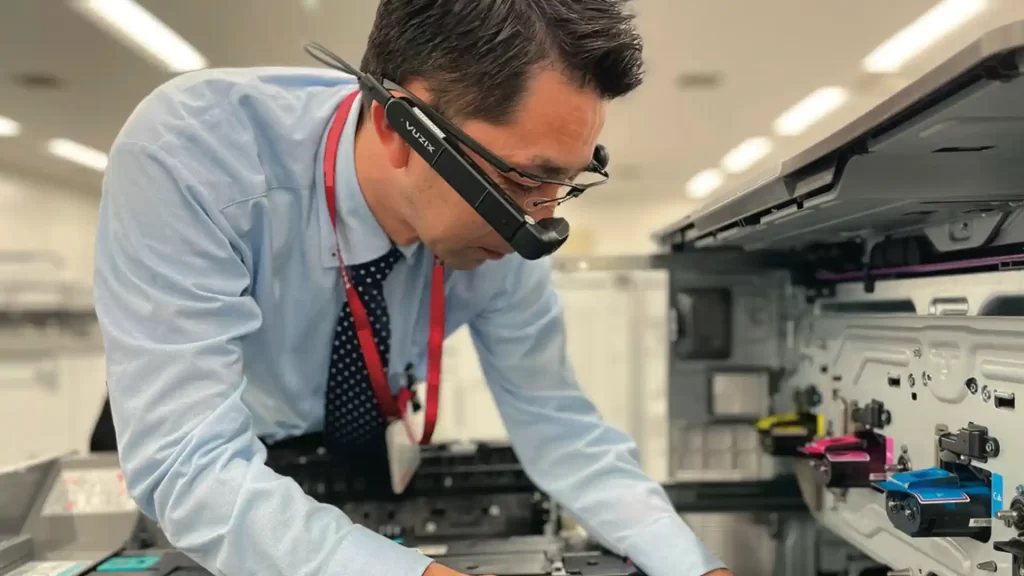
技術工程師佩戴 Vuzix AR 智能眼鏡進行設備檢修與遠端技術支援

III. Priority Assessment of Proof-of-Concept (PoC) Projects for AR Implementation in Hong Kong Healthcare Institutions

If a healthcare institution or company is implementing AR technology for the first time, it is recommended to adopt “Iterative Improvement, Key Breakthroughs"strategy" to avoid blindly implementing a hospital-wide approachThe

1. High Priority

  • Remote Technical Support for Medical Devices
  • Specialty Telemedicine Consultations
  • Medical Training and Demonstrations
  • Multicenter Expert Collaboration

2. Stricter verification is required

  • On-Site Emergency Support
  • Collaboration During Surgery
  • Clinical Processes Involving Direct Patient Participation

Reasons for Prioritizing High-Priority Projects: The closer the scenario is to direct clinical decision-making, the higher the requirements for medical regulations, patient privacy (such as the Hong Kong Personal Data (Privacy) Ordinance), network latency, and in-hospital IT security.. By focusing on training and after-sales support for equipment, you can quickly validate value with minimal risk.The

IV. Four Key Questions for Assessing AR Needs

Before deciding whether to conduct an AR proof of concept (PoC), healthcare organizations can first ask themselves the following four questions:::

  1. Does this task require the operator to keep both hands free at all times?


  2. Do remote experts need to see the first-person view of what the on-site personnel “actually see”?


  3. Do experts often find themselves unable to be on-site due to geographical, transportation, or time constraints?


  4. Does this process have value in terms of documentation, record-keeping, training, or post-event review?


👉 If you answered “Yes” to three or more of the above questions, this process has significant value for an AR PoC evaluation.The

HongKe can leverage the world's leading Vuzix AR Smart Glasses and S Med Telemedicine Collaboration Platform...providing professional scenario assessments, PoC testing and validation, and one-stop hardware and software deployment services to healthcare institutions, medical schools, and medical device companies in Hong Kong and the Greater Bay Area, helping you take a solid first step toward digital transformation in healthcareTheGo NowVuzix PageLearn more.

Other Articles

Hongke Dry Goods

[Hongke Solutions] ArangoDB Contextual Data Platform: Key Architecture for Next-Generation Network Asset Management (CAM/CMDB)

An in-depth analysis of how enterprises can transition from single LLM API calls to autonomous agentic systems. This article compiles real-world examples of AI agent deployments in production environments across six major industries, including retail and finance, and breaks down the underlying infrastructure logic—such as high concurrency, cross-interaction memory (Memory Infrastructure), and distributed state persistence.
Read more
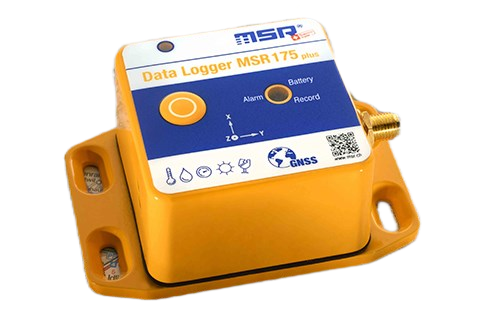
虹科 MSR175plus 衝擊與環境數據記錄器外觀圖:黃色堅固外殼配有 GNSS 定位功能、三軸加速度(X/Y/Z)以及溫度、濕度、氣壓、光照與傾斜感測器圖示,專用於運輸與物流監測。
Hongke Dry Goods

[Hongke Case Study] TSMC Selects MSR Shock and Vibration Data Loggers

How Can You Prevent Vibration Damage During International Transport of Semiconductor Wafers and Photomasks? We Reveal the Key Reasons TSMC Chose Hongke’s MSR175Plus Shock and Vibration Data Logger! The product features long battery life and large-capacity memory, enabling precise recording of temperature, humidity, pressure, and multi-axis acceleration during long-distance transport. In an exclusive interview, a TSMC engineer shares how the company converts vibration into quantifiable data and establishes rigorous standards to effectively reduce the risk of damage and significantly improve the success rate of international shipments!

Read more
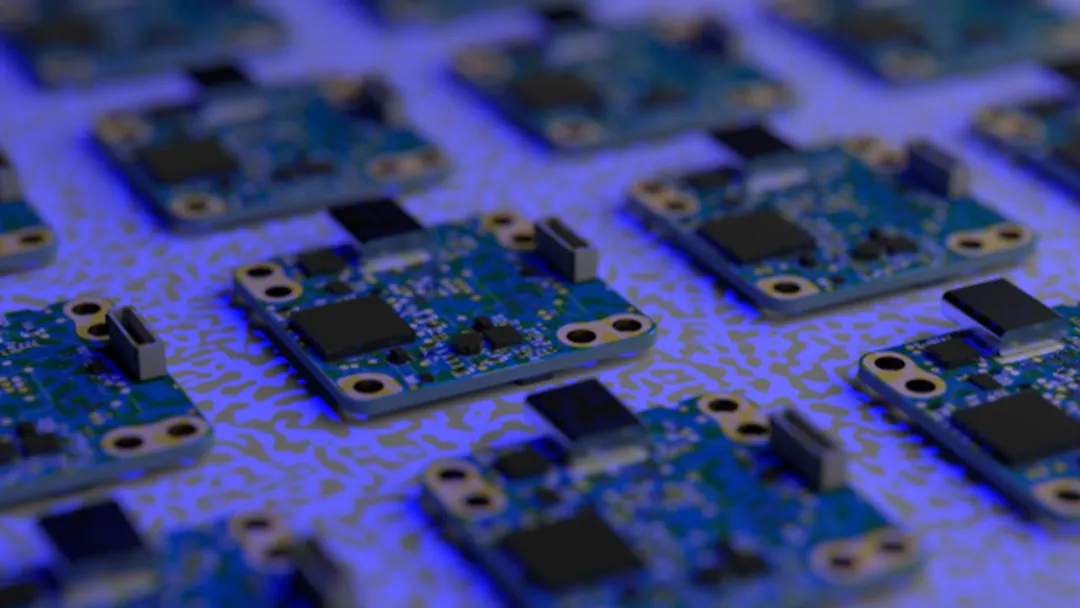
PCB 電路板組裝視覺檢測與測量示意圖:陣列排列的印刷電路板(PCBA)在藍光光源下展示晶片、元件與金屬焊盤細節,適用於 SMT 表面貼裝自動光學檢測(AOI)與品質管控。
Hongke Dry Goods

[Hongke Solutions] How Can AI-Powered Industrial Vision Inspection Overcome Quality Bottlenecks? A Comprehensive Analysis of Multi-Camera PTP Synchronization and Defect Detection

An In-Depth Analysis of AI Industrial Vision Inspection Technology! Explore how high-resolution industrial cameras, AI deep learning algorithms, and IEEE 1588 PTP microsecond-level multi-camera time synchronization precisely overcome bottlenecks in PCB component measurement and lithium-ion battery defect detection, and SMT Automated Optical Inspection (AOI), thereby improving production line yield!

Read more

Contact Hongke to help you solve your problems.

Let's have a chat