
Search

Hongke's latest articles

HongKe

Lorem ipsum dolor sit amet, consectetur adipiscing elit. Ut elit tellus, luctus nec ullamcorper mattis, pulvinar dapibus leo.

Lorem ipsum dolor sit amet, consectetur adipiscing elit. Ut elit tellus, luctus nec ullamcorper mattis, pulvinar dapibus leo.

[Hongke Solution] High-Speed Tracking and Detection Application for Drones Using Hongke’s iDS Event Camera

With the rapid development of the low-altitude economy and the widespread adoption of drones, small, high-speed, and highly maneuverable drones have posed unprecedented challenges to traditional visual perception: Issues such as motion blur, low-light failure, high latency, and insufficient dynamic range make it difficult to reliably perform core tasks such as detection, tracking, and trajectory prediction. Event cameras, however, are emerging as the key technology to overcome these bottlenecks thanks to their biomimetic visual characteristics, demonstrating irreplaceable commercial value in application scenarios such as drone security, autonomous flight, and airspace monitoring.

The Perception Challenges of Drones Using Traditional RGB Cameras

Traditional frame-based RGB cameras capture images at a fixed frame rate, which presents three inherent limitations when dealing with high-speed targets such as drones:

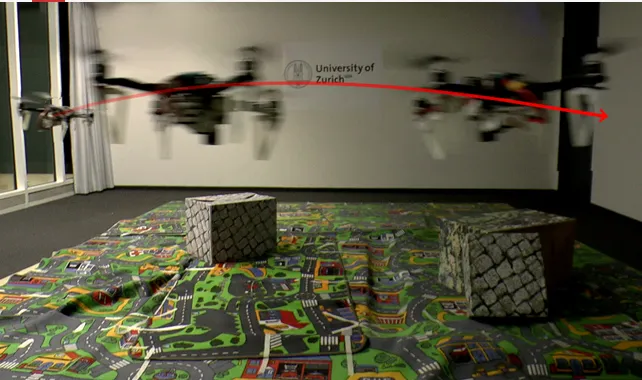
  1. Fast-moving objects tend to appear blurry: When a drone is flying at high speed, changing its hover position abruptly, or making sharp turns, severe motion blur can easily occur within a frame’s exposure cycle, causing detection to fail.

Blurred Images of Drones Moving at High Speeds

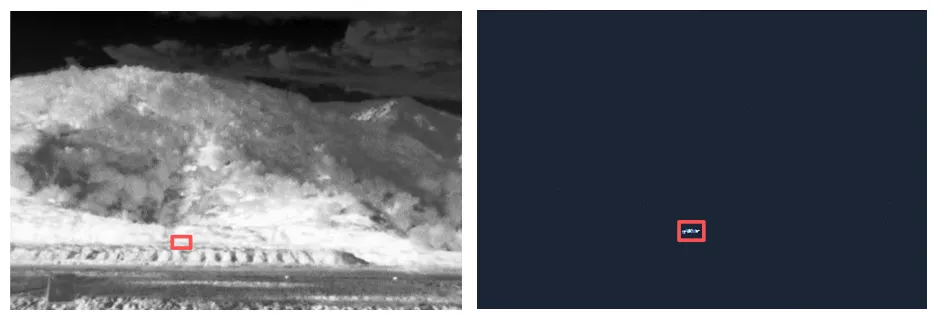
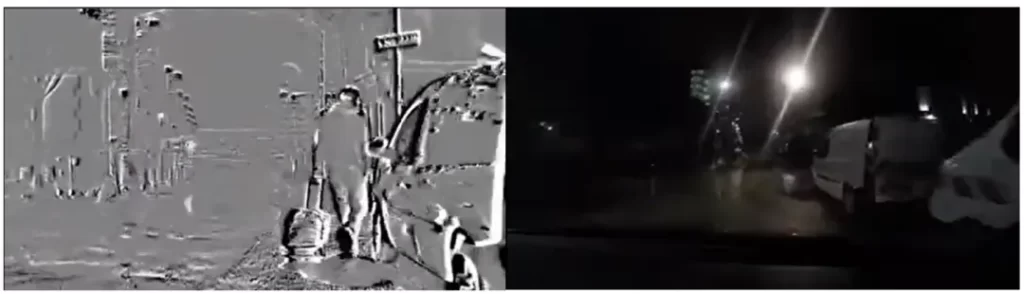
2. Poor adaptability to light: In conditions such as backlighting, nighttime, and strong shadows, images are highly prone to overexposure or underexposure, resulting in a significant loss of subject contours and textures.

Nighttime Infrared vs. Nighttime EVS

3. Delays and Insufficient Timing Information: Taking a typical RGB camera operating at 30 fps as an example, the resulting latency of approximately 33 ms makes it difficult to precisely locate high-speed drones, leading to a significant decline in tracking and prediction accuracy. However, using high-frame-rate cameras results in an extremely large volume of data, placing excessive demands on the computational performance of the hardware.

These issues are further exacerbated in complex environments—such as rainy weather, areas with many obstacles, and the transition between day and night—and have become the primary obstacles to the practical implementation of drone visual perception.

Event Camera: A Bionic Tool Tailored for Drone Motion Perception

Event cameras mimic the functioning of the human retina, outputting asynchronous event signals only when there is a sudden change in pixel brightness. They offer three key advantages that perfectly meet the perception needs of drones:

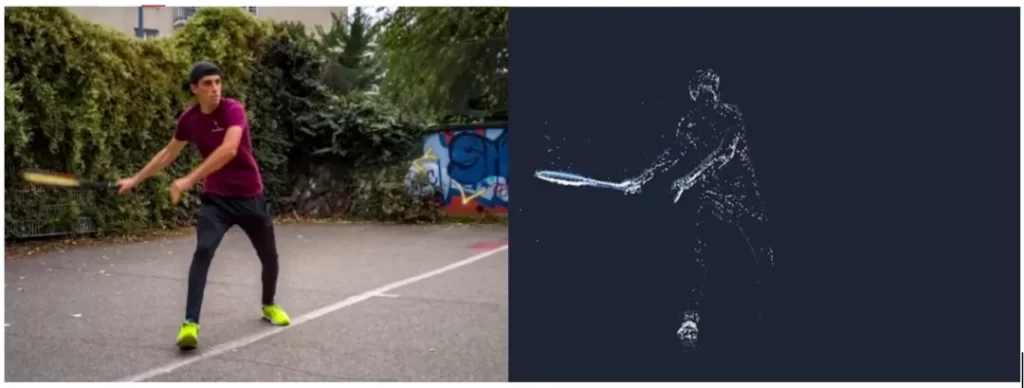
  1. Timing accuracy in the order of hundreds of microseconds: No fixed frame rate restrictions; response latency reduced to the 100 µs range, completely eliminating motion blur.

High-Speed Tennis: RGB Images vs. Time-Lapse Camera Images

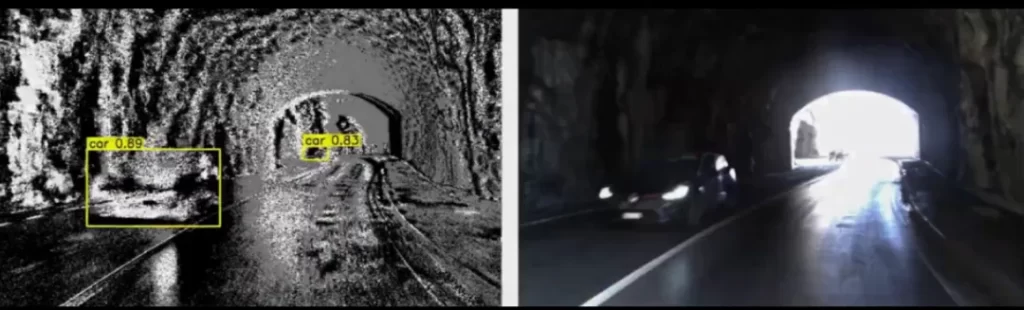
2. Ultra-Wide Dynamic Range: Native support for a dynamic range of over 120 dB, delivering stable imaging in both bright and low-light environments, with seamless performance day and night.

Event Camera Images vs. RGB Images Under Bright Tunnel Lighting
Nighttime Low-Light Camera Images vs. RGB Images

3. Low Redundancy, High Robustness: It outputs only valid dynamic information; it features a small data volume and strong interference resistance, and has a natural filtering capability against interference such as raindrops and flying insects. It can effectively reduce the data volume in static areas, significantly lowering bandwidth requirements.

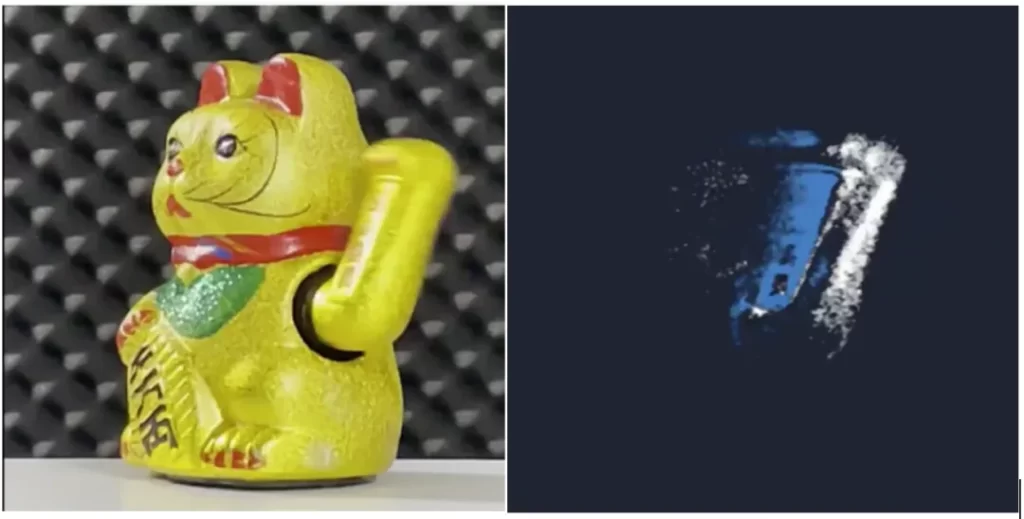
RGB Image Data vs. Event Camera Data in Dynamic Scenes

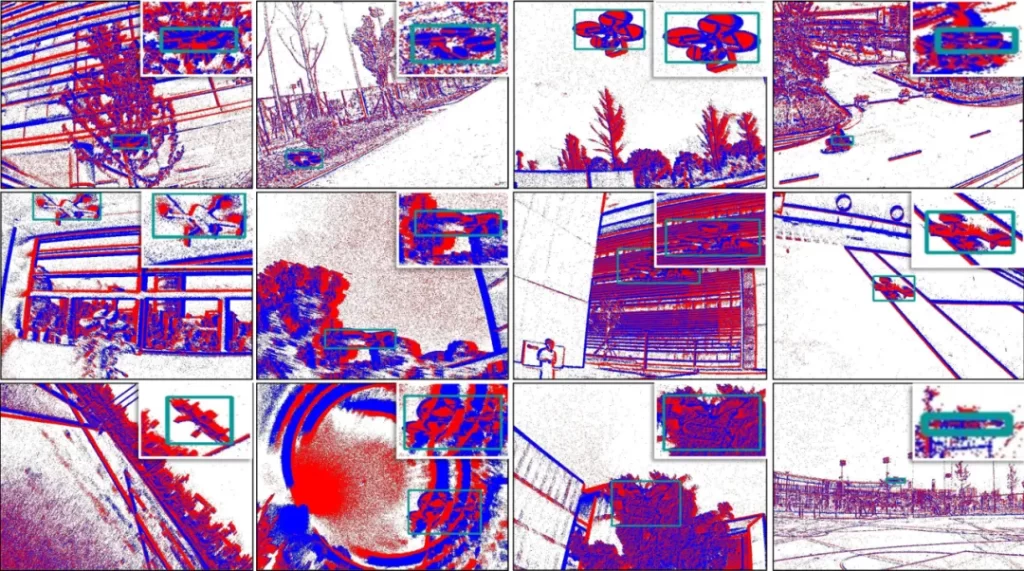
While RGB cameras struggle to see drones clearly at night and produce blurry outlines when shooting at high speeds, the event camera can still accurately capture the high-frequency rotation of the rotors and the drone’s flight path, providing highly reliable data for detection, tracking, and prediction.

Hongke Event Camera Drone Application Solution

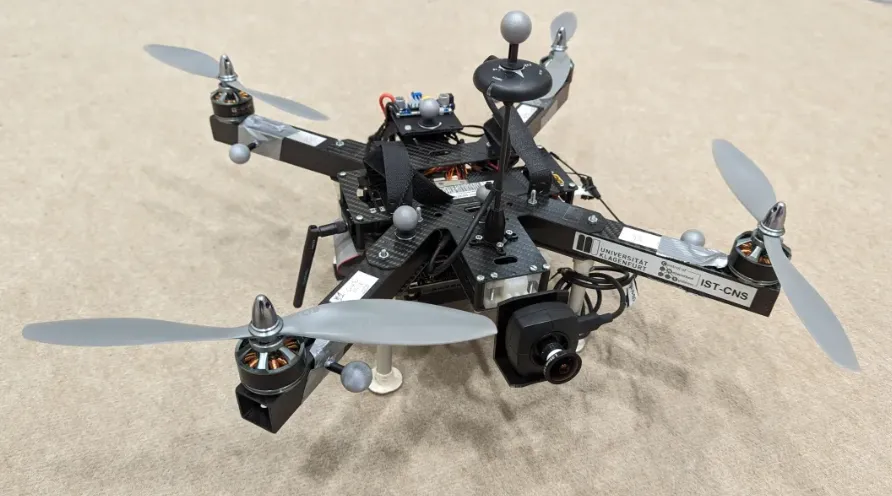
In practical applications,Hongke IDS Event CameraAs core sensing hardware, it offers extensive adaptability for real-world applications:

  • Low-Altitude Security and Airspace Control: It serves as the visual core of a 24/7 continuous monitoring system, enabling rapid detection, precise localization, and continuous tracking of drones operating in violation of regulations ("black flights"), thereby addressing the limitations of radar and radio frequency equipment in terms of visual precision.

  • Autonomous Drone Flight: As a core component of airborne sensing systems, it can instantly detect obstacles in GPS-denied environments—such as buildings, forests, and tunnels—and supports sub-millisecond response times for obstacle avoidance, significantly enhancing flight safety.

  • Professional Monitoring Scenarios: This camera can also be used directly in professional fields such as high-speed motion capture for drones and rotor condition monitoring, providing a high-quality, highly reliable visual data source for the development of related algorithms and system validation.

Conceptual Image of Drone Detection and Tracking Based on RGB Images

From the perspective of technological trends, event cameras are not a complete replacement for traditional computer vision, but rather one of the ideal choices for high-performance perception scenarios.Hongke IDS Event CameraLeveraging stable hardware performance and a mature software ecosystem, this technology has further lowered the engineering barriers to event-based vision, driving high-speed, high-dynamic-range, and highly robust drone perception technology from the laboratory into practical applications.

As sensors continue to become more compact and algorithms continue to be streamlined, event-based camera technology for drone detection and tracking will become increasingly widespread in fields such as low-altitude security, smart inspections, and autonomous aviation, serving as the core visual foundation for building a safe, efficient, and smart low-altitude ecosystem.

Other Articles

Hongke Case

[Hongke Solutions] Hongke PCAN-M.2 Interface Card – Case Study: L4 Autonomous Vehicle On-Board Communication Solution

This article explores how Hongke’s PCAN-M.2 four-channel CAN FD interface card can be deeply integrated into ADLINK’s autonomous driving ECU to create a high-bandwidth, low-latency, ISO automotive-grade, highly reliable in-vehicle communication solution for Level 4 autonomous shuttle buses. Click to read the full B2B technical case study and architecture analysis!

Read more
Hongke Case

[Hongke Insights] A Buyer’s Guide to Enterprise-Grade Smart Glasses: 8 Key Differences Between AR Glasses in Industrial and Medical Applications

Are you evaluating AR smart glasses for warehouse logistics, modern manufacturing, or telemedicine? This article provides an in-depth comparison of the eight key differences between consumer-grade and enterprise-grade smart glasses. Hongke offers professional AR solutions for businesses in Hong Kong and Southeast Asia that feature high security, support for MDM management, and reduced TCO. Read the buying guide now!

Read more
Hongke Dry Goods

[Hongke Insights] The Wave of Chinese Innovative Drugs Going Global: A Comprehensive Guide to Pharmaceutical Cold Chain Compliance and Temperature Monitoring During Transport

2026 will mark a boom period for the global expansion of China’s innovative drugs and biologics. How can you ensure that cross-border shipments comply with FDA 21 CFR Part 11 and EU GDP regulations? ELPRO LIBERO temperature recorders from Hongke offer a training-free, globally recognized pharmaceutical cold chain compliance solution, helping biotech companies successfully expand into global markets such as Hong Kong and Southeast Asia.

Read more

Contact Hongke to help you solve your problems.

Let's have a chat