

Search

Hongke's latest articles

HongKe

Lorem ipsum dolor sit amet, consectetur adipiscing elit. Ut elit tellus, luctus nec ullamcorper mattis, pulvinar dapibus leo.

Lorem ipsum dolor sit amet, consectetur adipiscing elit. Ut elit tellus, luctus nec ullamcorper mattis, pulvinar dapibus leo.

[Hongke Solution] High-Speed Tracking and Detection Application for Drones Using Hongke’s iDS Event Camera

With the rapid development of the low-altitude economy and the widespread adoption of drones, small, high-speed, and highly maneuverable drones have posed unprecedented challenges to traditional visual perception: Issues such as motion blur, low-light failure, high latency, and insufficient dynamic range make it difficult to reliably perform core tasks such as detection, tracking, and trajectory prediction. Event cameras, however, are emerging as the key technology to overcome these bottlenecks thanks to their biomimetic visual characteristics, demonstrating irreplaceable commercial value in application scenarios such as drone security, autonomous flight, and airspace monitoring.

The Perception Challenges of Drones Using Traditional RGB Cameras

Traditional frame-based RGB cameras capture images at a fixed frame rate, which presents three inherent limitations when dealing with high-speed targets such as drones:

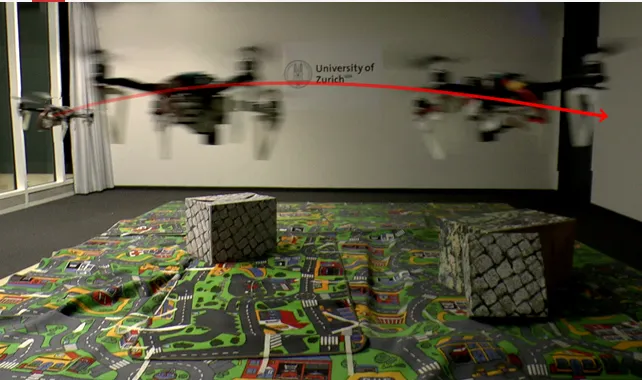
  1. Fast-moving objects tend to appear blurry: When a drone is flying at high speed, changing its hover position abruptly, or making sharp turns, severe motion blur can easily occur within a frame’s exposure cycle, causing detection to fail.

Blurred Images of Drones Moving at High Speeds

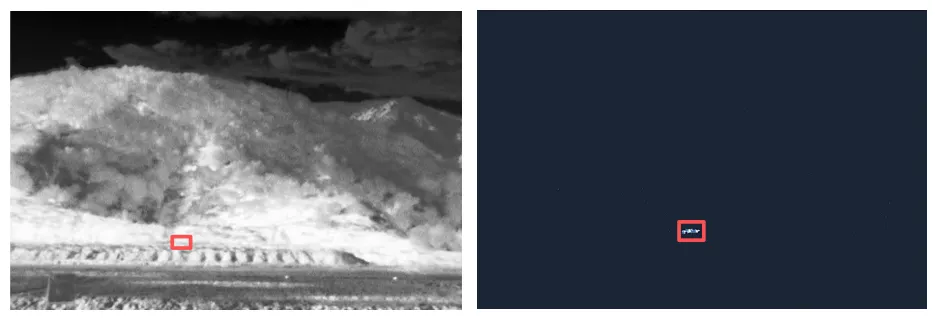
2. Poor adaptability to light: In conditions such as backlighting, nighttime, and strong shadows, images are highly prone to overexposure or underexposure, resulting in a significant loss of subject contours and textures.

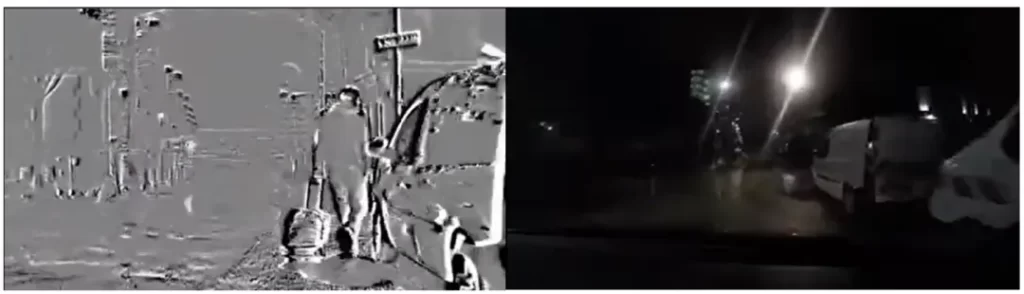
Nighttime Infrared vs. Nighttime EVS

3. Delays and Insufficient Timing Information: Taking a typical RGB camera operating at 30 fps as an example, the resulting latency of approximately 33 ms makes it difficult to precisely locate high-speed drones, leading to a significant decline in tracking and prediction accuracy. However, using high-frame-rate cameras results in an extremely large volume of data, placing excessive demands on the computational performance of the hardware.

These issues are further exacerbated in complex environments—such as rainy weather, areas with many obstacles, and the transition between day and night—and have become the primary obstacles to the practical implementation of drone visual perception.

Event Camera: A Bionic Tool Tailored for Drone Motion Perception

Event cameras mimic the functioning of the human retina, outputting asynchronous event signals only when there is a sudden change in pixel brightness. They offer three key advantages that perfectly meet the perception needs of drones:

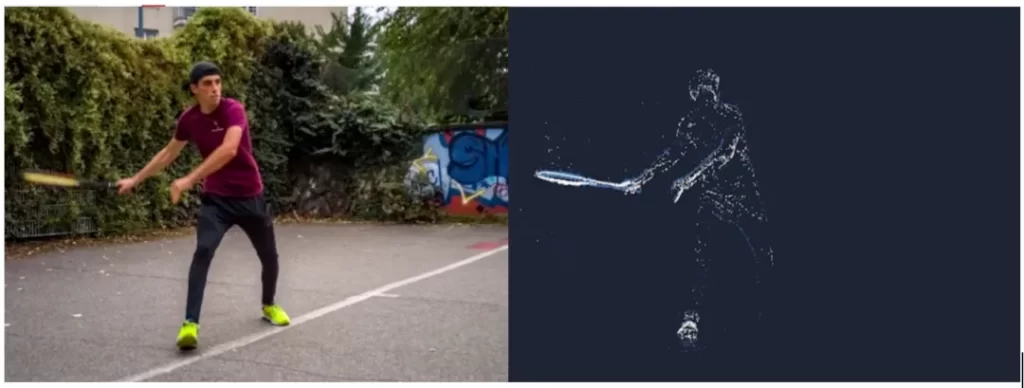
  1. Timing accuracy in the order of hundreds of microseconds: No fixed frame rate restrictions; response latency reduced to the 100 µs range, completely eliminating motion blur.

High-Speed Tennis: RGB Images vs. Time-Lapse Camera Images

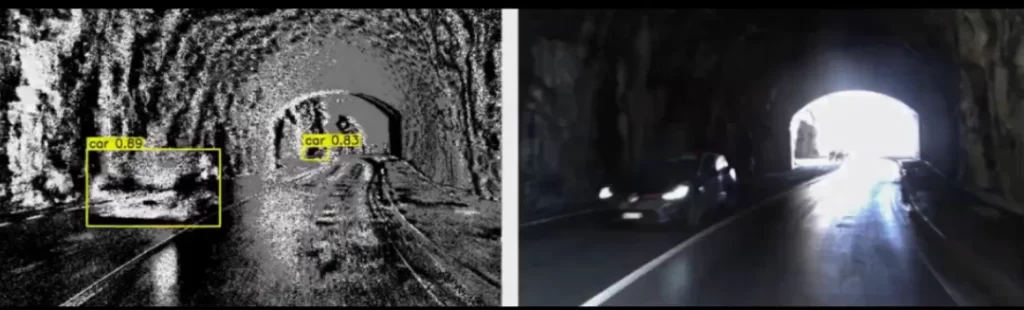
2. Ultra-Wide Dynamic Range: Native support for a dynamic range of over 120 dB, delivering stable imaging in both bright and low-light environments, with seamless performance day and night.

Event Camera Images vs. RGB Images Under Bright Tunnel Lighting
Nighttime Low-Light Camera Images vs. RGB Images

3. Low Redundancy, High Robustness: It outputs only valid dynamic information; it features a small data volume and strong interference resistance, and has a natural filtering capability against interference such as raindrops and flying insects. It can effectively reduce the data volume in static areas, significantly lowering bandwidth requirements.

RGB Image Data vs. Event Camera Data in Dynamic Scenes

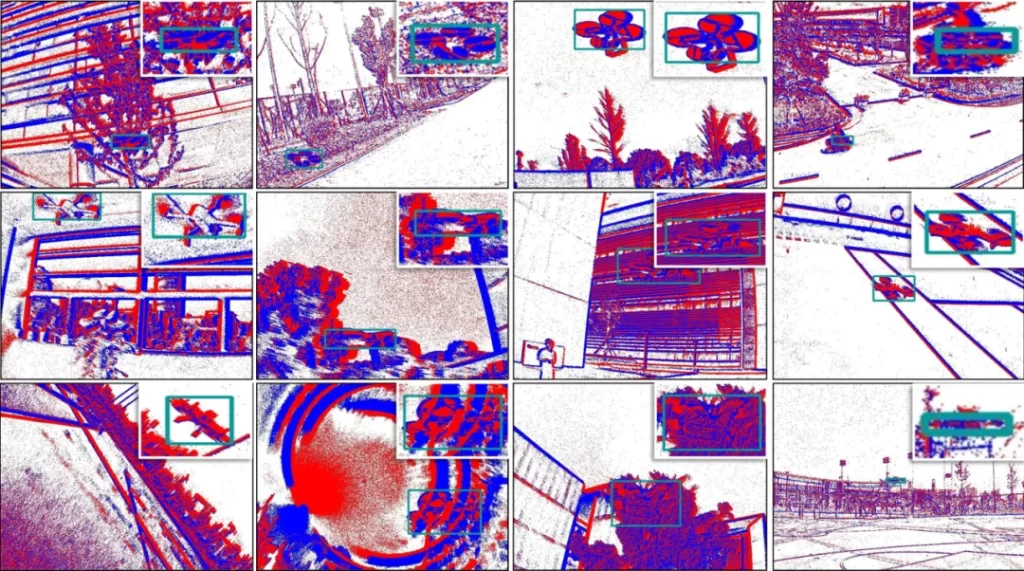
While RGB cameras struggle to see drones clearly at night and produce blurry outlines when shooting at high speeds, the event camera can still accurately capture the high-frequency rotation of the rotors and the drone’s flight path, providing highly reliable data for detection, tracking, and prediction.

Hongke Event Camera Drone Application Solution

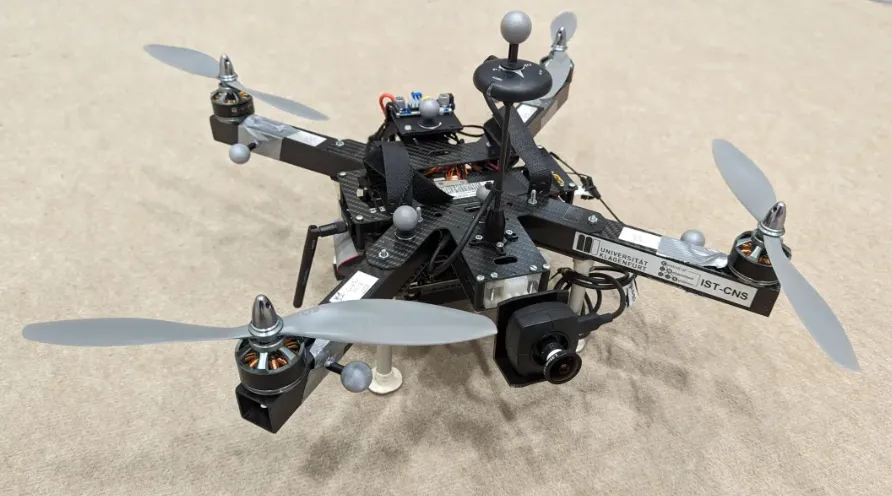
In practical applications,Hongke IDS Event CameraAs core sensing hardware, it offers extensive adaptability for real-world applications:

  • Low-Altitude Security and Airspace Control: It serves as the visual core of a 24/7 continuous monitoring system, enabling rapid detection, precise localization, and continuous tracking of drones operating in violation of regulations ("black flights"), thereby addressing the limitations of radar and radio frequency equipment in terms of visual precision.

  • Autonomous Drone Flight: As a core component of airborne sensing systems, it can instantly detect obstacles in GPS-denied environments—such as buildings, forests, and tunnels—and supports sub-millisecond response times for obstacle avoidance, significantly enhancing flight safety.

  • Professional Monitoring Scenarios: This camera can also be used directly in professional fields such as high-speed motion capture for drones and rotor condition monitoring, providing a high-quality, highly reliable visual data source for the development of related algorithms and system validation.

Conceptual Image of Drone Detection and Tracking Based on RGB Images

From the perspective of technological trends, event cameras are not a complete replacement for traditional computer vision, but rather one of the ideal choices for high-performance perception scenarios.Hongke IDS Event CameraLeveraging stable hardware performance and a mature software ecosystem, this technology has further lowered the engineering barriers to event-based vision, driving high-speed, high-dynamic-range, and highly robust drone perception technology from the laboratory into practical applications.

As sensors continue to become more compact and algorithms continue to be streamlined, event-based camera technology for drone detection and tracking will become increasingly widespread in fields such as low-altitude security, smart inspections, and autonomous aviation, serving as the core visual foundation for building a safe, efficient, and smart low-altitude ecosystem.

Other Articles

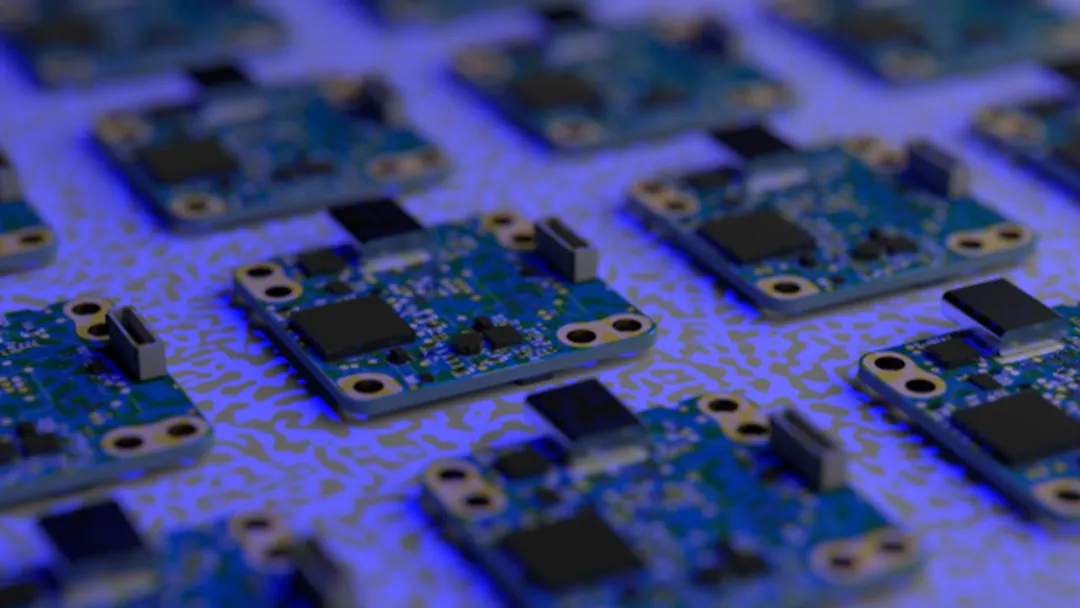
PCB 電路板組裝視覺檢測與測量示意圖:陣列排列的印刷電路板(PCBA)在藍光光源下展示晶片、元件與金屬焊盤細節,適用於 SMT 表面貼裝自動光學檢測(AOI)與品質管控。
Hongke Dry Goods

[Hongke Solutions] How Can AI-Powered Industrial Vision Inspection Overcome Quality Bottlenecks? A Comprehensive Analysis of Multi-Camera PTP Synchronization and Defect Detection

An In-Depth Analysis of AI Industrial Vision Inspection Technology! Explore how high-resolution industrial cameras, AI deep learning algorithms, and IEEE 1588 PTP microsecond-level multi-camera time synchronization precisely overcome bottlenecks in PCB component measurement and lithium-ion battery defect detection, and SMT Automated Optical Inspection (AOI), thereby improving production line yield!

Read more
可配置的CAN FD模擬I/O模塊 功能概述: PCAN-MicroMod FD系列模塊是支持CAN FD的數采模塊。 PCAN-MicroMod FD 插入式板卡可以和即插即用的母板一起購買,母板提供了各種外設可滿足特定需要。對於CAN連接、I/O、和供電,可用彈簧端子連接器。 PCAN-MicroMod FD 數字版1和2著重於數字輸入和輸出,其上有相應的保護電路。數字1的數字輸出裝備了低邊開關,數字2的裝備了高邊開關。
Hongke Dry Goods

[Hongke Solutions] Can’t Read CAN Data? Not Enough Temperature Channels? A Comprehensive Guide to Integrating NVH and Battery Data Acquisition

Is your current NVH data logger unable to read the CAN bus? Are there not enough temperature channels for battery testing? Hongke offers the PCAN-MicroMod FD and MU-Thermocouple1 CAN FD modules to enable CAN(FD)-to-analog conversion and high-density thermocouple multi-module cascading expansion. No coding required—just unbox and use it right away, with no need to replace your existing system!

Read more
Hongke Dry Goods

[Hongke Solutions] AI Agent Implementation Case Study: Enterprise-Level Deployment Across Six Major Industries and the Logic Behind the Underlying Infrastructure

An in-depth analysis of how enterprises can transition from single LLM API calls to autonomous agentic systems. This article compiles real-world examples of AI agent deployments in production environments across six major industries, including retail and finance, and breaks down the underlying infrastructure logic—such as high concurrency, cross-interaction memory (Memory Infrastructure), and distributed state persistence.

Read more

Contact Hongke to help you solve your problems.

Let's have a chat