
【虹科案例】每年節省200萬元的品質損失!海信日立如何用MSR振動記錄儀發現大型設備運輸隱憂?
虹科MSR衝擊振動記錄器可為物流運輸、軌道運輸、電力能源、工業自動化等領域提供高精度、可靠的衝擊振動監測解決方案。透過引入虹科MSR165衝擊微型振動記錄儀,海信日立成功建構了一套科學的數據監測體系,實現了對設備運輸環境的精準量化與產品設計的持續優化。
Lorem ipsum dolor sit amet, consectetur adipiscing elit. Ut elit tellus, luctus nec ullamcorper mattis, pulvinar dapibus leo.
With rising energy costs and increasingly stringent energy-saving and emission-reduction policies, building energy optimization has become a key aspect of digital transformation for enterprises. In the face of energy wastage and equipment inefficiency that are invisible to the naked eye, how can business managers accurately identify and tap into the "invisible energy-saving potential"? The answer is exactly:Energy SCADA System (Energy SCADA)The
The core role of SCADA in energy management is to digitize the energy consumption of buildings. Real-time monitoring, analysis and optimizationIt can help enterprises to continuously improve energy efficiency and form a closed-loop energy efficiency improvement mechanism. It can help enterprises to continuously improve energy efficiency, form a closed-loop energy efficiency improvement mechanism, and truly implement smart energy saving.
Through the SCADA platform, the building's Electrical, HVAC, lighting, etc. systems The system can monitor and control all aspects of energy consumption, and provide automatic alerts and intelligent adjustments in the event of abnormal fluctuations or energy wastage. This data-driven energy management model not only effectively reduces costs, but also helps companies meet various energy-saving regulations (e.g., France's Tertiary Energy Efficiency Decree, China's "Double Carbon" standard, etc.).


BMS is the core infrastructure of energy SCADA, which collects building operation data through a network of distributed sensors and actuators, and regulates HVAC, lighting and other equipment in an automated manner.
A well-established BMS typically includes:
Environmental SensorsTemperature, CO₂, brightness, etc.
Enforcer: Valves, Thermostats, Lighting Control Modules
controllers: parsing data, triggering control logic
Communication Agreement: BACnet, Modbus, etc.
HMI Human Machine Interface: Visual monitoring and parameter setting
According to Energies Dev, intelligent BMS control can reduce energy consumption by as much as 30%This is especially true for high energy consumption scenarios such as HVAC.
In the SCADA architecture, sensors and smart metering devices are the core of the "sensing layer" of energy monitoring.
High-frequency energy-consuming data collection and remote transmission can be realized through multiple types of sensors (power, heat, motion, etc.) and IoT communication technologies (LoRaWAN, Sigfox).
Focused control is required during deployment:
Accurate mapping of key energy consumption points
Sensors near major energy-consuming equipment to improve representativeness
Real-time data upload to SCADA to support predictive maintenance
This approach significantly reduces the risk of downtime and equipment failures, and enhances the reliability of energy management.
Modern Energy SCADA platform integration:
Real-time monitoring
Trend Analysis
Data Modeling
Visualization
Helps managers to quickly pinpoint building energy consumption problems and develop improvement strategies.
An ideal SCADA system should have:
Real-time Alarms: Instant alerts for energy abnormalities
Multi-source data analysis: Electricity, gas and water analysis
Highly interoperable: Seamless integration with BMS/building equipment
Compliance Support: Compliance with EU BACS regulations, etc.
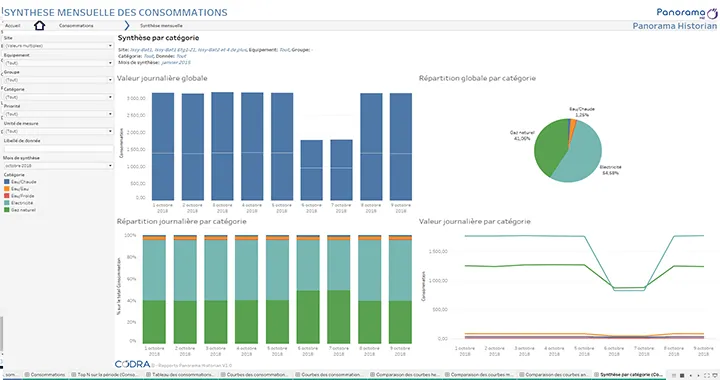
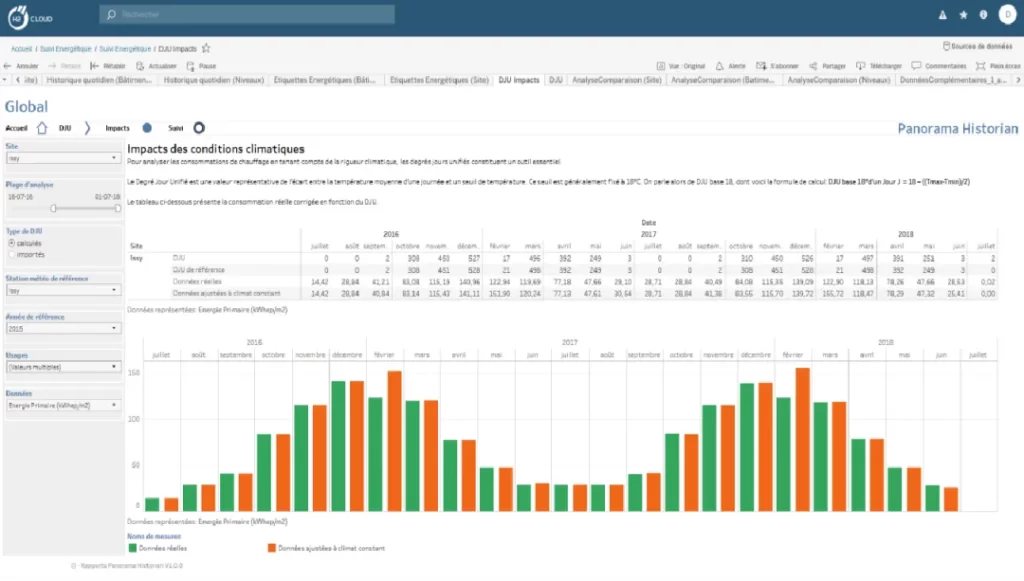
HOSCO Panorama SCADA Platform Adopting modular architecture and open communication interface, it can flexibly integrate architectural and industrial equipments, and open up the complete chain from data collection, visual display to energy consumption analysis, thus truly realizing energy transparency.
In complex commercial buildings, energy wastage is often the result of subtle deviations in a number of areas. For example:
Improper HVAC settings
Lighting not automatically adjusted according to occupancy
Data omissions lead to analytical bias
Modeling and algorithmic analysis through SCADA can reveal:
Energy efficiency KPI deviation
Energy flow imbalance between lighting and air conditioning systems
Early warning of potential waste through predictive algorithms
The Panorama SCADA platform enables cross-system energy consumption correlation analysis to help managers identify "deep inefficiencies" and continuously improve overall energy efficiency.

虹科MSR衝擊振動記錄器可為物流運輸、軌道運輸、電力能源、工業自動化等領域提供高精度、可靠的衝擊振動監測解決方案。透過引入虹科MSR165衝擊微型振動記錄儀,海信日立成功建構了一套科學的數據監測體系,實現了對設備運輸環境的精準量化與產品設計的持續優化。

虹科 PCAN Router 提供 CAN / CAN FD 通訊橋接解決方案,支援跨 EE 架構信號轉換,無需修改 ECU 軟件即可完成 POC 驗證與測試整合,適用於汽車電子、自動駕駛與車載系統開發。

虹科高保真 HIL(Hardware-in-the-Loop)仿真解決方案,以 aiSim 模擬平台為核心,支援 L3/L4 自動駕駛測試、多傳感器仿真與 SiL/MiL/HiL 驗證,提供高置信度智能駕駛測試環境,適用於 OEM、Tier1 及自動駕駛科技企業。