

Search

Hongke's latest articles

HongKe

Lorem ipsum dolor sit amet, consectetur adipiscing elit. Ut elit tellus, luctus nec ullamcorper mattis, pulvinar dapibus leo.

Lorem ipsum dolor sit amet, consectetur adipiscing elit. Ut elit tellus, luctus nec ullamcorper mattis, pulvinar dapibus leo.

HONGKE Solutions] Enabling dSPACE to Realize GNSS-based HIL Simulation for Driving Functions, Accelerating the Revolution of Autonomous Driving Tests

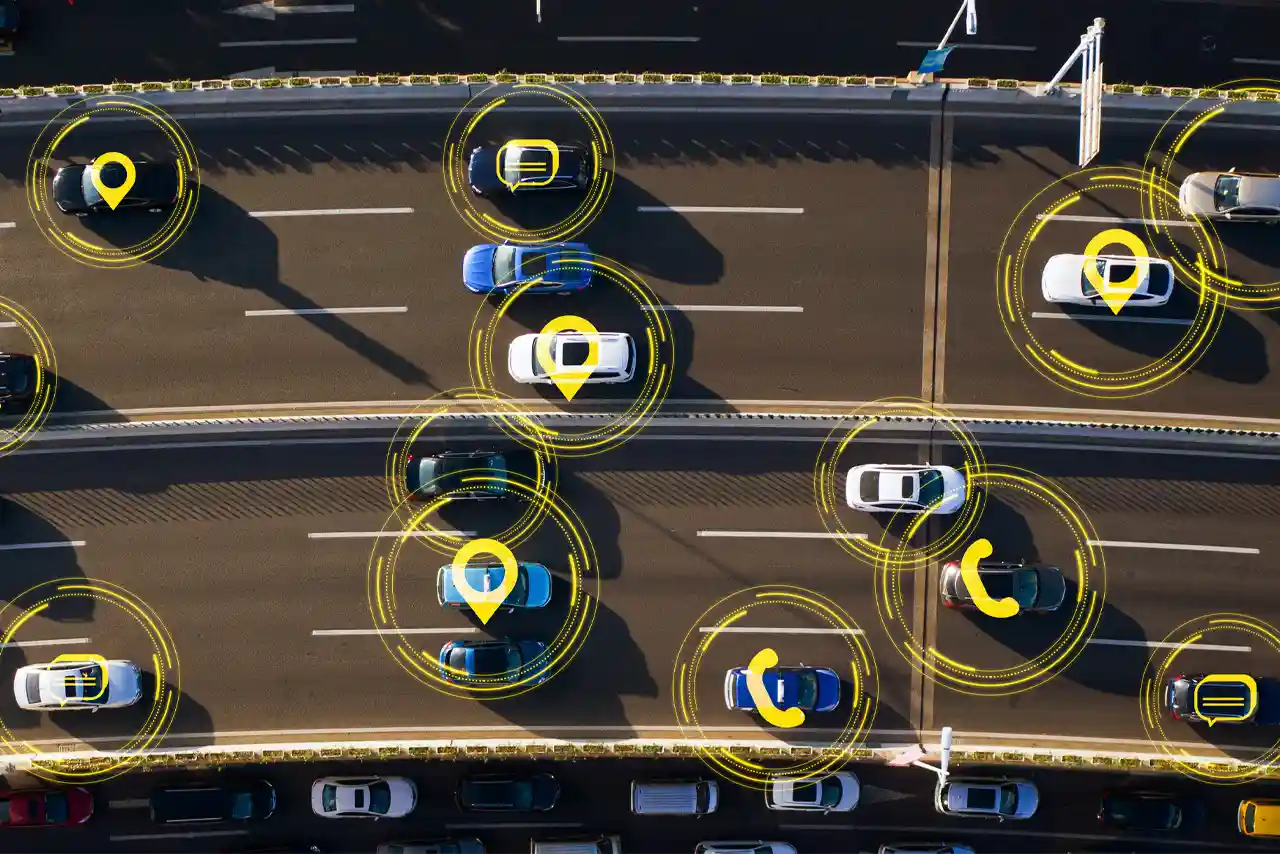
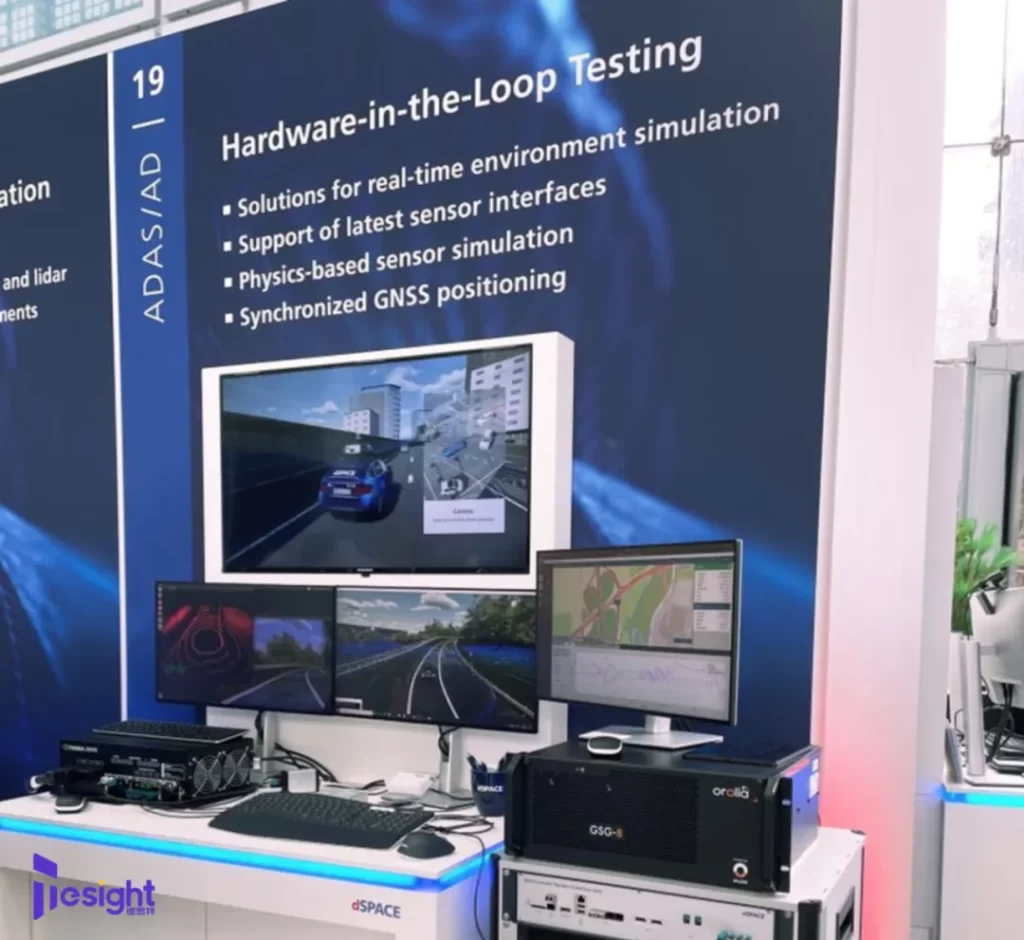
dSPACE, a world-renowned provider of simulation and verification solutions, has successfully constructed a GNSS-based Hardware-in-the-Loop (HIL) simulation system for driving functions. The system can be widely used in automotive scenarios such as autonomous driving, V2X, and smart cabins, and is highly flexible and versatile, making it suitable for all kinds of complex test environments.

About dSPACE

dSPACE is a global player in the field of simulation and verification, and a pioneer in aerospace and defense innovation. Its product portfolio covers the entire development chain from conceptual design to mass production support for applications in autonomous driving, electric vehicles, motors, battery management systems, fuel cells, power electronics, charging infrastructure, and more.

dSPACE also offers a wide range of simulation models to support all stages of development, from functional development to ECU testing.

Program Introduction

The importance of GNSS signals in autonomous driving lies in their ability to provide accurate, reliable and stable positioning information. Whether it is V2X communication or autonomous driving function verification, all core applications rely on satellite-supported positioning capabilities.

However, the availability of different GNSS systems varies greatly, and the quality of GNSS signals can be easily affected by topographical environments (e.g., urban canyons, viaducts, dense buildings). In addition, GNSS signals can be subject to unintentional interference, malicious interference, or spoofing attacks.

To ensure the robustness and reliability of the application in everyday scenarios, it is essential to rely on more powerful and stable GNSS simulators.

Program Components

The whole system is mainly composed of the following parts:

  • HIL SimulatorIncludes Automotive Simulation Models (ASM) for simulating vehicle motion and traffic behavior.
  • GNSS blockset: Dedicated interface module set for controlling GNSS signal generators
  • GNSS Simulator GSG-8 GEN2Generate GNSS scenes with specific requirements based on the current geographic location and output vehicle position data in the form of RF signals.
  • Automotive Simulation Model (ASM)Simulates engines, vehicle dynamics, electrical components, and traffic environments, and supports model development and ECU-based HIL testing.

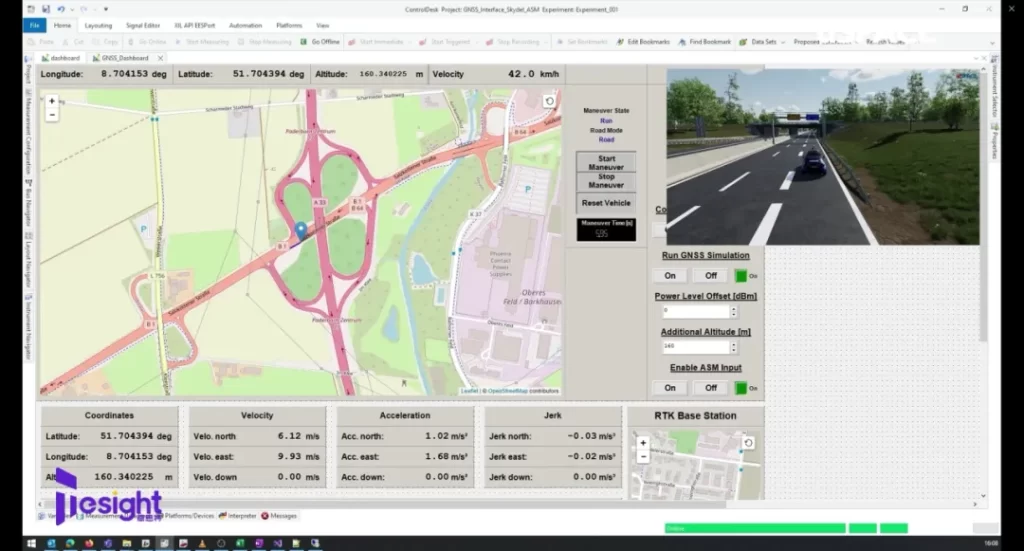
In this solution, the HIL simulator can specify the 3D trajectory and related scenes, and output the position information (latitude, longitude, altitude), 3-axis velocity, 3-axis acceleration and acceleration. Attitude information such as 3-axis angular velocity can be obtained using an ASM module, and the data is transmitted in real time to the GNSS simulator, which then feeds it back to the device to be tested using RF signals.

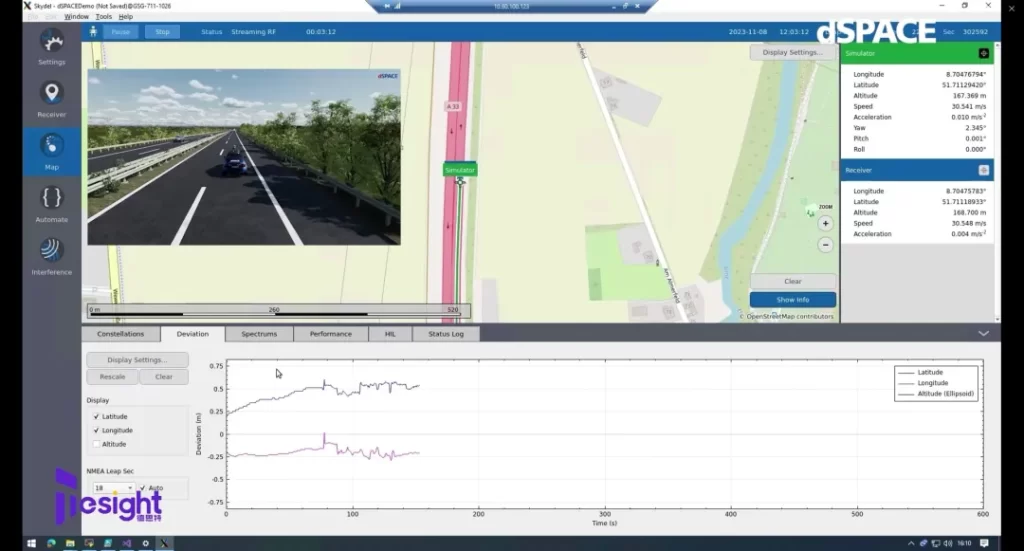
During the GNSS simulation process, you can observe the GNSS data output from the simulator and received from the device under test in real time, and you can check the positioning error and compare the performance of the simulation coordinates. By monitoring the interaction between the GNSS simulator and the DUT (Device Under Test) in real time, the performance of the positioning algorithm and GNSS modules in different environments can be more accurately evaluated.

In this way, the GNSS module can be fully integrated into HIL's 3D simulation scenarios, enabling it to perform a wide range of complex environmental and operational tests in a laboratory environment. The ability to simulate a wide range of road conditions and environmental changes without the need for extensive on-road measurements dramatically improves testing efficiency, while providing more quantifiable data for performance optimization and algorithm adjustment.

efficacy

The GNSS simulator enables highly accurate geolocation simulation and satellite signal generation. When the GNSS signal generator is integrated into the dSPACE ASM model, the system automatically selects the default GNSS test scene and controls the signal generator.

In a typical autonomous driving test, the starting position, date, driving route and driving maneuvers can be parameterized in the ASM model, and various GNSS constellations (GPS, Galileo, GLONASS, BeiDou, etc.) and signal degradation modes can be selected. the HIL simulator continuously transmits the vehicle position data to the signal generator, which generates a simulated signal based on the scene and outputs it as a real RF signal to the GNSS device to be tested. The HIL simulator continuously transmits the vehicle position data to the signal generator, which generates a simulated signal based on the scene and outputs it to the GNSS device to be tested in the form of a real RF signal.

Through this complete process, the positioning status, error behavior and performance limits of GNSS modules in various complex scenarios can be completely reconstructed, effectively supporting the rapid verification of autonomous driving perception and positioning tests.

Other Articles

Hongke Case

【虹科方案】 Redis Enterprise 如何助力香港關鍵基礎設施合規?單秒級故障轉移實現零中斷核心功能保障

隨著香港《保護關鍵基礎設施(計算機系統)條例》實施,核心功能持續性與恢復時間目標(RTO)成為法定責任。Redis Enterprise 透過 99.999% 高可用架構、單秒級自動故障轉移與 Active-Active 多活技術,將恢復時間與恢復點目標趨近於零,在高負載下仍維持毫秒級延遲,幫助金融、電信與能源行業實現真正的零中斷數據合規。

Read more
Hongke Case

【虹科方案】從 Crunchbase 外洩事件看企業郵件安全:如何防止誤寄與敏感資料外流?

2026 年初 Crunchbase 證實發生重大資料外洩,再次證明一次成功釣魚即可引爆數百 MB 檔案外流。除了外部攻擊,企業更常忽略「郵件誤寄」與內部外傳風險。本文解析釣魚產業化趨勢、合規壓力(如 HIPAA、GDPR、GLBA),並提供整合式 DLP、行為式 AI 與郵件加密的三位一體防護策略,協助企業在資料寄出前即時攔截風險。

Read more
Hongke Case

【虹科方案】虹科 ArangoDB 圖資料庫 – 圖形資料的力量:金融反詐欺從規則博弈走向關係洞察

ArangoDB plays a key role in the financial anti-fraud space, helping organizations move from traditional rule-based approaches to deep relationship insights. In the face of increasingly complex and insidious fraud networks, traditional risk control systems have been overwhelmed by the lack of a global perspective, lagging rule updates, and challenges in cross-system integration, ArangoDB, through its unique native multi-model (graphs, files, vectors) capabilities, integrates fragmented customer information, transaction behavior, and device fingerprints to achieve an integrated analysis of "Relationships + Behavior + Patterns Identification". This not only significantly improves the speed and accuracy of fraud identification, reduces decision-making delays and maintenance costs, but also empowers financial institutions with the ability to proactively prevent and comprehensively understand risks, opening a new chapter in financial anti-fraud.

Read more

Contact Hongke to help you solve your problems.

Let's have a chat