

Search

Hongke's latest articles

HongKe

Lorem ipsum dolor sit amet, consectetur adipiscing elit. Ut elit tellus, luctus nec ullamcorper mattis, pulvinar dapibus leo.

AI Recognition Meets AR Workflow: PCB Quality Control Welcomes a New "Golden Era

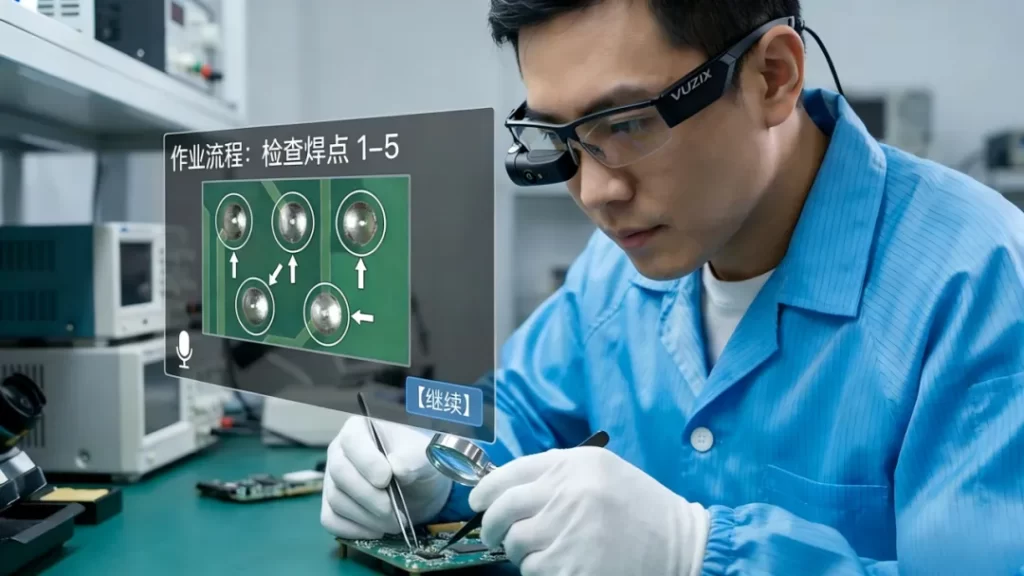
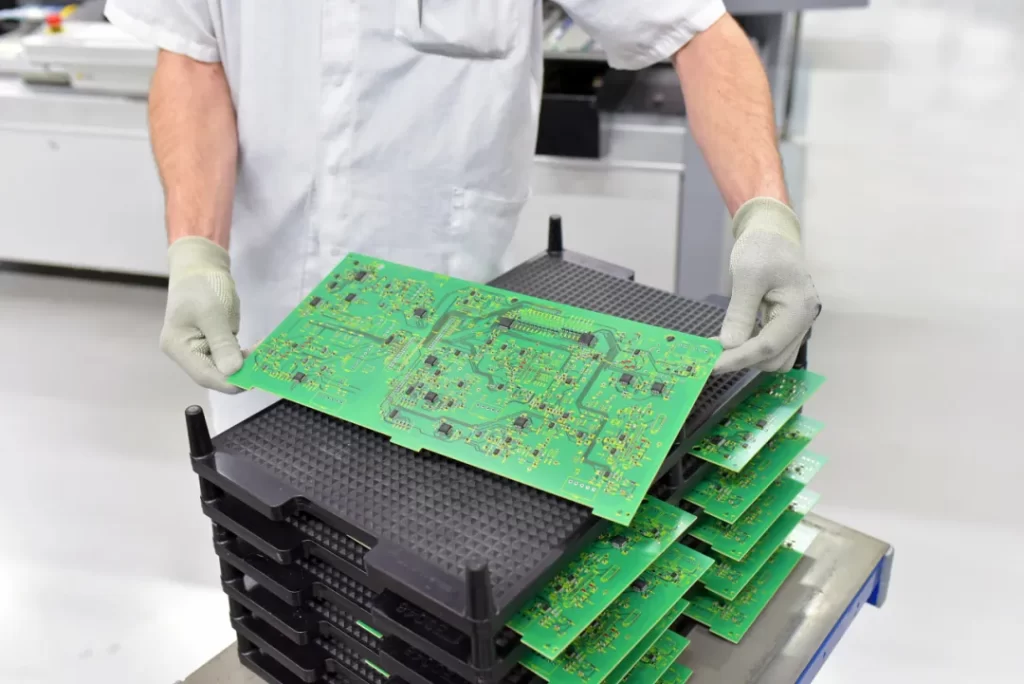
When the line operator puts on the AR Smart GlassesIt's complicated. PCB Inspection Flow The visual presentation of "step-by-step, structured and standardized" was realized in front of our eyes - from experience-oriented operation toNumerical WorkflowThe transformation is becomingElectronics ManufacturingA key breakthrough in transformation and upgrading.

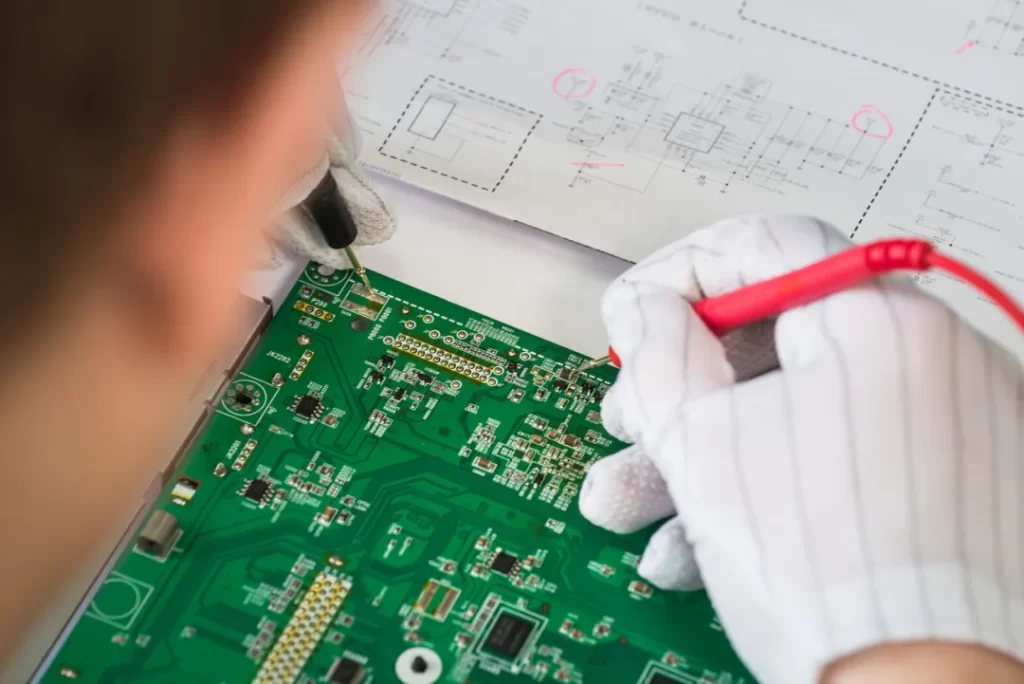
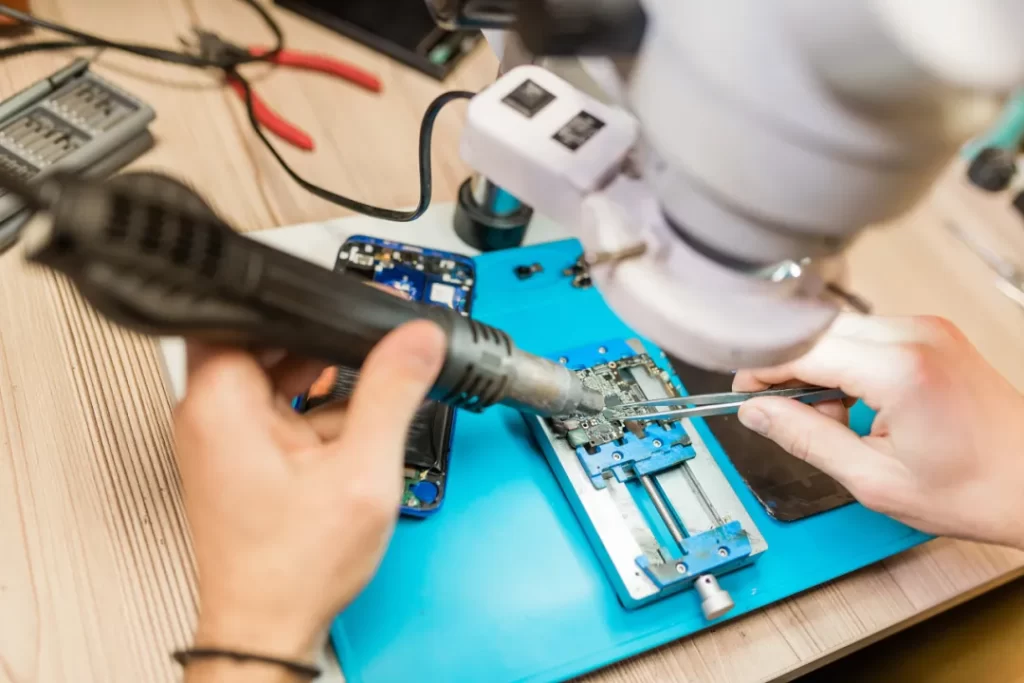
Highly dependent onManual Visual Inspection (used form a nominal expression) PCB IndustryThe differences in operating levels and process inconsistencies have long been a constraint.Product YieldAnd based on the And based on AR Standardized Workflow + AI Intelligent Recognition Innovative applications are helping all workstations to achieve "Accurate Execution without Discrepancies".

Cracking the dilemma of manual quality control: let the standardization of operation as on-site

Seamless multi-station coordination

In the traditional inspection mode, the operator has to change the work order frequently,SOP (Standard Operating Procedures) This is not only distracting but also prone to bias in understanding. AR Eyewear Depth of fit MES (Manufacturing Execution System),ERP up to AOI (Automatic Optical Inspection) Data that will:

  • Checklist
  • Inspection Procedure
  • Core Checkpoints
  • Defect Example Gallery
  • Labeling Requirements
  • Points of Attention

It is projected in the field of view of the operator in the form of an interface card, so that the operator can complete the whole process of "Inspection → Confirmation → Labeling → Recording" according to the prompts without having to look down to check the data.

Workflow Guidelines + First View Interaction

  • Standardized Step-by-Step Tips: AR goggles pop up the inspection actions (e.g., "check solder joints 1-5," "verify capacitor polarity," "check barcode," etc.) in a sequential order to ensure that the operator performs them in a strict manner and does not miss anything.
  • AI Recognition Box Highlighting: The system recognizes in real time through the camera. PCB Front and BackThe following are some of the areas that can be automatically selected for inspection (e.g. BGA Packaging AreaThe system is designed to provide a clearer picture of the situation (e.g., small pin IC area, dense pad area), and suggest potential anomalies, realizing "instant understanding at a glance".
  • First View Operational VerificationThe AR goggles track the entire operation process, providing real-time alerts on whether key checkpoints are completed and whether the labeling position has deviated - this is a practicable technological solution, not an illusory holographic overlay.

This approach dramatically reduces the risk of "looking at the wrong point" and "missing the check", and transforms empirical operations into replicable ones.Standardized ProcessesThe

Three core application scenarios

Production Workstations: Upgrading Inspection Capabilities

exist PCB Visual Inspection The AR workflow empowers the operator:

  • Inspect high-risk areas on a case-by-case basis according to system prompts.
  • Precise double-checking against suspected defects identified by AI.
  • Follow the guidelines to complete the material barcode verification and labeling position confirmation.

Measured data show that::

  • Reduced visual leakage rate 50%+
  • Improved consistency in multi-station inspection 40%
  • Shorten the training start-up time for new staff from 5-7 days to 1-2 days

Feedback from multiple electronics manufacturersThe output is now stable and standardized for novices in a job that used to be performed only by experienced quality inspectors.

Craft / Quality Departments: Enhancing Collaboration Efficiency

AR is not just an "action reminder tool", it is a professionalProcess Management Platform::

  • SOP changes can be "one-click" distributed to all AR devices.
  • Each test action is automatically recorded, which facilitates the subsequent auditing andQuality TraceabilityThe
  • AI automatically summarizes defect assignments to provide engineers withCraftsmanship ImprovementDepends.

Typical Results::

  • Reduced time for craft promotion 60%
  • Reduction of quality control variance judgment 35%
  • Improvement of production line abnormality localization efficiency 2-3 times

Customer Side: Improving Delivery Quality

Stable detection accuracy means:

  • Rework Rate decreased.
  • Reduced risk of defective product outflow.
  • AgainstVehicle Class,MedicalWe are also able to provide our customers with a more competitive edge in the marketplace, such as demanding customers.

importHOSCOAs a result of the program, the customer's quarterly rework rate for a single production line dropped by 0.8 percentage points, significantly improving the overall yield rate.

III. Future outlook

As AR goggle display, recognition and interaction technologies continue to be upgraded.PCB Quality Inspection Process will move towards a smarter model:

  • AI automatically recognizes more diverse types of blemishes.
  • Automatically compare silkscreen, barcode and material number to reduce manual checking.
  • Intelligent adjustment of inspection steps based on historical defect records.
  • Automatically generates and updates SOPs to realize real-time adaptation with process changes.

For those who are committed to advancingDigital Transformation The introduction of AR Standardized Workflow + AI Real-Time RecognitionThis will not only solve the current bottleneck of manual quality control, but will also enable the future to be more efficient.Quality ControlThe ability to form long-term competitive barriers. When a pair of glasses can make all operators feel like "experts", quality consistency is truly "stable, accurate and fast".

Other Articles

Hongke Dry Goods

[Hongke Insights] Plug the Gaps Before Deploying AI: Minimize Data Breach Risks with “Real-Time Monitoring + Access Control”​

As generative AI and AI agents are widely adopted in enterprises, behaviors such as prompt injection, over-agency, and unintentional data leaks by employees continue to amplify data leakage and compliance risks, creating an urgent need for proactive security solutions. This article leverages the Lepide Data Security Platform to build a comprehensive protection system centered on “pre-deployment governance + in-operation monitoring.” Through real-time sensitive data monitoring, fine-grained permission controls, end-to-end auditing, and automated incident response capabilities, it can integrate with SIEM and SOAR systems to form a closed-loop risk management system. The platform automatically consolidates excessive permissions, and abnormal behavior triggers rapid response measures such as account freezing and system isolation. This addresses the challenges of excessive AI permissions and confidential data leaks while meeting compliance requirements under regulations such as GDPR, thereby establishing a robust data security defense for enterprises implementing AI.

Read more
Hongke Dynamic

[Hongke Solutions] From Passive Defense to Proactive Prevention: Easily Handle Annual Risk Assessments and Security Audits with KnowBe4

Hong Kong’s “Protection of Critical Infrastructure (Computer Systems) Ordinance” requires companies to conduct annual cybersecurity risk assessments and complete independent audits every two years. However, most companies focus solely on technical vulnerabilities while overlooking human-related risks, which account for 80 percent of cybersecurity incidents. KnowBe4 quantifies employee risk through simulated phishing tests, establishes a dynamic risk scoring mechanism, comprehensively retains data on testing, training, and improvements, and enables one-click export of regulatory-grade reports, helping enterprises implement continuous risk management and easily navigate annual assessments and security audits.

Read more
Hongke Dynamic

[Hongke News] Why Rule-Intensive Businesses Are Better Suited for Low-Code: Making Decision Logic “Configurable” Instead of “Hard-Coded”

Many rule-intensive enterprises often face challenges during digital transformation, such as business rules being tightly coupled with underlying code, cumbersome tuning processes, and difficulties in unifying logic across systems. Low-code solutions can transform decision logic into visual configurations, shortening rule iteration cycles and clarifying the division of responsibilities between business and IT. The Decisions platform integrates a low-code environment with a rules engine to independently build a shared decision-making layer. It supports drag-and-drop rule management and cross-system integration and invocation, balancing operational flexibility with IT governance and regulatory requirements.

Read more

Contact Hongke to help you solve your problems.

Let's have a chat