
Search

Hongke's latest articles

HongKe

Lorem ipsum dolor sit amet, consectetur adipiscing elit. Ut elit tellus, luctus nec ullamcorper mattis, pulvinar dapibus leo.

AI Recognition Meets AR Workflow: PCB Quality Control Welcomes a New "Golden Era

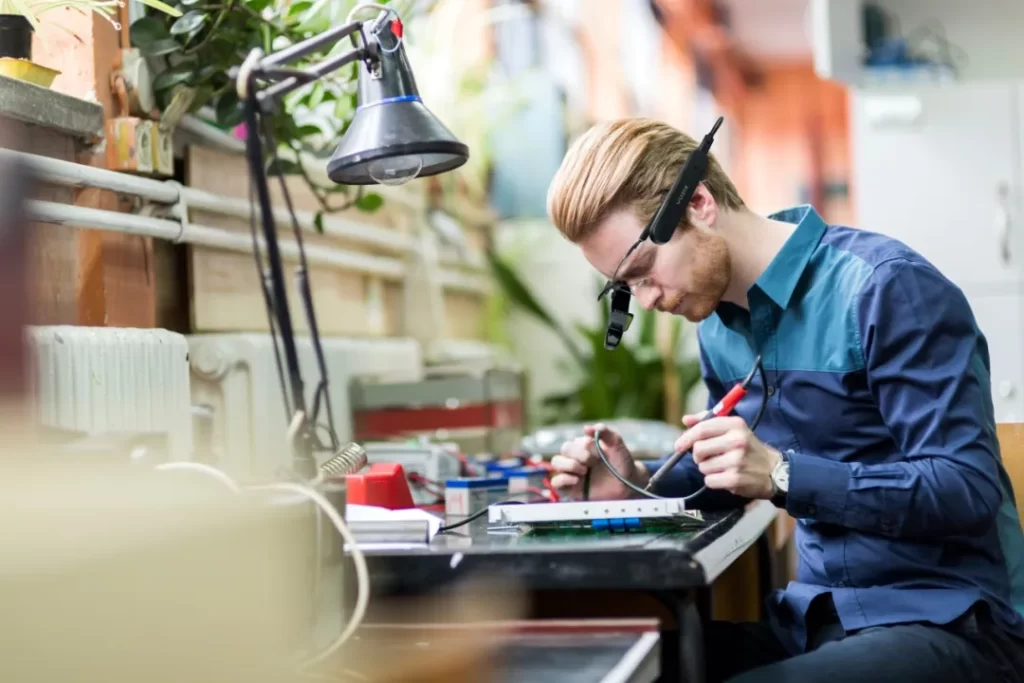
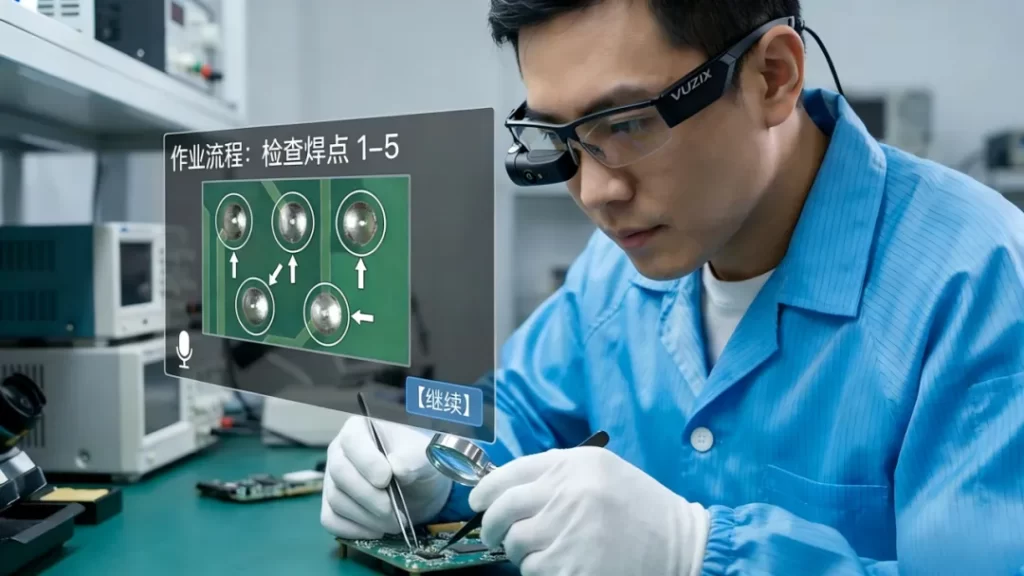
When the line operator puts on the AR Smart GlassesIt's complicated. PCB Inspection Flow The visual presentation of "step-by-step, structured and standardized" was realized in front of our eyes - from experience-oriented operation toNumerical WorkflowThe transformation is becomingElectronics ManufacturingA key breakthrough in transformation and upgrading.

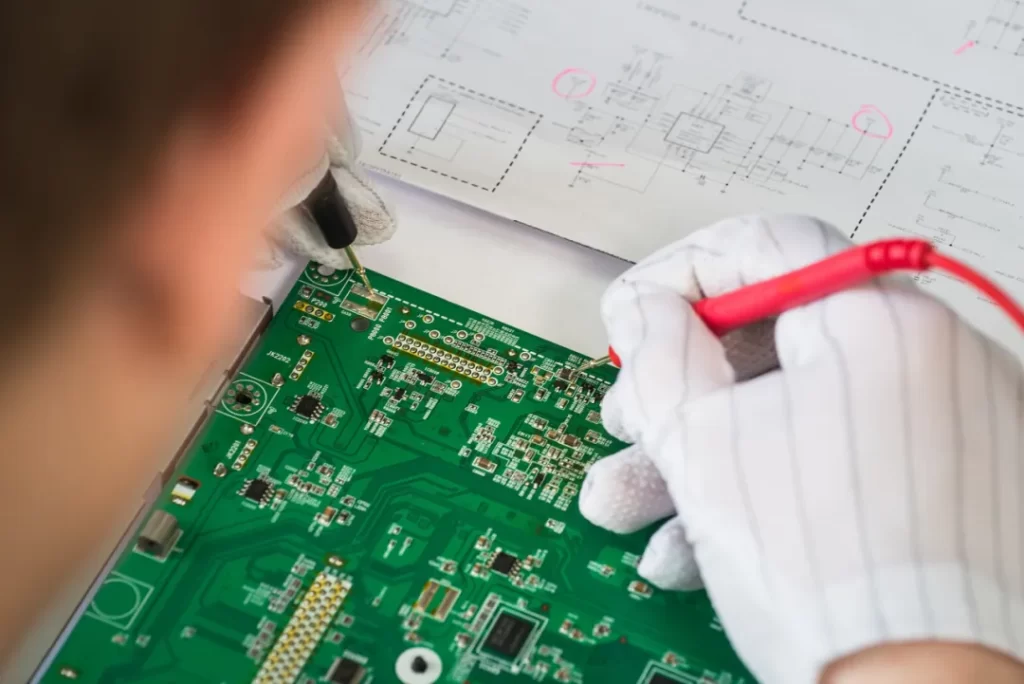
Highly dependent onManual Visual Inspection (used form a nominal expression) PCB IndustryThe differences in operating levels and process inconsistencies have long been a constraint.Product YieldAnd based on the And based on AR Standardized Workflow + AI Intelligent Recognition Innovative applications are helping all workstations to achieve "Accurate Execution without Discrepancies".

Cracking the dilemma of manual quality control: let the standardization of operation as on-site

Seamless multi-station coordination

In the traditional inspection mode, the operator has to change the work order frequently,SOP (Standard Operating Procedures) This is not only distracting but also prone to bias in understanding. AR Eyewear Depth of fit MES (Manufacturing Execution System),ERP up to AOI (Automatic Optical Inspection) Data that will:

  • Checklist
  • Inspection Procedure
  • Core Checkpoints
  • Defect Example Gallery
  • Labeling Requirements
  • Points of Attention

It is projected in the field of view of the operator in the form of an interface card, so that the operator can complete the whole process of "Inspection → Confirmation → Labeling → Recording" according to the prompts without having to look down to check the data.

Workflow Guidelines + First View Interaction

  • Standardized Step-by-Step Tips: AR goggles pop up the inspection actions (e.g., "check solder joints 1-5," "verify capacitor polarity," "check barcode," etc.) in a sequential order to ensure that the operator performs them in a strict manner and does not miss anything.
  • AI Recognition Box Highlighting: The system recognizes in real time through the camera. PCB Front and BackThe following are some of the areas that can be automatically selected for inspection (e.g. BGA Packaging AreaThe system is designed to provide a clearer picture of the situation (e.g., small pin IC area, dense pad area), and suggest potential anomalies, realizing "instant understanding at a glance".
  • First View Operational VerificationThe AR goggles track the entire operation process, providing real-time alerts on whether key checkpoints are completed and whether the labeling position has deviated - this is a practicable technological solution, not an illusory holographic overlay.

This approach dramatically reduces the risk of "looking at the wrong point" and "missing the check", and transforms empirical operations into replicable ones.Standardized ProcessesThe

Three core application scenarios

Production Workstations: Upgrading Inspection Capabilities

exist PCB Visual Inspection The AR workflow empowers the operator:

  • Inspect high-risk areas on a case-by-case basis according to system prompts.
  • Precise double-checking against suspected defects identified by AI.
  • Follow the guidelines to complete the material barcode verification and labeling position confirmation.

Measured data show that::

  • Reduced visual leakage rate 50%+
  • Improved consistency in multi-station inspection 40%
  • Shorten the training start-up time for new staff from 5-7 days to 1-2 days

Feedback from multiple electronics manufacturersThe output is now stable and standardized for novices in a job that used to be performed only by experienced quality inspectors.

Craft / Quality Departments: Enhancing Collaboration Efficiency

AR is not just an "action reminder tool", it is a professionalProcess Management Platform::

  • SOP changes can be "one-click" distributed to all AR devices.
  • Each test action is automatically recorded, which facilitates the subsequent auditing andQuality TraceabilityThe
  • AI automatically summarizes defect assignments to provide engineers withCraftsmanship ImprovementDepends.

Typical Results::

  • Reduced time for craft promotion 60%
  • Reduction of quality control variance judgment 35%
  • Improvement of production line abnormality localization efficiency 2-3 times

Customer Side: Improving Delivery Quality

Stable detection accuracy means:

  • Rework Rate decreased.
  • Reduced risk of defective product outflow.
  • AgainstVehicle Class,MedicalWe are also able to provide our customers with a more competitive edge in the marketplace, such as demanding customers.

importHOSCOAs a result of the program, the customer's quarterly rework rate for a single production line dropped by 0.8 percentage points, significantly improving the overall yield rate.

III. Future outlook

As AR goggle display, recognition and interaction technologies continue to be upgraded.PCB Quality Inspection Process will move towards a smarter model:

  • AI automatically recognizes more diverse types of blemishes.
  • Automatically compare silkscreen, barcode and material number to reduce manual checking.
  • Intelligent adjustment of inspection steps based on historical defect records.
  • Automatically generates and updates SOPs to realize real-time adaptation with process changes.

For those who are committed to advancingDigital Transformation The introduction of AR Standardized Workflow + AI Real-Time RecognitionThis will not only solve the current bottleneck of manual quality control, but will also enable the future to be more efficient.Quality ControlThe ability to form long-term competitive barriers. When a pair of glasses can make all operators feel like "experts", quality consistency is truly "stable, accurate and fast".

Other Articles

Hongke Dry Goods

[Hongke Solutions] ArangoDB Contextual Data Platform: Key Architecture for Next-Generation Network Asset Management (CAM/CMDB)

An in-depth analysis of how enterprises can transition from single LLM API calls to autonomous agentic systems. This article compiles real-world examples of AI agent deployments in production environments across six major industries, including retail and finance, and breaks down the underlying infrastructure logic—such as high concurrency, cross-interaction memory (Memory Infrastructure), and distributed state persistence.
Read more
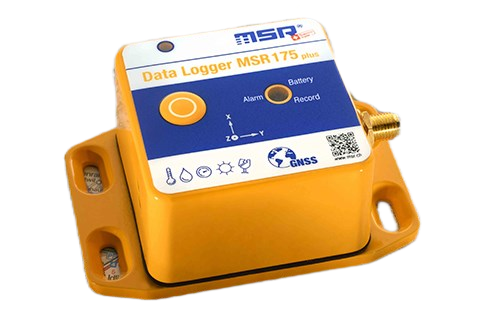
虹科 MSR175plus 衝擊與環境數據記錄器外觀圖:黃色堅固外殼配有 GNSS 定位功能、三軸加速度(X/Y/Z)以及溫度、濕度、氣壓、光照與傾斜感測器圖示,專用於運輸與物流監測。
Hongke Dry Goods

[Hongke Case Study] TSMC Selects MSR Shock and Vibration Data Loggers

How Can You Prevent Vibration Damage During International Transport of Semiconductor Wafers and Photomasks? We Reveal the Key Reasons TSMC Chose Hongke’s MSR175Plus Shock and Vibration Data Logger! The product features long battery life and large-capacity memory, enabling precise recording of temperature, humidity, pressure, and multi-axis acceleration during long-distance transport. In an exclusive interview, a TSMC engineer shares how the company converts vibration into quantifiable data and establishes rigorous standards to effectively reduce the risk of damage and significantly improve the success rate of international shipments!

Read more
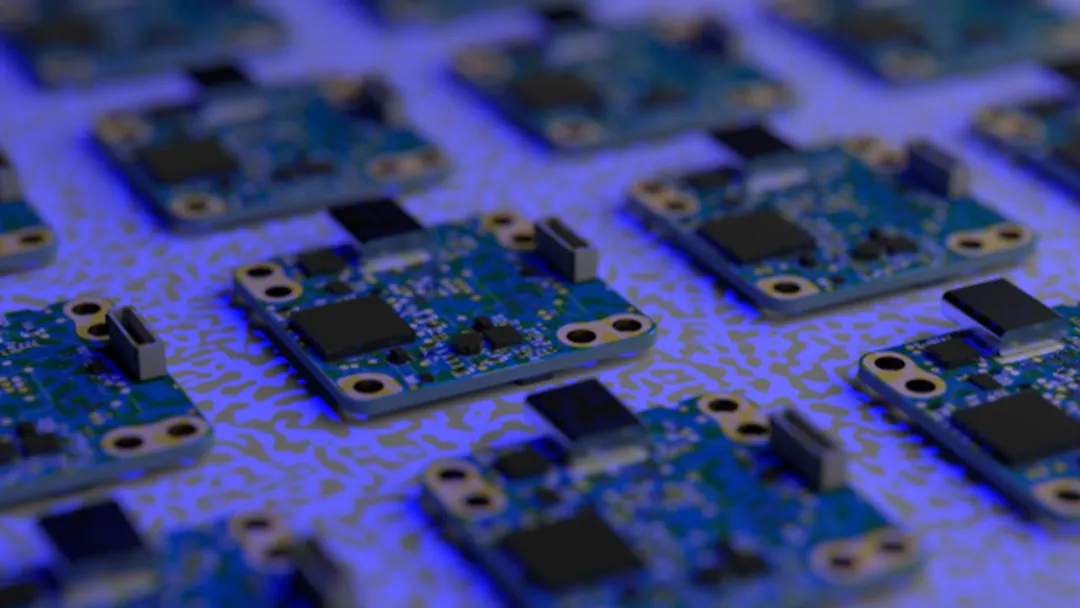
PCB 電路板組裝視覺檢測與測量示意圖:陣列排列的印刷電路板(PCBA)在藍光光源下展示晶片、元件與金屬焊盤細節,適用於 SMT 表面貼裝自動光學檢測(AOI)與品質管控。
Hongke Dry Goods

[Hongke Solutions] How Can AI-Powered Industrial Vision Inspection Overcome Quality Bottlenecks? A Comprehensive Analysis of Multi-Camera PTP Synchronization and Defect Detection

An In-Depth Analysis of AI Industrial Vision Inspection Technology! Explore how high-resolution industrial cameras, AI deep learning algorithms, and IEEE 1588 PTP microsecond-level multi-camera time synchronization precisely overcome bottlenecks in PCB component measurement and lithium-ion battery defect detection, and SMT Automated Optical Inspection (AOI), thereby improving production line yield!

Read more

Contact Hongke to help you solve your problems.

Let's have a chat